

How Zudio Is Moving From Plastic to Compostable Packaging Across 800+ Stores
Disclaimer: This case study is based on publicly available information from Trent Limited’s BRSR filings, Tata Sustainability Group reports, supplier listings, regulatory documents, and news sources. Ukhi is not affiliated with Zudio or Trent Limited. If you represent Zudio or Trent and wish to have any information corrected or removed, please contact us.
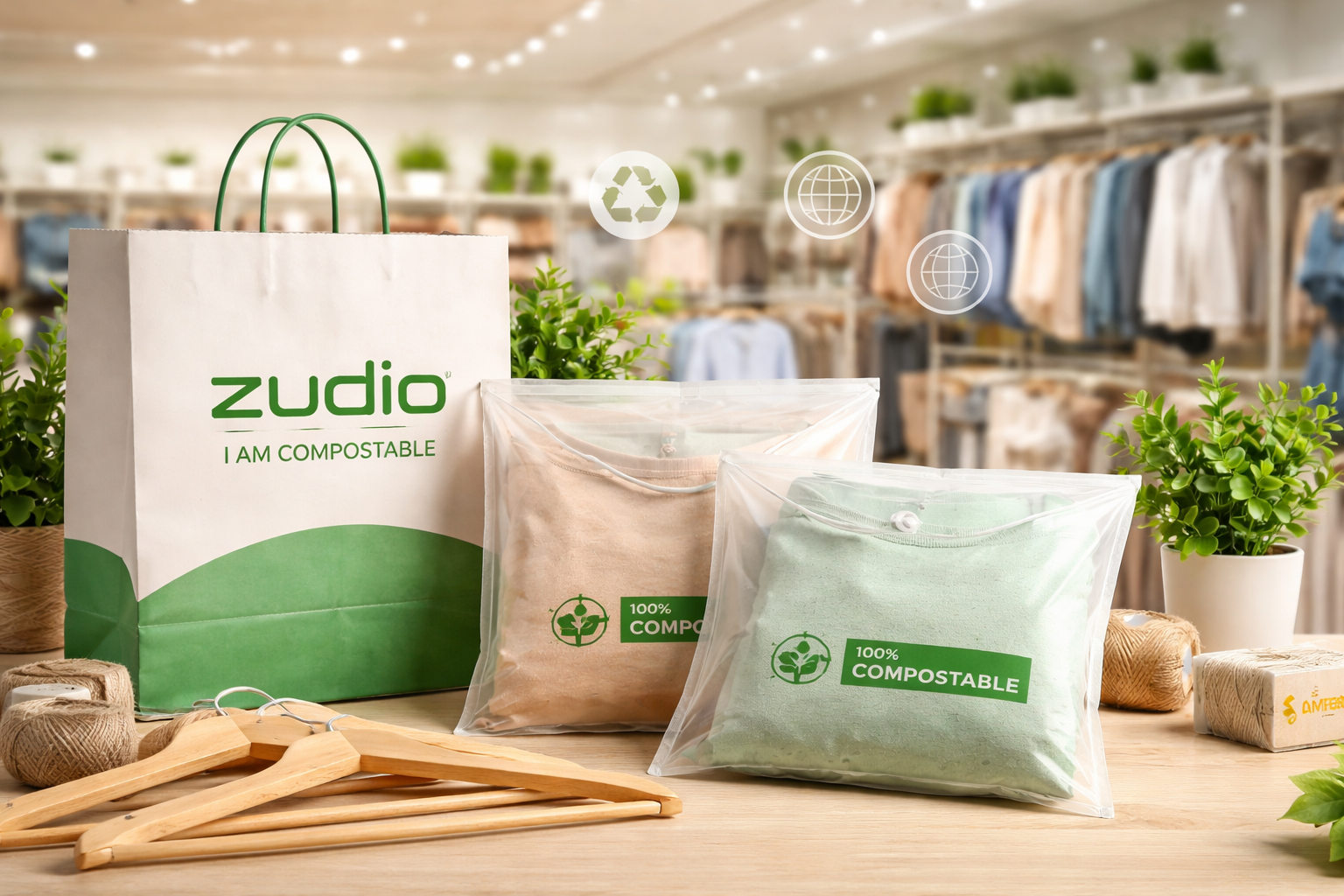
Zudio is one of India’s fastest-growing value fashion retail brands. It is operated by Trent Limited, a Tata Group company.
Zudio has crossed 800 stores across more than 250 cities in India, with revenue of approximately ₹7,000 crore. At peak, the brand sells 90 T-shirts per minute.
At this scale, packaging adds up fast. Every carry bag, every garment polybag, every product tag, when multiplied across hundreds of stores and millions of units, creates a significant material footprint.
That same scale also means that when Zudio makes a packaging change, even a small one, the tonnage impact is meaningful. This is what makes Zudio one of the most important brands to watch in India’s sustainable packaging shift.
800+
Stores
250+
Cities
₹7,000 Cr
Revenue
90
T-Shirts / min
What Zudio Has Already Changed
The Supply Chain Challenge Every Fashion Retailer (Including Zudio) Faces
The customer-facing changes are clear. The larger challenge, one that every fashion retailer in India shares, sits in the supply chain.
The Tata Sustainability Group’s case study on Trent is refreshingly honest about this. When you shop at a Zudio store, you may not see much plastic. But behind the scenes, each piece of clothing procured by Trent arrives in a plastic bag.
This is standard across the garment industry.
Factories ship garments in individual polybags to protect them during transit, and replacing these at scale requires coordination across hundreds of suppliers.
The numbers show the size of this industry-wide challenge.
In FY 2022–23, Trent Limited tracked 724 metric tonnes of plastic waste across its operations, up from 329 metric tonnes the previous year.
Trent attributes the increase to improved measurement and tracking systems, which is an important step, since you cannot reduce what you do not measure. The willingness to report a higher number rather than undercount is itself a positive signal.
This is also where the biggest opportunity lies.
Converting supply chain polybags from conventional plastic to compostable garment bags across the full vendor base would dramatically reduce this figure.
The material alternatives exist. The certification pathways are established. The question is pace of rollout.
How Trent Manages Packaging Waste Today
To handle waste from operations, Trent partnered with WiseBin, a waste collection and recycling organisation. Before this partnership, plastic waste from stores was sold to local scrap recyclers with no traceability. The WiseBin programme brought structure and accountability to this process.
The programme now covers approximately 200 stores and 2 large warehouses. It provides organised collection, recycling through a CPCB-certified partner, and monthly recycling certificates.
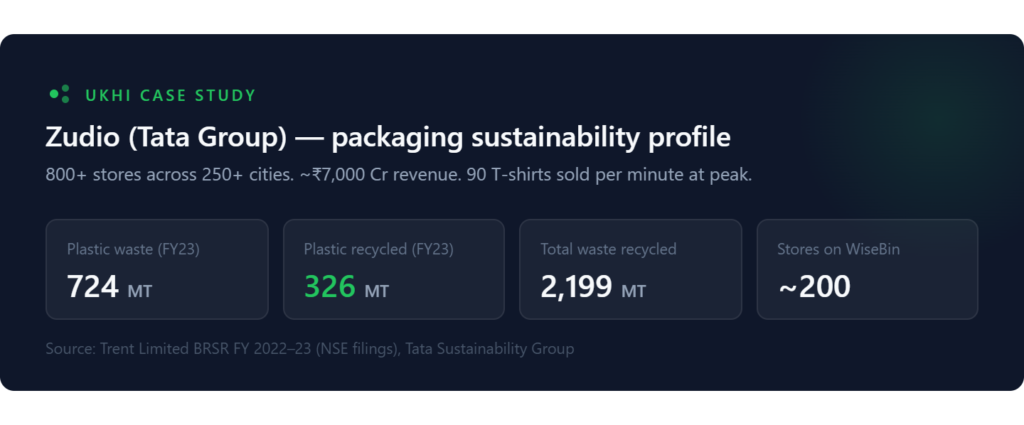
The BRSR numbers for FY23:
As Zudio’s store network continues to expand, extending WiseBin coverage to all locations would be a natural next step.
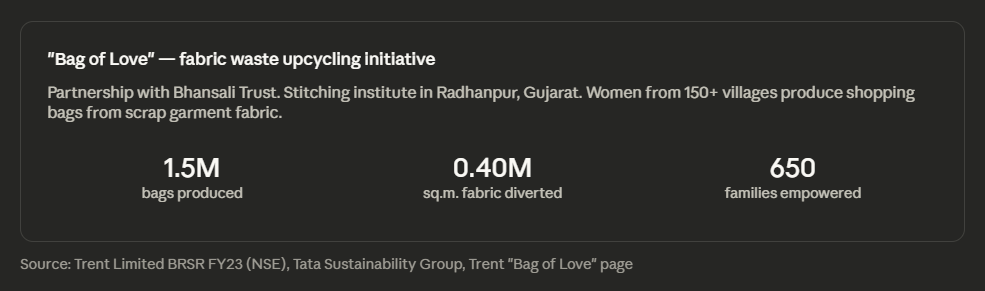
Trent also runs the “Bag of Love” initiative, which is one of the more distinctive programmes in Indian retail. In partnership with Bhansali Trust, Trent set up a stitching institute in Radhanpur, Gujarat, where women from 150+ villages produce shopping bags from scrap garment fabric.
The programme has produced 1.5 million bags, diverted 0.40 million square metres of waste fabric from landfills, and supported 650 families. These bags are used across Westside, Zudio, and Star Bazaar stores.
" At this scale, even a small packaging change creates meaningful tonnage impact."
" At this scale, even a small packaging change creates meaningful tonnage impact."
The Regulatory Tailwind Making This Easier
India’s regulatory environment is now actively supporting the shift to compostable packaging, and in some cases making it the more economical choice.
India’s single-use plastic ban took effect on July 1, 2022.
For carry bags, plastic below 75 microns was banned from September 2021, and bags below 120 microns were banned from December 31, 2022. Since then, over 853,000 inspections have been conducted nationally, with ₹19.05 crore in fines collected.
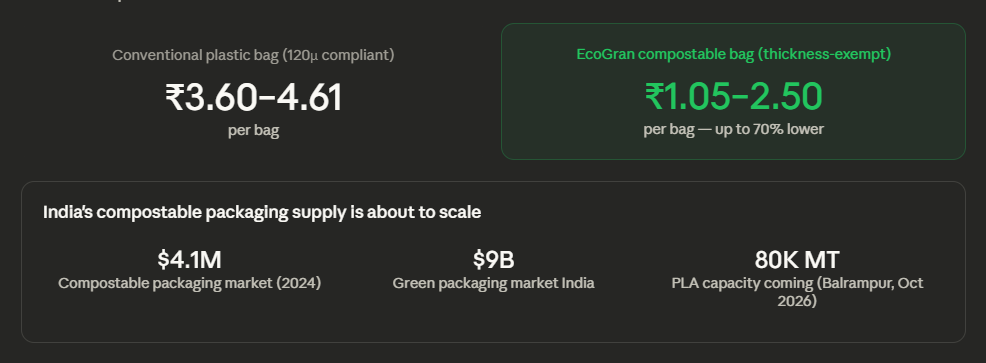
The detail that matters most for fashion brands: compostable bags are exempt from the 120-micron thickness requirement. A compostable bag can legally be thinner than a conventional plastic bag, meaning less material per bag, lower weight per unit, and often lower cost. For a brand like Zudio buying millions of bags per year, this exemption fundamentally changes the economics.
The EPR (Extended Producer Responsibility) framework adds further momentum. Brand owners must meet collection targets, and recycled content mandates take effect from FY 2025–26. From July 2025, all plastic bags and multilayer packaging must carry QR codes for traceability. Trent is registered on the CPCB EPR portal as a Brand Owner.
As of March 2026, 20.7 million tonnes of plastic packaging waste has been recycled nationally since the EPR guidelines came into force, which is a sign that the infrastructure is maturing.
Where Zudio Sits Among Competitors
Zudio’s progress is best understood in context.
The Tata Group’s Project Aalingana, launched in 2022 with a net-zero aspiration by 2045, provides the corporate framework for these efforts to accelerate.
With domestic PLA supply set to expand significantly, the cost and availability barriers that have slowed compostable adoption are likely to ease.
The building blocks are in place. The trajectory is towards fuller adoption.
Considering the switch to compostable packaging?
Multiple Indian suppliers now offer biopolymer granules and finished compostable bags at or near cost parity with conventional plastic — particularly when the thickness exemption under India’s Plastic Waste Management Rules is factored in.
Ukhi is one such supplier. Its EcoGran biopolymer, made from agricultural residue, is designed as a drop-in replacement for conventional LDPE/LLDPE granules used in compostable garment bags, compostable carry bags, and compostable mailer bags. EcoGran-based products are CPCB-certified compostable, qualify for the thickness exemption, and are available through the DCGpac distribution network — India’s largest B2B packaging platform with 60,000+ customers.
To explore compostable packaging options or request material samples, visit ukhi.com or ask your DCGpac partner about Ukhi.