

Britannia's Plastic Footprint: What 45,000 Tonnes Looks Like in Practice
Disclaimer: This case study draws entirely on publicly available sources. Hindustan Unilever Limited was not contacted for this analysis and has had no involvement in its preparation or review. If you spot something that needs correcting, or if HUL or anyone else has information that would improve the accuracy of this piece, please write to us at [email protected].
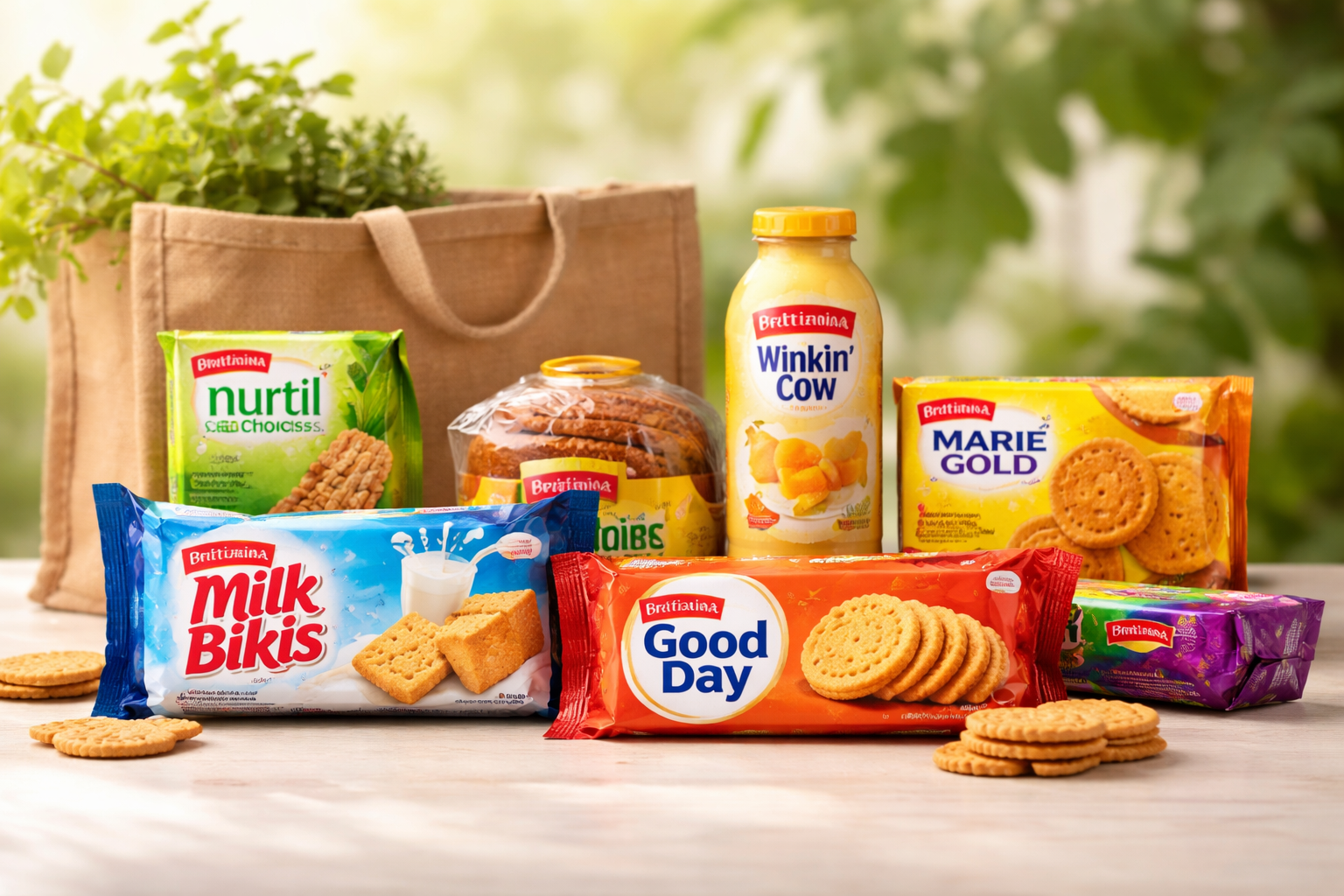
Britannia’s biscuits, dairy drinks, and snacks reach over 180 million Indian households every year. That kind of reach is built on decades of distribution, but it also means one thing: an enormous amount of packaging.
In the financial year 2024–25, Britannia consumed 45,174 metric tonnes of plastic across its operations. To put that in context, that is roughly the weight of 45,000 small cars, most of it in the form of thin flexible films that wrap every Good Day, Marie Gold, and Milk Bikis packet that leaves a factory.
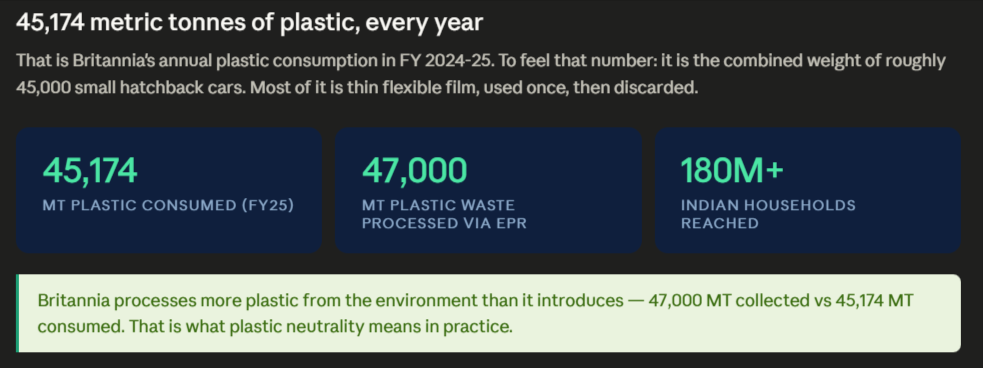
45,174 MT
Plastic used in FY25
47,000 MT
Plastic processed
79%
Recyclable packaging
2030
Bio-based target
The type of plastic matters here.
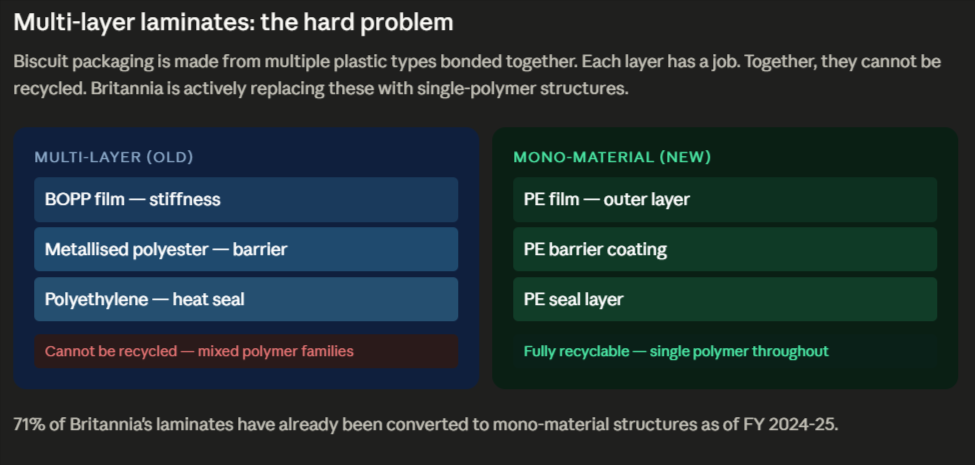
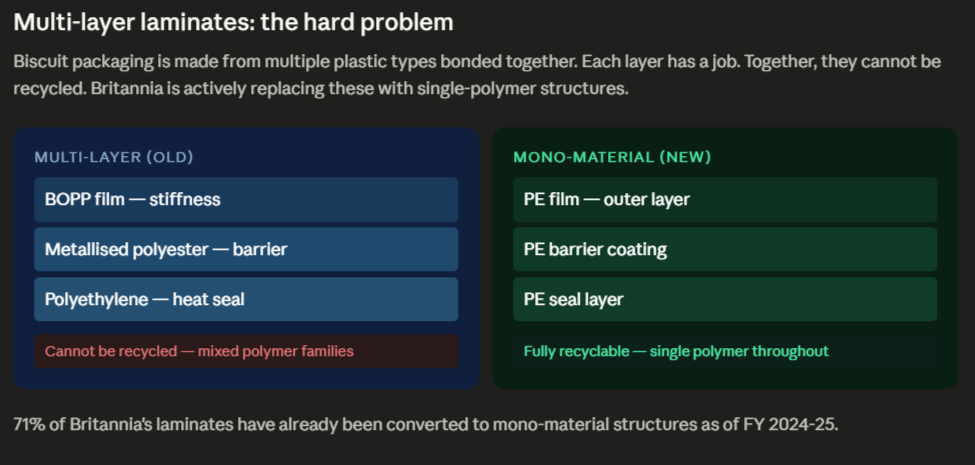
Most biscuit packaging is made from multi-layer plastic laminates, which combine materials like BOPP (a type of polypropylene film), metallised polyester, and polyethylene fused together into a single structure.
Each layer serves a specific purpose:
The problem is that because these layers are bonded together from different polymer families, they cannot be separated and therefore cannot be recycled in any standard recycling stream in India today.
This is the packaging challenge that Britannia, and frankly most of Indian FMCG, has inherited. It is not a problem anyone designed on purpose. It is what decades of optimising for shelf life and cost produced.
Why Britannia's Biscuit Packaging Is One of the Hardest Plastics to Replace
Before getting to where Britannia is going, it is worth understanding what they have already built.
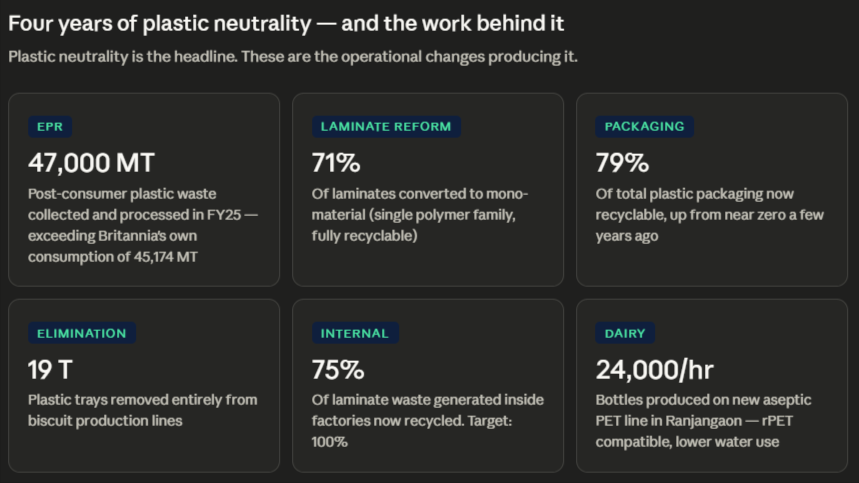
For four consecutive years, including FY 2024–25, Britannia has achieved plastic neutrality.
This means the company collects and processes at least as much plastic waste from the environment as it introduces through its own packaging.
This is enabled through Extended Producer Responsibility (EPR) under India’s Plastic Waste Management Rules 2022.
Britannia has not just met its EPR obligations — it has exceeded them.
How Britannia Achieved Plastic Neutrality Four Years in a Row
One of the most concrete steps Britannia has taken is the commissioning of a new aseptic PET packaging line at its Ranjangaon facility in Maharashtra for the Winkin’ Cow dairy range. The line runs at 24,000 bottles per hour and uses dry preform sterilisation technology, which uses hydrogen peroxide vapour instead of water-based rinsing. This significantly cuts water and chemical use in production.
PET as a material is important here because it is one of the most widely recycled plastics in India and is compatible with food-grade recycled PET, or rPET. India’s packaging regulations are moving toward a requirement of 40% recycled content in beverage PET packaging by 2026, and this line positions Britannia ahead of that requirement rather than scrambling to meet it.
Britannia's Bioplastic Roadmap: PLA, Domestic Supply, and What Gets Piloted First
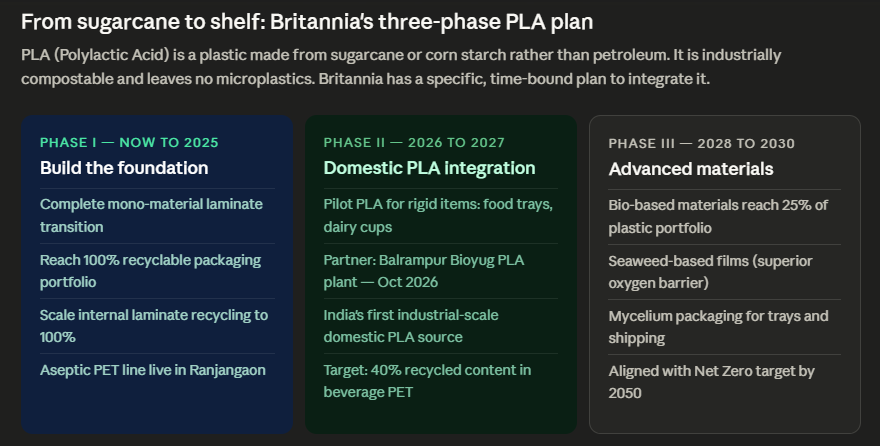
The most significant part of Britannia’s packaging strategy is what it is building toward, and the timeline is specific.
PLA is a plastic made from sugarcane or corn starch rather than petroleum.
It is industrially compostable, meaning it breaks down in a composting facility without leaving microplastics behind, and it is exempt from India’s single-use plastic bans.
The reason the 2026–27 window is realistic rather than aspirational is a specific supply chain development.
Balrampur Chini Mills, through its subsidiary Balrampur Bioyug, is commissioning India’s first industrial-scale PLA manufacturing plant in October 2026.
Once domestic PLA production comes online, it will reduce both the cost and the import dependency that historically made bioplastic packaging expensive in India.
Beyond PLA, Britannia is researching what it calls third-generation packaging materials.
The longer-horizon target is for bio-based materials to represent 25% of Britannia’s total plastic portfolio by 2028–2030, aligned with its broader net zero 2050 commitment.
This is why the initial PLA pilot is focused on rigid items like trays and dairy cups rather than flexible biscuit packets.
For flexible films, the industry is working on hybrid structures with thin barrier coatings. Britannia’s research into seaweed-based barrier films is directly aimed at solving this problem.
The Carbon Case: What Britannia Switching to Compostable Packaging Actually Means
If Britannia reaches its target of shifting 25% of its plastic portfolio to bio-based compostable formats by 2030, that would mean approximately 11,000 tonnes of plastic moving into compostable materials annually.
Britannia is operating at a scale most brands will never reach. But the transition it is making, from multi-layer plastic laminates toward mono-material recyclable structures and then toward industrially compostable bioplastics, is the same journey available to brands of any size.
About Ukhi
Ukhi manufactures EcoGran, certified compostable granules used to produce compostable films, bags, and rigid formats. We work with packaging converters, brands, and manufacturers across India who are at the beginning of this process, figuring out which products to pilot first, which certifications they need, and what their customers will accept.
If your brand is evaluating compostable packaging formats for any part of your product range, talk to Ukhi’s team.
Learn more at ukhi.com