

Ukhi Research Division
Ukhi Bioplastics Private Limited India
- A clear overview of how global bioplastics capacity has grown between 2018 and 2030, including analysis of where production is concentrated and how fast different segments are expanding.
- Country-wise snapshots for 11 major markets such as India, China, Germany, the USA, Brazil, and Italy, with emphasis on their production capacity, policies, key players, and current demand trends.
- An easy-to-understand explanation of the main bioplastic families, including PLA, PHA, PBAT, bio-PE, bio-PET, and starch-based blends, and where each one is typically used.
- Profiles of leading global manufacturers as well as strong regional players who influence supply, pricing, and innovation.
- A practical review of policy environments, industry opportunities, and emerging risks that could shape the bioplastics market over the next decade.
Publication Details
Publication Date: 1 November 2025
Publisher: Ukhi India Pvt. Ltd.
Location: New Delhi, India
Report Period Covered: 2018–2030
Data Last Updated: October 2025
Disclaimer
This report is based on data and information available from government publications, peer-reviewed research, and verified industry sources as of November 2025. While every effort has been made to ensure accuracy, Ukhi does not guarantee completeness in cases where official data is unavailable or incomplete. The report prioritizes factual integrity and transparency over speculative modelling.
Executive Summary
Bioplastics: At a Turning Point in 2025
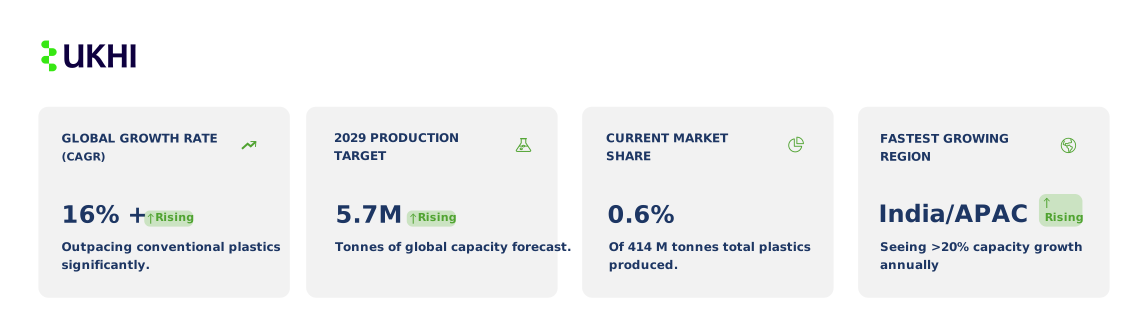
The world makes more than 414 million tonnes of plastics every year.
Thankfully, bioplastics (plastics made at least partly from plants, not oil) are finally taking a visible place in this landscape.
Today, they account for just 0.6% of all plastics made.
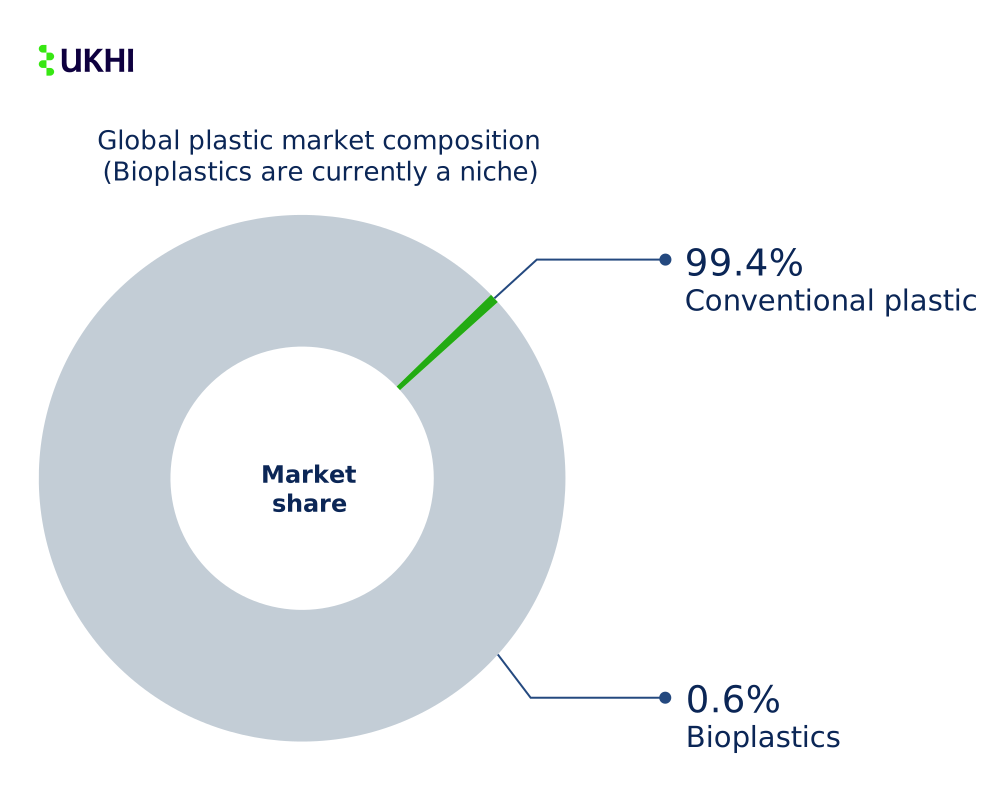
That’s a slice barely visible on a pie chart, but we can take heart and hope from another fact: the growth is real and accelerating.
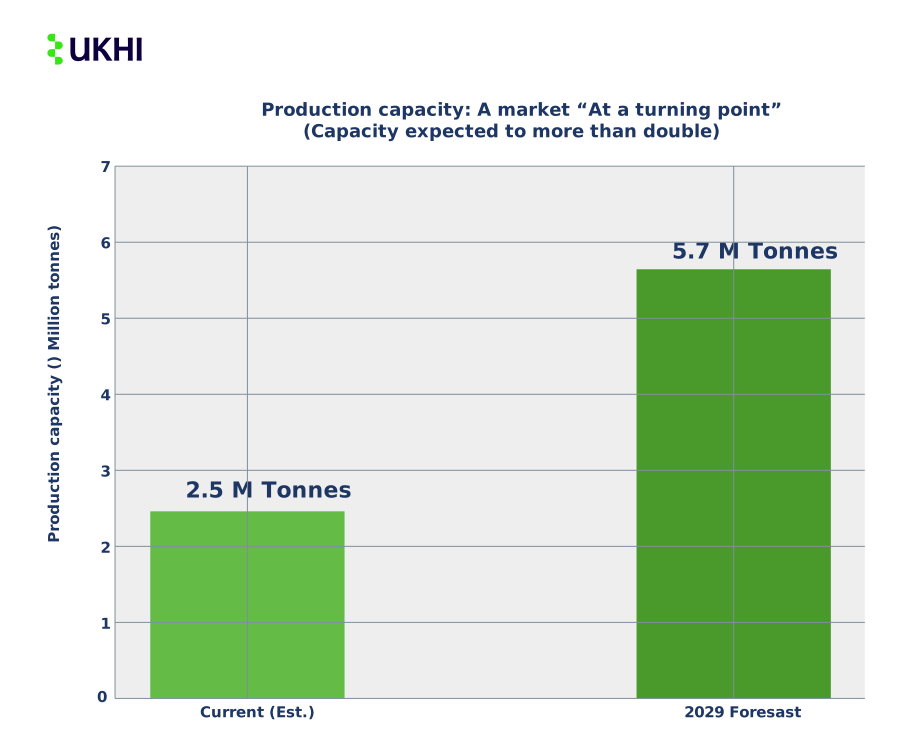
By 2029, global bioplastics production capacity will more than double, and is expected to reach nearly 5.7 million tonnes.

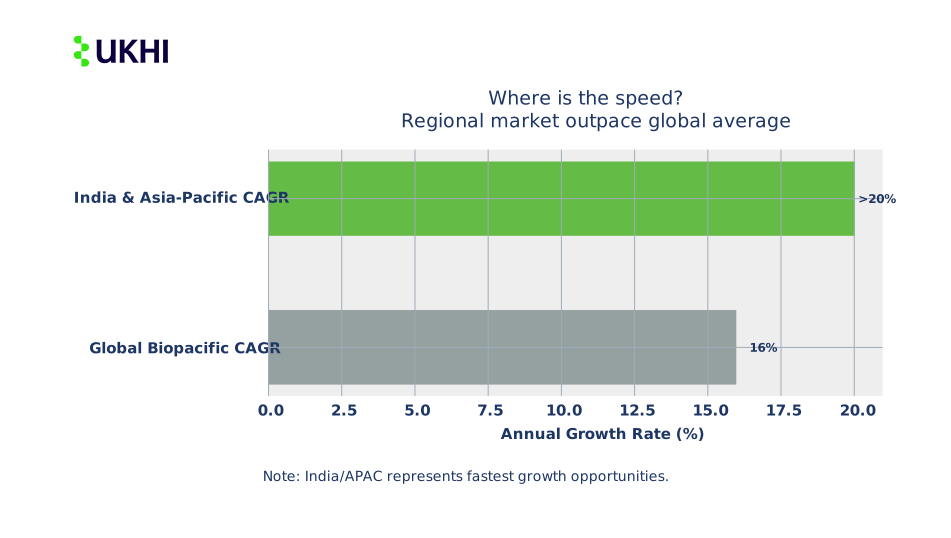
Some of the fastest growth stories are playing out in India and Asia-Pacific, where capacity is rising at over 20% a year.
Why does this matter?
Growth activity in bioplastics is a signpost of which regions, sectors, and companies are getting ready for a world where policy, consumer demand, and climate goals no longer allow “business as usual.”
1. Growth Is Outpacing Conventional Plastics, But Off a Small Base
- Bioplastics are still tiny compared to fossil plastics, but their production is growing at over 16% CAGR globally, a pace most industries would envy.
- Every year, new factories, materials, and use-cases are coming online.
2. Not All Bioplastics Are Equal
- “Bioplastic” is not a single material.
- Some (like PLA and PHA) are both bio-based and biodegradable.
- Others (like bio-PE) are plant-based but behave just like regular plastics at end-of-life.
- The label can be misleading: a bio-based plastic may not be compostable or biodegradable outside of industrial settings.
- For any executive who works in policy and procurement, knowing the difference is critical to avoid greenwashing.
3. Policy and Corporate Action Are Accelerating the Shift
- The biggest drivers of bioplastics growth are bans on single-use plastics, corporate sustainability targets, and incentives for domestic manufacturing (especially in India, the EU, and China).
- Major consumer brands like Coca-Cola, Danone, and Unilever are moving ahead with bioplastic packaging.
4. Cost, Infrastructure, and Trust Are Still Roadblocks
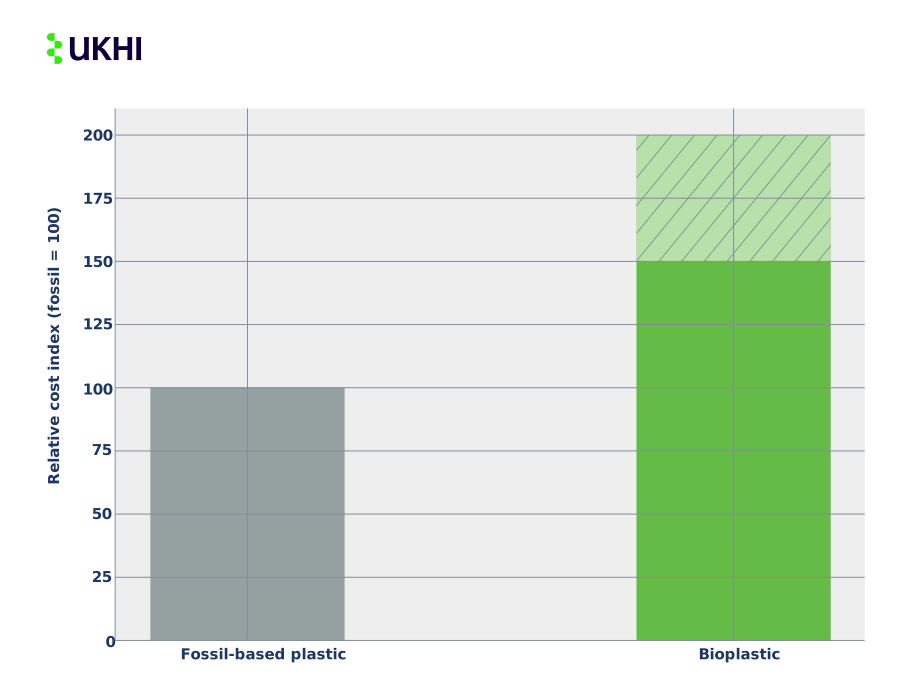
- Bioplastics can cost 50–100% more than fossil-based plastics, though this cost differential is falling in some regions.
- Compostable plastics (e.g., PLA) need industrial-scale composting, which is not widely available outside Europe and select metropolitan cities of the world.
5. The Biggest Opportunities Are Local
- India and Southeast Asia have the feedstock, demand, and policy push to become global leaders in bioplastics.
- Investors, policymakers, and entrepreneurs have a window to build the enabling ecosystem that will decide who captures the next decade of growth.
Whether you’re a manufacturer, policymaker, or investor, three questions now shape the market:
1. Where are you in the value chain?
- If you manufacture plastic products or packaging, check whether your existing machines can run the major bioplastic materials (most can). Also review which certifications and standards apply in your region.
- If you’re a policymaker, know that incentives and clear standards move markets faster than mandates alone.
- If you’re an investor, focus on regional manufacturing, infra, and trusted certification as these are the real value creators.
2. Are you equipped to navigate the hype?
- A sharp understanding of what each bioplastic can—and can’t—do is your protection against “greenwashing.”
- Not every bioplastic is a fit for every need, and not every claim stands up to scrutiny.
3. How will you act on the window of opportunity?
- The next five years will decide who owns the IP, the brands, and the networks for bioplastics in India and beyond.
- Partnerships between bio-manufacturers, farmers, and downstream brands are already shaping the fastest-growing markets.
The Bottom Line
Bioplastics have moved from promise to presence, but the road ahead is uneven.
What happens next depends on honest labeling, smart policy, robust infrastructure, and investment in local capacity. This report is built to give you the clarity and context to act, decide, and lead.
If you want not just information but an edge in the world of sustainable materials, keep reading.
About This Report
This Ukhi Bioplastics Market Report 2025–2030 is designed to serve as a comprehensive and accessible reference for leaders, practitioners, and stakeholders across the plastics, packaging, policy, and sustainability sectors.
Our aim is to offer a single, credible source that bridges the gap between raw data, technical jargon, and real-world business or policy decisions.
Scope of the Report
The report covers the global bioplastics market with a focus on the period 2018–2030.
It examines:
- Market size and historical growth, with forecasts to 2030
- Regional and country-level dynamics across major markets, including India, China, Europe, North America, South America, Russia/CIS, Middle East, and Africa
- Applications of bioplastics across packaging, agriculture, consumer goods, medical, and industrial sectors
- The competitive landscape, including leading global players
- Key opportunities, risks, challenges, and white spaces shaping the market’s future
Methodology and Sources
Our analysis draws on multiple data sources to provide the most accurate and up-to-date market view:
- Official statistics and reports published by government agencies and relevant ministries in major producing and consuming nations
- Peer-reviewed academic and industry papers
- Publicly available financial reports, company filings, and investor presentations
- Policy documents, standards, and regulatory frameworks
Where gaps or inconsistencies existed in published data, we have prioritized accuracy over convenience, and refrained from extrapolations and oversimplifications for the sake of narrative completeness.
Disclaimer
Some figures, especially those related to market size, production capacity, or waste management, are not always chronologically comprehensive.
We have used the most recent, credible numbers available at the time of publication (November 2025).
Where estimates are presented, the methodology is stated clearly in the text.
Our commitment is to present the bioplastics sector as it truly stands — grounded in evidence, acknowledging uncertainty, and focused on practical relevance.
1. Bioplastics: Core Concepts & Market Relevance
1.1 Introduction
Bioplastics are the most talked-about solutions in the global fight against plastic pollution and climate change.
Yet, despite the attention, they remain a small but fast-growing niche.
Bioplastics account for roughly 0.6% of all plastics produced worldwide today, up from just 0.2% in 2014.
With global production capacity expected to soar from around 2.47 million tonnes in 2024 to approximately 5.73 million tonnes in 2029, bioplastics are moving from the margins into mainstream industries, especially packaging, where they now comprise nearly half of all bioplastics used.
However, the story of bioplastics is not simple, and neither are the challenges.
From supply chain concerns to economic costs, and from recycling complexities to legislative hurdles, the issues are many. The journey ahead requires clarity, evidence, and honest appraisal.
In this section, we start by defining what bioplastics really are.
1.1.1 What are Bioplastics?
At its core, bioplastics refers to a diverse family of plastic materials that are derived from renewable biomass like corn starch, sugarcane, vegetable oils, or even recycled food waste, rather than from fossil fuels.
But “bioplastics” is not a one-size-fits-all label.
In practice, the term encompasses a range of materials with distinct characteristics, and these differences directly affect their sustainability, performance, and real-world value.
| Term | Definition | What It Means in Practice |
|---|---|---|
| Bio-based | Plastics whose carbon content comes fully or partly from biomass | May be renewable but not necessarily biodegradable. Example: Bio-PE is made from sugarcane but is not biodegradable. |
| Biodegradable | Plastics that can be broken down by microbes into CO₂, water, and biomass | End-of-life solution. Can be fossil-based or bio-based. Example: PBAT (fossil-based, but biodegradable). |
| Compostable | Biodegrades under specific composting conditions (temperature, humidity, microbes) | All compostable plastics are biodegradable, but only under controlled conditions (usually industrial composting). |
Not all bioplastics are both bio-based and biodegradable.
For instance:
- Bio-PE: 100% bio-based, but not biodegradable. Used by Coca-Cola and Danone for beverage bottles, it’s chemically identical to traditional PE and can be recycled in existing PE streams.
- PBAT: Fossil-based, but biodegradable and compostable, used in flexible packaging and compostable bags.
- PLA (Polylactic Acid): Made from corn or sugarcane, PLA is both bio-based and industrially compostable. It’s used in yoghurt cups, disposable cutlery, and 3D printing filament. However, it requires industrial composting facilities (~58°C, specific humidity) to fully degrade.
- PHA (Polyhydroxyalkanoates): Produced by microorganisms, both bio-based and compostable, and even degrades in marine environments.
1.1.2 Why Does This Matter?
The global debate often assumes “bioplastic” means eco-friendly by default. In reality:
- A “bio-based” plastic may not solve the litter problem if it is not biodegradable.
- A “biodegradable” plastic may require specific infrastructure, without which its environmental advantage is lost.
In context: As of 2022, global bioplastics production capacity was ~2.2 million tonnes, with projections rising to 6.7 million tonnes by 2029. Yet, this is still just a fraction of the >300 million tonnes of conventional plastics made each year.
1.2 Main Types of Bioplastics in the Market
Bioplastics refers to a wide and evolving set of materials. Each type is distinguished not only by its raw material source, but also by its environmental profile and real-world performance.
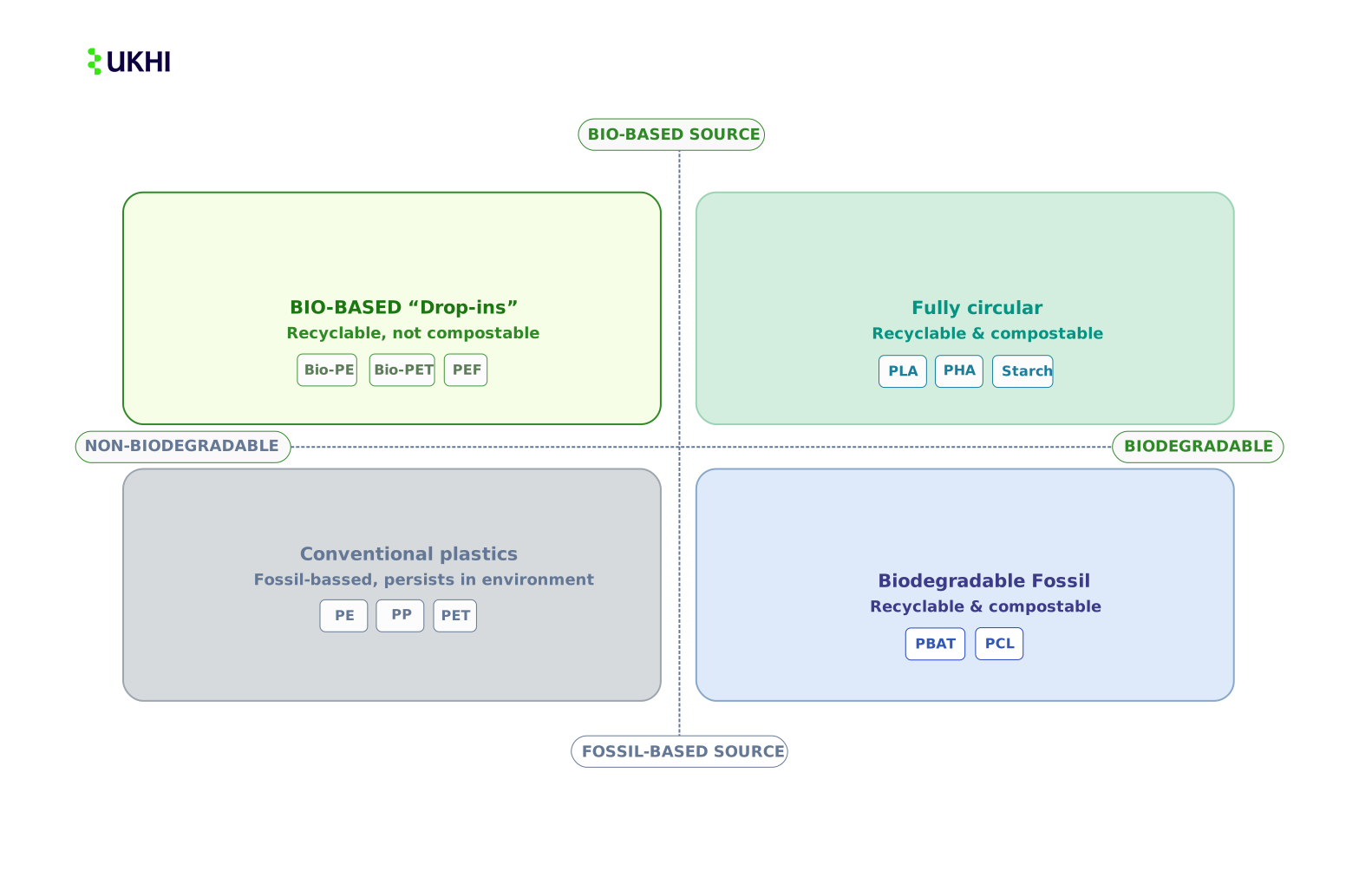
Bioplastics fall into three main categories:
- Bio-based & Biodegradable
- Bio-based & Non-biodegradable
- Fossil-based & Biodegradable
Let’s look at the most widely used types, along with their applications and limitations:
1.2.1 Polylactic Acid (PLA)
- Type: Bio-based & biodegradable
- Source: Corn starch, sugarcane
- Applications: Food packaging (yoghurt cups, trays), disposable tableware, 3D printing filament, surgical sutures
- Market Fact: PLA is among the most produced bioplastics globally. For instance, Luminy® PLA is widely used for food service and packaging
- Note: Needs industrial composting to degrade as it rarely breaks down in nature or landfills
1.2.2 Polyhydroxyalkanoates (PHA)
- Type: Bio-based & biodegradable (marine compostable)
- Source: Produced by bacteria fermenting sugars or lipids
- Applications: Biomedical implants (sutures, stents), beach toys, food packaging
- Innovation Example: Nodax™ PHA is used in both medical and consumer products; it can degrade even in marine environments
- Note: Still higher in cost and less available at industrial scale
1.2.3 Bio-PE and Bio-PET (“Drop-ins”)
- Type: Bio-based & non-biodegradable
- Source: Sugarcane, corn
- Applications: Beverage bottles (Coca-Cola’s PlantBottle™, Danone’s Actimel), cosmetics packaging
- Market Fact: Bio-PET is the largest non-biodegradable bioplastic by volume; fits directly into existing recycling streams
- Note: Renewable source, but persistence and pollution risks remain unless effectively recycled
1.2.4 Polybutylene Adipate Terephthalate (PBAT)
- Type: Fossil-based & biodegradable
- Source: Fossil fuels (often blended with bio-based materials)
- Applications: Compostable bags, flexible films, agricultural mulch
- Market Fact: PBAT blends help improve flexibility in compostable bags, but full compostability relies on correct infrastructure
- Note: Still derived from fossil resources, though it provides a route to organic recycling
1.2.5 Starch Blends (TPS)
- Type: Bio-based & biodegradable (may be compostable)
- Source: Starch (potato, corn, tapioca)
- Applications: Compostable carrier bags, food wrappers, waste collection sacks
- Innovation Example: Mater-Bi® by Novamont (Italy) is used in meat trays and flexible packaging, with up to 60% starch content
- Note: Is blended with PLA or PBAT for improved water resistance and processing
Table: Major Bioplastics by Type, Source, and Key Application
| Material | Type | Main Source | Key Applications | Notable Fact/Brand |
|---|---|---|---|---|
| PLA | Bio-based, biodegradable | Corn, sugarcane | Packaging, 3D print, cutlery, sutures | Luminy®, commonly used |
| PHA | Bio-based, biodegradable | Microbes | Implants, toys, films | Nodax™, BioMer®, CJ PHA® |
| Bio-PE | Bio-based, non-biodegradable | Sugarcane, corn | Bottles, containers | Coca-Cola PlantBottle™ |
| Bio-PET | Bio-based, non-biodegradable | Sugarcane, corn | Beverage bottles, food packaging | Danone’s Actimel |
| PBAT | Fossil-based, biodegradable | Fossil | Compostable bags, mulch, films | Blended for flexibility |
| TPS | Bio-based, biodegradable | Potato, corn, tapioca | Carrier bags, food films, trays | Novamont’s Mater-Bi® |
Table: Major Bioplastics – Origins, End-of-life, Typical Uses
| Type | Bio-based | Biodegradable | Compostable | Key Uses |
|---|---|---|---|---|
| PLA | ✅ | ✅ | ✅ | Packaging, 3D printing, utensils |
| PHA | ✅ | ✅ | ✅ | Biomedical, packaging, agriculture |
| Bio-PE | ✅ | ❌ | ❌ | Bottles, packaging |
| Bio-PET | ✅ | ❌ | ❌ | Bottles, food containers |
| PBAT | ❌ | ✅ | ✅ | Compostable films, bags |
| TPS | ✅ | ✅ | ✅ | Bags, wrappers, films |
As we see, choosing the right bioplastic depends on both its source and its afterlife. This versatility allows bioplastics to compete with conventional plastics across a wide array of products. But what makes these materials not just interesting, but commercially important?
1.3 What Makes Bioplastics Commercially Important?
The commercial relevance of bioplastics stems from their alignment with urgent global trends such as climate policy, corporate sustainability, consumer demand, and innovation.
1.3.1 Sustainability and Market Growth
- When biodegradable bioplastics degrade, they release CO₂ that was recently captured from the atmosphere by plants, which achieves a near-neutral carbon cycle.
- As of 2022, bioplastics represented ~2.2 million tonnes of production capacity. With projections of 5.73 million tonnes by 2029, the market is expanding quickly.
- Packaging makes up almost half of all bioplastics produced, but new sectors are emerging rapidly.
1.3.2 Business Performance and Fit
Modern bioplastics are engineered for the demands of industry:
- Comparable strength, flexibility, and processability to traditional plastics.
- “Drop-in” solutions (Bio-PE, Bio-PET) allow brands to switch feedstocks with minimal changes to manufacturing or recycling systems.
- Case in Point: Global brands like Coca-Cola and Danone have adopted bioplastic bottles at scale.
1.3.3 Policy, Waste, and Circular Economy
- Bioplastics align with evolving regulations against single-use plastics:
- Ireland’s plastic bag levy led to a 95% reduction in SUP bag use, while China and the EU have issued sweeping bans, which is driving innovation in alternative materials.
- Compostable bioplastics offer new end-of-life pathways for products contaminated with food (e.g., compostable cutlery and packaging in foodservice), and help to close the organic waste loop.
- The case of Brazil shows that switching to compostable and alternative materials can increase sector value by over 50% and cut 18 million tonnes of CO₂ equivalent by 2040.
1.3.4 Innovation and Diverse Use Cases
- Biomedical: Sutures, tissue scaffolds, drug delivery (PHA, PLA, PCL)
- Engineering: Sensors, car parts, 3D printing, and “green electronics”
- Consumer Goods: Sports shoes (with sugarcane soles), Timberland eyewear, phone cases, toys
Challenges to Note
- Many compostable bioplastics (e.g., PLA) require industrial facilities.
- Bioplastics remain expensive — PHA, for example, can be 3–4 times the price of PP.
- Large-scale bioplastic production competes with food supply for land and water, especially in Asia, which is projected to host 80%+ of capacity.
- Bioplastics can contaminate conventional plastic recycling if not sorted correctly.
2. Market Size and Historical Growth (Global Level)
The global bioplastics market remains a fast-growing but still niche segment within the much larger world of conventional plastics.
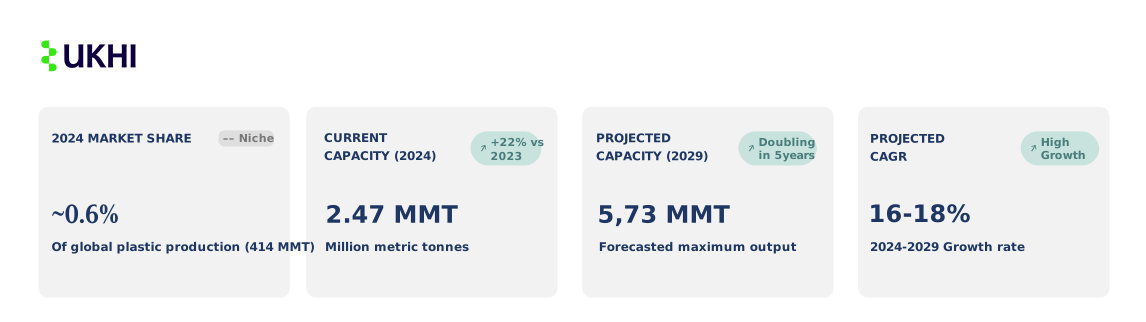
As of 2024, bioplastics account for just about half a percent of the roughly 414 million tonnes of plastics produced annually worldwide.
In other words, for every 200 kilograms of plastic manufactured, only about one kilogram is currently bioplastic.
This figure sets the stage for understanding both the scale and growth potential of this sector.
Historical Context: From 2010 to Today
To appreciate where the industry is heading, it is important to see where it has come from.
In 2010, the total global production capacity for bioplastics stood at only 0.7 million tonnes (MMT).
This number has climbed steadily:
- 2014: 1.66 MMT
- 2019: 2.02 MMT
- 2024: 2.47 MMT
This represents more than a threefold increase in capacity in just over a decade.
While these numbers reflect production capacity (the maximum possible output if every plant runs at full speed), actual production is lower due to factors such as feedstock supply, demand fluctuations, and plant maintenance.
Table: Global Bioplastics Production Capacity, 2010–2024
| Year | Global Bioplastics Capacity (MMT) | % of Global Plastics Output |
|---|---|---|
| 2010 | 0.7 | n/a |
| 2014 | 1.66 | 0.2% |
| 2019 | 2.02 | ~0.5% |
| 2024 | 2.47 | ~0.6% |
This steady growth is especially striking given that global plastics production overall has also been increasing year after year.
For example:
- 2018: ~359 million tonnes
- 2019: ~368 million tonnes
- 2024: >414 million tonnes
So, while bioplastics are growing rapidly in percentage terms, the market is still dominated by fossil-based plastics.
What’s Driving This Growth?
Three main factors are accelerating the rise of bioplastics:
1. Policy and regulation
- Governments are tightening rules around single-use plastics and encouraging sustainable alternatives.
- An example is the EU’s Green Deal and the Single-Use Plastics Directive (SUPD), which bans or restricts 15 common single-use plastic products.
2. Corporate sustainability goals
- Major brands in food and consumer goods are pledging to increase the share of renewables in their packaging.
- Newer biopolymers such as PLA and PHA are increasingly competitive in both price and performance.
3. Technology and materials innovation
- Improved processing, compostability, and strength characteristics are expanding product applications.
The Road Ahead: 2024–2029
Looking forward, industry forecasts anticipate strong, continuous growth.
Based on the latest European Bioplastics and nova-Institute data:
Global bioplastics capacity is expected to rise from 2.47 MMT in 2024 to approximately 5.73 MMT in 2029.
This means the sector more than doubles in five years — a CAGR of roughly 16–18%, far higher than conventional plastics.
Table: Projected Global Bioplastics Capacity, 2023–2029
| Year | Global Bioplastics Capacity (MMT) |
|---|---|
| 2023 | 2.02 |
| 2024 | 2.47 |
| 2025 | 3.19 |
| 2026 | 4.16 |
| 2027 | 4.65 |
| 2028 | 5.35 |
| 2029 | 5.73 |
These figures refer to capacity — the maximum potential output — not guaranteed production or sales. Actual utilization varies based on demand, feedstock availability, regulation, and logistics disruptions.
Note: Where uncertainties exist, we present conservative, consensus-based numbers.
The Bottom Line
The bioplastics market is still a small share of global plastics, but its growth is both significant and accelerating.
Supported by policy, consumer preference, and technology, bioplastics are steadily claiming a larger share of global plastic production.
As we move into regional and material-specific analysis, we will see where growth is concentrated and which bioplastics lead the market.
2.1 China: Bioplastics Market Profile (2025)
China has quickly become one of the world’s most dynamic bioplastics markets. It is propelled by far-reaching government policy, massive investment in production capacity, and a manufacturing sector capable of scaling technologies at record speed.
At the same time, the industry faces clear structural and commercial challenges. Most notable among these are overcapacity and the pressure to shift from policy-driven growth to market-driven maturity.
2.1.1 Current Size and Global Share
China’s bioplastics market is best understood in terms of two factors:
- production capacity (the potential output of all installed plants), and
- actual production (what is manufactured and sold).
In 2023, the country’s bio-based plastics sector stood at around 765,631 tonnes.
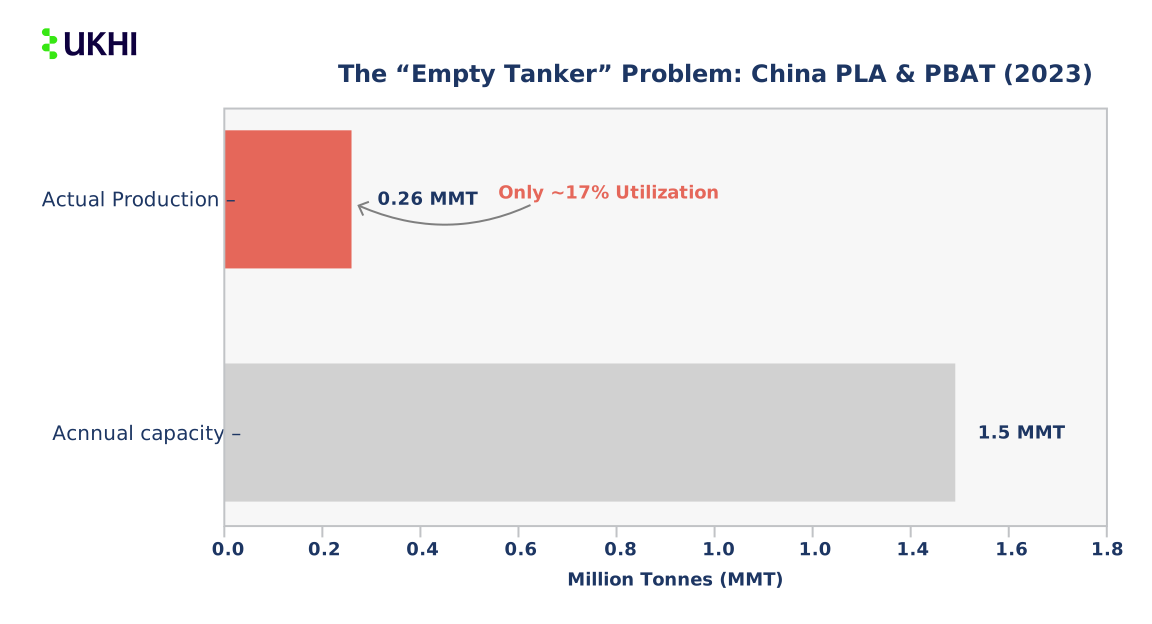
However, when it comes to the two leading biodegradable plastics — PLA (Polylactic Acid) and PBAT (Polybutylene Adipate Terephthalate)—China’s annual production capacity was an impressive 1.5 million tonnes.
Actual production lagged at 260,000 tonnes in 2023.
This pattern is not unique to China, but the scale is.
China now represents approximately 20% of global bioplastics production capacity, which makes it the single largest producer in Asia, and one of the world’s principal hubs.
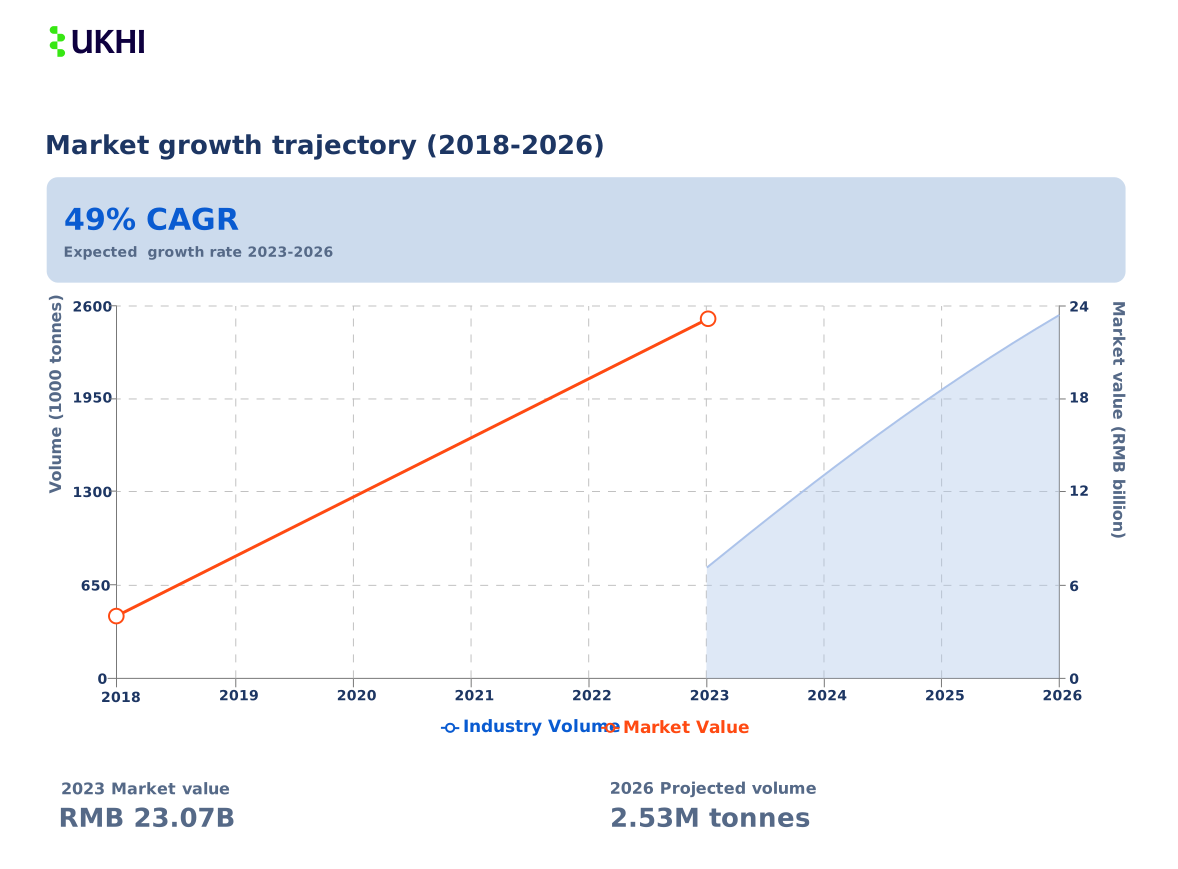
The country’s market value for biodegradable plastics reached about RMB 23.1 billion (US$3.3 billion) in 2023, after having risen steeply from just RMB 4.1 billion in 2018.
Table: China Bioplastics — Capacity, Actual Production, Market Value (2018–2023)
| Year | PLA+PBAT Capacity (t/y) | Actual Production (t/y) | Market Value (RMB bn) |
|---|---|---|---|
| 2018 | — | — | 4.1 |
| 2022 | — | — | 22.4 |
| 2023 | 1,500,000 | 260,000 | 23.1 |
China’s capacity build-out is primarily concentrated in PLA and PBAT.
Notably, PBAT accounts for around 79% of the country’s biodegradable plastics capacity, which is a much higher share than in most other markets.
2.1.2 Growth Rate and Market Trajectory
China’s bioplastics market is growing at a rate rarely seen anywhere else in the world.
Driven by government incentives and a national focus on “dual carbon” goals (peaking emissions before 2030 and reaching carbon neutrality by 2060), both production and demand are rising rapidly.
- Bio-based plastics volume: Projected to grow from 765,631 tonnes in 2023 to 2.53 million tonnes in 2026 — a compound annual growth rate (CAGR) of approximately 49%.
- PLA and PBAT capacity: Expected to increase from 1.5 million tonnes in 2023 to 3.6 million tonnes by 2025 (CAGR ~65%). Despite this, market demand is projected at only 2.5 million tonnes in 2025.
- Market value: Increased almost six-fold from 2018 to 2023.
China’s trade in bioplastics also reflects this dynamism:
● Exports: 136,900 tonnes of biodegradable products in 2021 (+28% YoY)
● Imports: 8,500 tonnes in 2021 (+65% YoY)
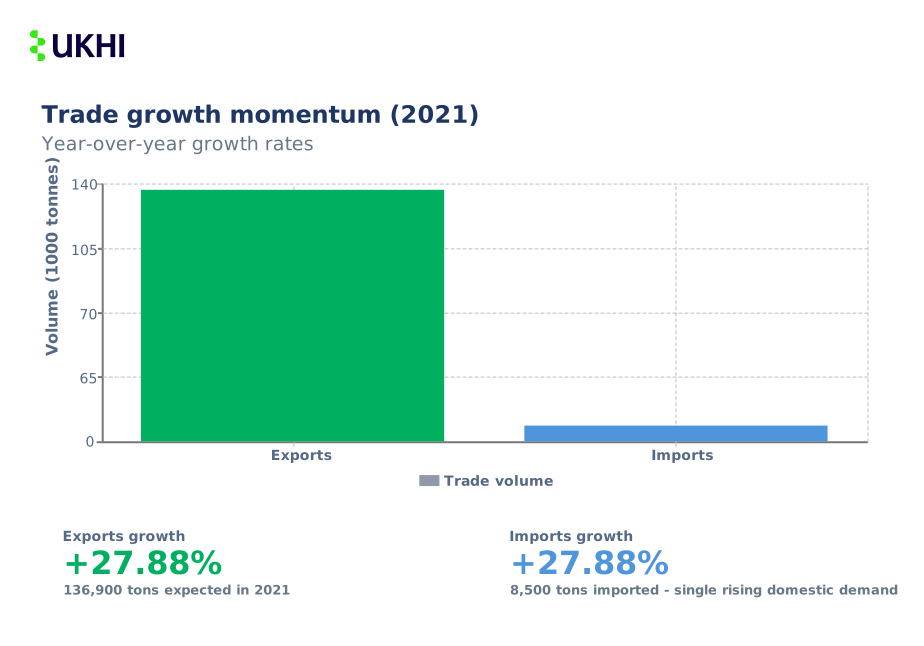
While these growth rates demonstrate confidence in the sector, actual market absorption lags behind installed capacity. As a result, China is expected to remain in a state of overcapacity for the next few years, with price competition intensifying.
2.1.3 Market Evolution: History and Policy Context
While China’s plastics policy history dates back over a decade, the bioplastics industry’s true “take-off” began in 2020:
- 2008: China’s first plastics policy targeting ultra-thin bags and free distribution laid early groundwork.
- 2019: Biodegradable plastics sector remained relatively niche.
- 2020: The game changed:
- January: National plan to phase out single-use plastics by 2025.
- July: Upgraded prohibitions on non-biodegradable plastics; multiple cities issued detailed implementation guidelines.
- Investment surge: Strong government incentives and clear targets led to rapid growth in private equity investment and plant construction.
- 2021: The 14th Five-Year Plan placed bio-based materials at the core of China’s “bioeconomy,” aligned with national climate and security strategies.
From 2020 onward, this framework triggered capacity investments, new companies, and R&D growth — but utilisation still lags capacity and downstream systems are catching up.
2.1.4 Most Common Bioplastics and Sectoral Highlights
PLA and PBAT are the workhorses of the Chinese bioplastics industry.
- PBAT:
- Comprises nearly 80% of total biodegradable capacity.
- Used in flexible packaging such as supermarket bags, food wraps, and compostable mailers.
- Gained rapid market share as local governments enforced bans on single-use non-degradable plastics.
- PLA:
- Rapidly growing capacity for both domestic use and export.
- Used in rigid packaging, disposable cutlery, and food service.
- Also applied in 3D printing and specialty segments.
- PHA:
- China is at the forefront of industrialising PHA, though current volumes are smaller than PLA and PBAT.
- Universities and spin-offs (e.g., PhaBuilder) are advancing bacterial screening and ML-guided fermentation.
Sector highlights: Most demand is from packaging and food service; e-commerce and city waste systems increasingly integrate bioplastics.
2.1.5 Unique Trends, Examples, and Challenges
Overcapacity and Price Competition
Plants are underutilized: in 2023, only 260,000 tonnes of PLA + PBAT were produced from 1.5 MMT of capacity. As capacity reaches 3.6 MMT by 2025, price pressure will intensify.
Innovation in Biotechnology
Companies such as PhaBuilder use AI and high-throughput screening to accelerate PHA development; alternative feedstock R&D is expanding.
Policy vs. Market Readiness
- Policies are strong on supply-side incentives.
- Collection, certification, labeling, and composting lag behind.
- PLA will reach full potential only as downstream systems mature.
Feedstock and Sustainability
Food-crop reliance poses risk; researchers are shifting toward residues, wood, and municipal organics.
Trade & Global Presence
Exports of biodegradable plastics are rising; imports are also growing, signaling unmet demand.
At a Glance: China (2023–2025)
- Market size (bio-based): 765,631 tonnes (2023)
- PLA + PBAT capacity: 1.5 MMT (2023) → 3.6 MMT (2025)
- Actual production: 260,000 tonnes (2023)
- Market value: RMB 23.1 billion (2023)
- PBAT capacity share: ~79%
- Projected industry growth: 49% CAGR (2023–2026)
- Key drivers: policy support, dual-carbon goals, rapid industrialisation
- Key challenges: overcapacity, price pressure, infrastructure lag, feedstock constraints
Conclusion and Outlook
China’s bioplastics sector shows what strong policy can achieve — but also the risks of moving faster than market absorption.
The coming years will test whether policy-led growth can mature into sustainable, market-driven expansion.
2.2 India: Bioplastics Market Profile (2025)
India’s bioplastics market is a story of growth, constraint, and immense untapped opportunity.
As the world’s largest sugar producer and a leader in agricultural output, India has the raw material to power a robust bio-economy.
Yet, despite strong policy momentum and surging demand, the domestic bioplastics sector remains in its early stages. It is import-dependent, facing cost challenges, but moving rapidly toward maturity.
Below, we provide an assessment of India’s bioplastics sector in five essential sections.
2.2.1 Current Size and Global Share
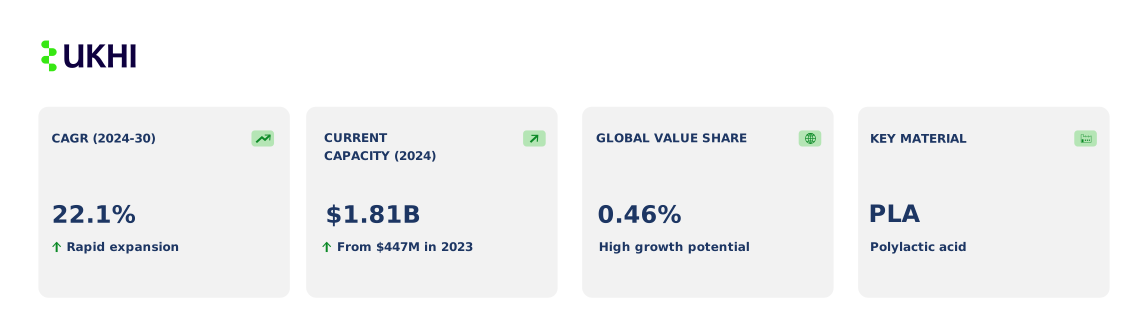
India’s bioplastics market size was valued at US$447.3 million in 2023, which is up from US$308.9 million in 2020.
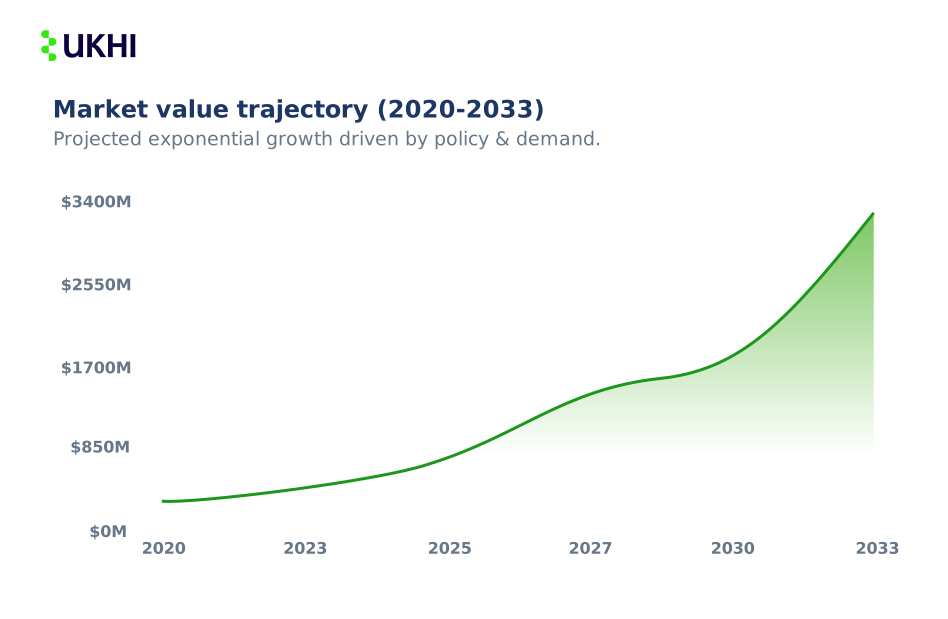
By 2030, the sector is projected to reach nearly US$1.81 billion, according to market research forecasts.
Yet, in the context of global bioplastics, which is estimated at about US$96.6 billion in 2023, India’s market constitutes just 0.46% of global value.
In terms of production capacity, India remains at a nascent stage:
Domestic manufacturing
- The country has no large-scale, commercial bioplastics plants in operation as of 2024.
- A single Polylactic Acid (PLA) plant with 75,000 tonnes per year capacity is under development.
- By comparison, Thailand operates PLA plants at about 95,000 tonnes per year, and the USA at about 150,000 tonnes per year.
Import dependence
- India is a net importer of bioplastics, particularly PLA, PBAT, and related blends.
- In FY 2022–23, India imported approximately US$1.5 billion worth of bioplastics.
- Major import sources include:
- Thailand – about US$481 million
- China – about US$462 million
- Korea – about US$386 million
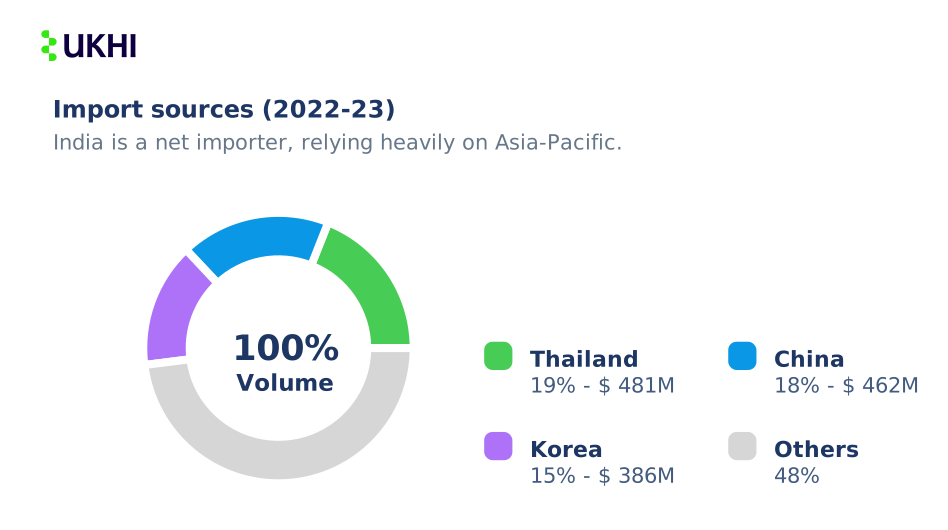
For context, global bioplastics production is roughly 1% of total annual plastics output, with India contributing only a minute fraction. Despite this, the market’s growth momentum is clear and accelerating.
2.2.2 Growth Rate and Market Trajectory
India’s bioplastics market is among the fastest-growing globally.
- Compound Annual Growth Rate (CAGR):
- 2020–2027: 24.36%
- 2024–2030 (forecast): 22.1%
- Market trajectory:
- 2020: US$308.9 million
- 2023: US$447.3 million
- 2027: US$1.42 billion (projected)
- 2030: US$1.81 billion (projected)
- 2033: US$3.29 billion (projected, if current trends persist)
What’s driving this growth?
- Policy action: The 2019 national commitment to phase out Single-Use Plastics (SUPs) by 2022, along with the Plastic Waste Management Rules (2021), created strong market pull for alternatives.
- Corporate and consumer demand: Environmental awareness and sustainable packaging demand have surged, especially in FMCG, retail, and food service.
- Biomass abundance: India’s position as the world’s top sugar producer (>34 million tonnes/year) offers strong feedstock availability for PLA and other biopolymers.
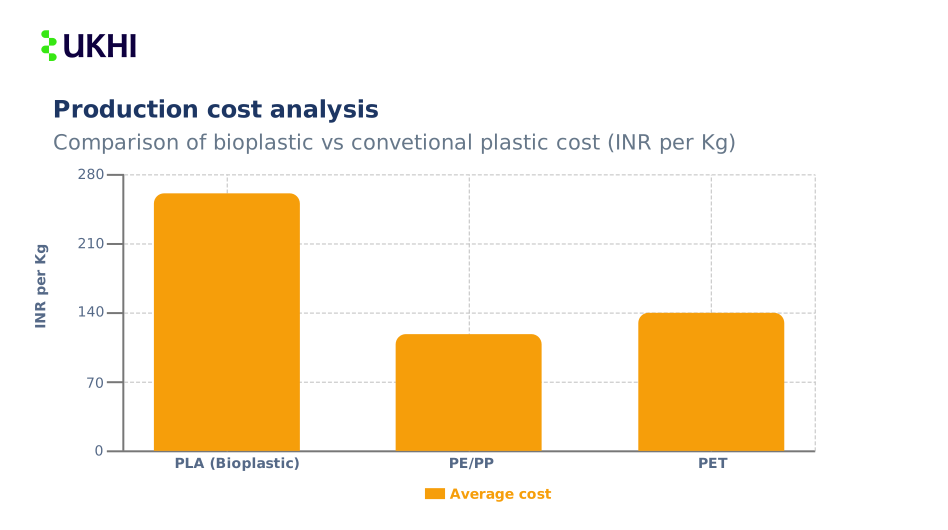
Despite these advantages, production costs remain high:
- PLA costs in India are INR 250–280/kg
- Polyethylene (PE) or polypropylene (PP): ~INR 120/kg
- PET: ~INR 140/kg
2.2.3 Market Evolution: History and Policy Context
Specialized machinery and technical know-how are in short supply, which is slowing the growth of domestic capacity.
Early foundations (pre-2010)
India’s first policy focus on biomaterials and bioplastics appeared in the 2007 National Biotechnology Development Strategy. This phase was marked by recognition and research activity, but very limited market adoption.
2010–2018
Research output expanded, with universities and industry focusing on polymer science, biodegradable composites, and bio-based materials. Domestic demand, however, remained modest and scattered.
2019–2024: The policy-driven take-off
Real momentum began in 2019 with the decision to phase out identified single-use plastics by 2022. The Plastic Waste Management (Amendment) Rules 2021 introduced strict deadlines, and the SUP ban from 1 July 2022 generated strong demand for compostable alternatives in packaging, retail, and food services.
Recent policy initiatives
- BioE3 policy (2024): Biopolymers identified as a strategic sector for sustainable growth.
- Union Budget 2024: Support for bio-manufacturing and bio-foundry, particularly biodegradable polymers and bioplastics.
Real-world impact
- Retail chains, food delivery platforms, and temple trusts have shifted to certified compostable packaging and cutlery.
- Startups and established firms are increasingly working to bridge supply, technology, and cost gaps.
2.2.4 Most Common Bioplastics and Sectoral Highlights
- Polylactic Acid (PLA): The most visible and in-demand bioplastic; imports have increased sharply and a dedicated domestic PLA facility is under development.
- Other key biopolymers:
- PBAT: Flexible and compostable; commonly blended with PLA for films and bags.
- PHA/PHB: Emerging through R&D and pilot projects (e.g., IIT Guwahati’s SusPol Centre).
- Compostable blends: Used for carry bags, service ware, and flexible packaging tailored to Indian waste systems.
Sectoral focus
Most significant activity is in compostable packaging such as carry bags, food service ware, and films for fresh produce. Healthcare and agri-tech are rapidly growing application areas.
2.2.5 Unique Trends, Real-World Examples, and Challenges
Circular innovation
- Dharaksha Ecosolutions converts stubble waste into mycelium-based packaging (decomposes in ~60 days).
- Ricron Panels recycles multilayer plastics into structural panels and sheets.
- DRDO’s biodegradable cutlery deployed at religious sites demonstrates indigenous bioplastic innovation.
Trade and supply chain pressure
Import dependence is high; the bioplastics trade deficit increased from US$654 million (2019–20) to more than US$1.5 billion (2023–24). Key trading partners include Thailand, China, and Korea.
Cost and infrastructure
Bioplastics remain ~twice as expensive as fossil plastics. Specialized processing machinery is limited, though investment and policy support are gradually narrowing the gap.
Sustainability potential
India’s biomass resources and innovation ecosystem could transform the country from net importer to regional bioplastics leader by 2030 if policy and investment momentum continue.
Conclusion and Outlook
India’s bioplastics market is small but expanding rapidly. The next five years will depend on the speed of capacity scale-up, clarity and enforcement of standards, and innovation in cost-competitive biopolymers.
For business and policymakers
The sector is strategically important for both sustainability and industrial development, provided scale, cost, and policy support align effectively.
2.3 Australia: Bioplastics Market Profile (2025)
Australia is widely regarded as a sustainability test-bed—quick to evaluate and debate, cautious to invest, and focused on local applicability.
The market is modest in size but characterised by steady progress, innovation clusters, and pragmatic policy approaches.
2.3.1 Current Size and Global Share
Australia/Oceania represents approximately 0.5% of global bioplastics production capacity (2022 estimates), making it a small but strategically interesting market.
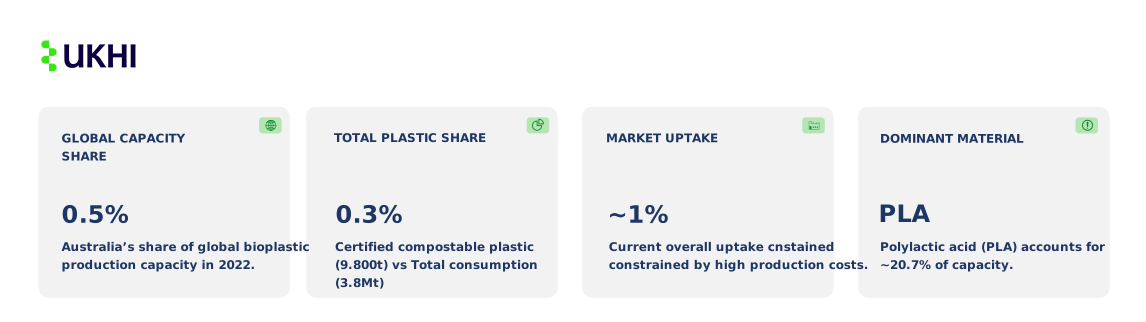
For perspective, Asia (mainly China) leads with 41.4%, and Europe follows with 26.5%.
Australia consumes about 3.8 million tonnes of plastic each year, but only around 9,800 tonnes are certified compostable under government standards — which represents just about 0.3% of national plastic use.
When considering all bioplastics (not only compostables), Australia’s uptake is estimated at around 1% of total plastics, and the country remains a net importer of bioplastics.
Major application areas for bioplastics in Australia
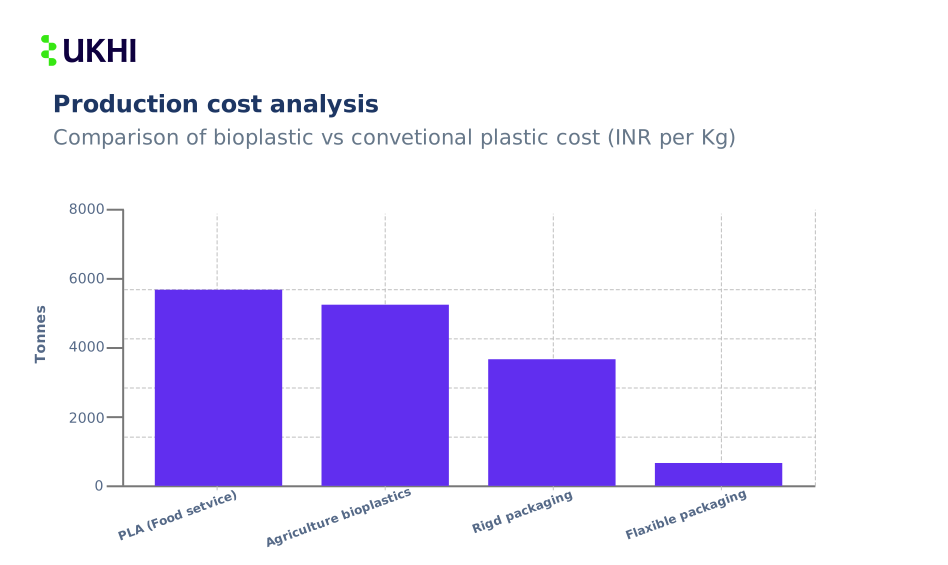
Most locally consumed bioplastics are concentrated in food service ware, packaging, and agriculture:
- PLA imports: approximately 10,000 tonnes per year (mainly sourced from Thailand)
- PLA in waste streams: about 9,600 tonnes per year
- Certified compostable PLA consumption: about 2,312 tonnes (2020–2021)
- PLA in food service ware: about 8,000 tonnes per year (cups, lids, cutlery, coatings)
- Bioplastics for agriculture: ~7,300 tonnes per year (mulch films)
- Bioplastics packaging (2018–19): 6,000 tonnes placed on market
- 5,000 tonnes rigid packaging
- 1,000 tonnes flexible packaging
2.3.2 Growth Rate and Market Trajectory
Unlike the fast-growing bioplastics markets in Asia or Europe, Australia’s domestic bioplastics sector is not yet on a rapid growth path, but the groundwork is being laid for future expansion.
There is no clearly published annual growth rate or CAGR for Australia’s bioplastics market because the base is small, data is fragmented, and imports dominate overall supply.
However, the global context helps frame expectations:
- Global bioplastics CAGR: around 4% in capacity, with global production capacity expected to increase by about 15% between 2019 and 2024.
- Europe annual growth rate: approximately 10%, driven by policy support and demand for sustainable products.
- Australian uptake: roughly 1% of total plastic consumption, concentrated in targeted, policy-driven sectors.
Domestic manufacturing remains limited because high production costs make local output uncompetitive against imports.
As a result, market growth in Australia closely tracks:
- government and council procurement policies
- National Packaging Targets (100% reusable, recyclable, or compostable packaging by 2025)
- the rollout of FOGO (Food Organics and Garden Organics) programs, which create demand for compostable liners and service ware
2.3.3 Market Evolution: History and Policy Context
Australia’s bioplastics market has evolved more through policy initiatives than through domestic manufacturing or exports.
- 2006: Australasian Bioplastics Association (ABA) formed; helps establish standards such as AS 4736 (industrial composting) and AS 5810 (home composting).
- 2018 onward: states and territories begin phasing out single-use plastics, leading to a complex and varied regulatory environment.
- 2020: National Plastics Plan introduced to reduce plastic pollution and promote compostable alternatives to hard-to-recycle plastics.
- 2020–2021: about 2,312 tonnes of certified compostable PLA used nationally.
- 2020: National Packaging Targets updated to promote reusable, recyclable, or compostable packaging by 2025.
- 2023: ACCC issues draft guidance on environmental claims to address greenwashing.
These policy measures are creating clearer market signals for compostable and bio-based products, although differing state rules still cause confusion for businesses and consumers.
2.3.4 Most Common Bioplastics and Sectoral Highlights
The Australian bioplastics market is dominated by PLA (Polylactic Acid). It is bio-based and compostable, and is used mainly in food service ware such as cups, lids, cutlery, and coatings. Despite being compostable, most PLA is still landfilled due to inadequate sorting and limited composting capacity; South Australia is a notable exception with better PLA composting infrastructure.
Other notable polymers include:
- Starch-based blends: Often combined with PLA or PBAT for compostable bags, films, and packaging; account for ~18% globally and are growing in Australia.
- PBAT: Used for agricultural mulch films and compostable FOGO liners; degrades in soil under suitable conditions.
- Bio-PE: Bio-based but non-biodegradable; recyclable along with conventional PE but available only via imports.
Sectoral highlights
- Food service and events: PLA and starch-blend compostables widely used where procurement policy allows.
- FOGO programs: Compostable bin liners made from PBAT or starch blends support food and garden organics collection.
- Agriculture: PBAT mulch films designed to break down in soil reduce plastic residues on farms.
2.3.5 Unique Trends, Real-World Examples, and Challenges
Rise of PHA and algal bioplastics
- Australian startups and researchers are advancing PHA, which degrades in soil, freshwater, and marine environments.
- Startups such as Uluu are developing algae- and seaweed-based bioplastics that avoid competition with food crops.
- The UTS Climate Change Cluster (C3) has developed algae-based film prototypes, including carrageenan–glycerol blends.
FOGO integration
- Expansion of FOGO programs represents a major opportunity for certified compostable products.
- Councils using AS 4736–certified liners report reduced contamination and smoother collection operations.
- National estimates suggest that approximately 950 million compostable liners are used annually.
Addressing “niche leaks”
- Bioplastics are gaining ground in agriculture and horticulture through degradable mulch films and crop covers.
- Biomedical use is expanding through resorbable implants and drug-delivery applications.
End-of-life reality check
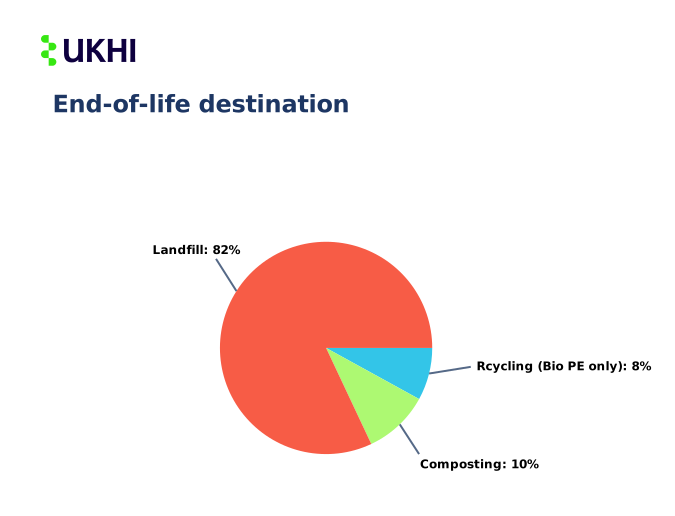
Despite strong potential, most bioplastics in Australia still end up in landfill due to limited industrial composting capacity, collection challenges, and low volumes that hinder economic sorting. Bio-PE can be recycled only when waste streams are kept very clean.
Cost and Local Manufacturing
Australia’s high manufacturing costs mean domestic bioplastics production is negligible. The price gap with fossil plastics remains wide, so most bioplastics will continue to be imported until incentives, technology, or economies of scale change the equation.
Conclusion
Australia’s bioplastics journey is steady and pragmatic, with innovation concentrated in specific regions and sectors. Supportive policies, pioneering startups, and council-led composting trials position the market for gradual growth. However, until cost barriers, infrastructure gaps, and policy complexity are addressed, the sector will likely remain niche in scale.
2.4 Germany: Bioplastics Market Profile (2025)
As Europe’s industrial powerhouse, Germany is setting the pace for the continent’s transition from fossil plastics to bio-based, biodegradable, and circular polymer solutions.
2.4.1 Current Size and Global Share
Germany is Europe’s largest producer of bioplastics. In 2021, the German bioplastics market recorded an estimated volume of about 216,800 tonnes, representing more than 40% of Europe’s bio-based plastics production. This places Germany among the world’s top five producers, alongside China, the United States, Brazil, and Canada.
- Market value (2021): estimated between US$870 million and US$1.08 billion, reflecting the presence of both commodity and high-value specialty segments.
- Market share: Europe produced around 54 million tonnes of plastics in 2024; bioplastics remain a minority by weight, but Germany leads all European countries in both volume and value of bioplastics.
- Production context: although bioplastics remain below 1% of global plastics output by weight, Germany’s domestic production makes it the single largest bioplastics market within the EU.

Table: Germany – Bioplastics Market, 2021
| Metric | Value / Estimate | Notes |
|---|---|---|
| Market volume | 216,800 tonnes | 2021 |
| Market value | $870m – $1.08bn | 2021 |
| EU production share | >40% | By volume, bio-based plastics |
| Global producer rank | Top 5 | With China, US, Brazil, Canada |
2.4.2 Growth Rate and Market Trajectory
Germany’s bioplastics market has shown impressive growth over the last decade, with Compound Annual Growth Rates (CAGR) exceeding the broader plastics sector.
CAGR (2017–2021)
- Value: 6.9% – 21% (depending on calculation method)
- Volume: 1.8% – 16%
2021–2030 projection
- The market is expected to sustain growth of over 10% CAGR through the decade.
- Growth is driven by EU circular economy targets, strong German policy support, and a robust research and innovation ecosystem.
Context
Overall German plastics demand is flat or only slowly increasing, meaning bioplastics are steadily gaining market share—especially in packaging, food service, and regulated sectors.
Investment
Germany spends nearly EUR 3 billion annually on R&D in sustainable materials, energy-efficient processes, and circular solutions, including bioplastics and advanced recycling.
2.4.3 Market Evolution: History and Policy Context
Germany’s bioplastics sector is built on decades of scientific groundwork, manufacturing capability, and supportive policy.
- 1990s – early 2000s: Early production capacity established; R&D focused on compatibility of bio-polymers with existing processing (extrusion, injection molding).
- 2007–2010: Government research programs (including Fraunhofer institutes) formalised market potential and led to strategic investments.
- 2010s: Industrial clusters and chemical parks expanded; EU policies on packaging and waste increased recycled and renewable content targets.
- 2020s: Germany leads EU Green Deal and Circular Economy implementation, aiming for all plastic packaging to be recyclable or compostable by 2030.
Germany now operates more than twenty specialized polymer-focused chemical parks, hosts Europe’s strongest plastics innovation clusters, and is the EU’s leading destination for investment in bioplastics and advanced recycling.
2.4.4 Most Common Bioplastics and Sectoral Highlights
Germany’s market is characterized by diverse material types and applications where bioplastics provide clear environmental or functional advantages.
Biodegradable and compostable plastics
Driven by EU directives and German national law, these dominate innovation in packaging, especially for single-use food containers, films, and compostable bags.
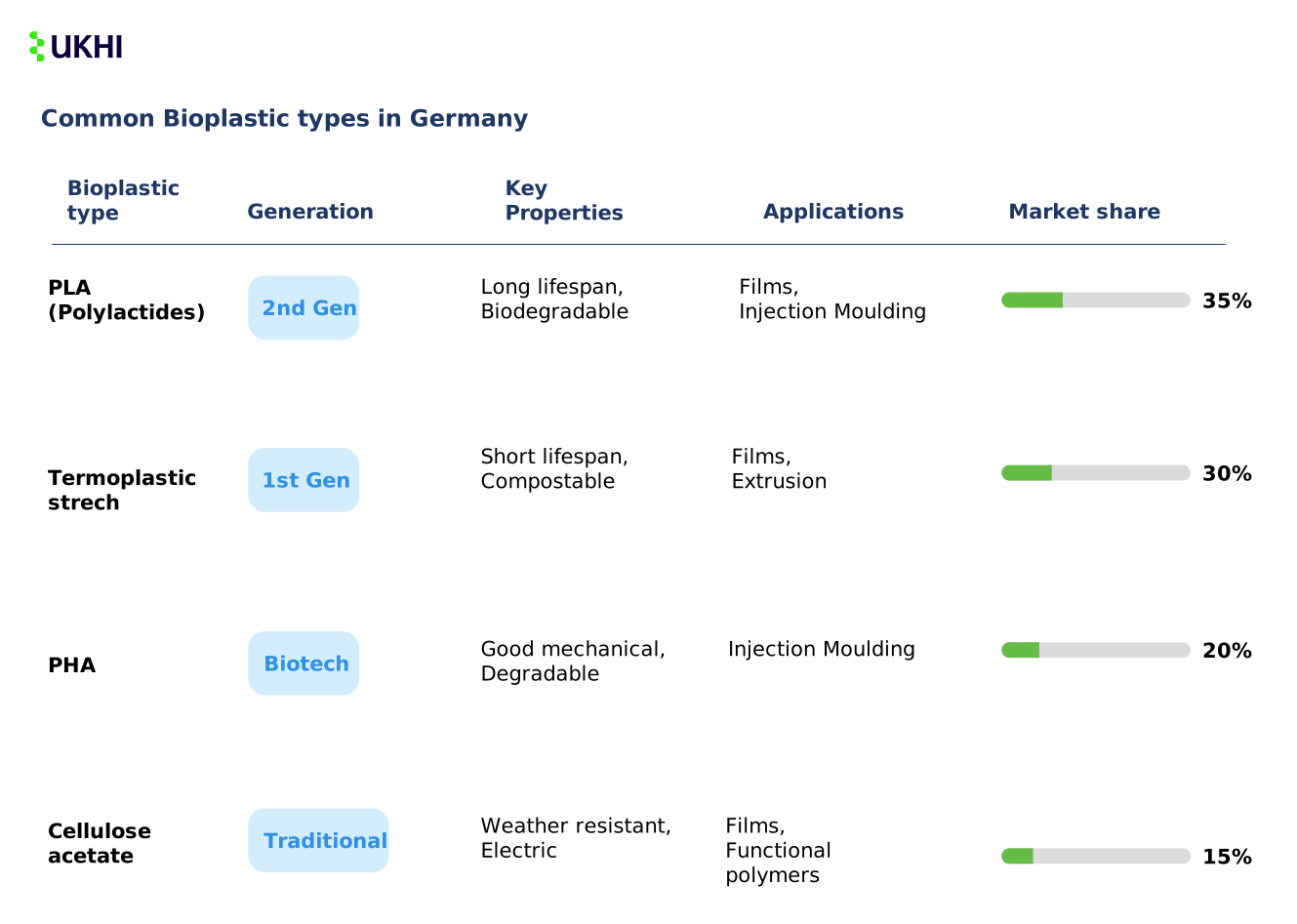
Material breakdown
- PLA (Polylactides): Second-generation, partially compostable; used in films and injection molding.
- Thermoplastic Starch (TPS): Fully biodegradable; used in films and some molded products, often blended for performance.
- PHA (Polyhydroxyalkanoates): Fermentation-based; used in clear films, packaging, and specialty molded products.
- Cellulose acetate: Durable specialty plastic for films and frames; not always compostable.
Applications
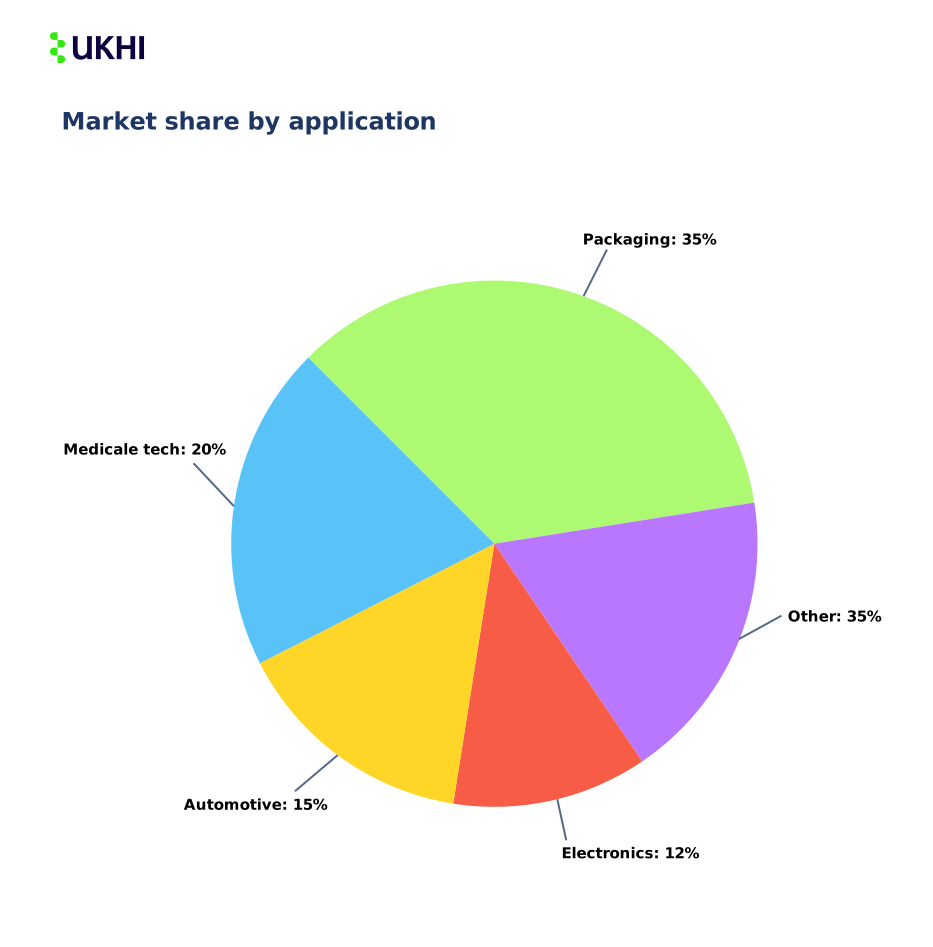
- Packaging: Around 35% of total plastics use in Germany is in packaging, making it the single largest segment for bioplastics adoption.
- Medical technology: Bioplastics are preferred in certain medical products due to biodegradability and functional properties such as antistatic and antimicrobial behaviour, especially in disposables and specialized components.
- Electronics: German research and development has led to functional bioplastics for printed electronics, including polymer solar cells and OLED applications.
- Automotive: Plastics account for up to 15% of the weight of new vehicles; bioplastics are increasingly used in interiors, trims, and specialty components in premium and eco-focused models.
2.4.5 Unique Trends, Real-World Examples, and Challenges
Radical transformation and the circular economy
Germany’s “Plastics Strategy 2030” and nearly EUR 3 billion per year in sustainability spending are supporting an industry-wide transition toward circular systems.
- AI-driven smart recycling: projects such as KISS use artificial intelligence to identify, classify, and route post-consumer plastics for optimal reuse.
- Material traceability platforms: digital systems track bioplastic products from origin through recycling, enabling “circular passports” for packaging.
Packaging innovation
German companies lead in multilayer, high-barrier, and active packaging solutions using bioplastics.
- compostable trays and containers
- films with extended shelf life
- compostable “smart” labels integrated with sensors or inks
Medical and specialty technologies
- Southern German firms supply global markets with bioplastic-based surgical tools and temporary implants.
- Antistatic and antimicrobial properties make bioplastics suitable for demanding medical applications.
Automotive and electronics premium shift
- bioplastics are used in dashboards and interior trims of electric and premium vehicles
- biodegradable trim components and panels are gaining adoption
- “green” circuit boards and components are emerging in electronics
Policy-driven demand and scaling challenges
German legislation and the EU Circular Economy Action Plan are stimulating bioplastics investment and procurement. However, several challenges persist:
- raw material competition: sustainable sourcing at scale remains complex
- cost pressure: bioplastics generally remain more expensive than fossil-based plastics
- end-of-life and recycling: routing compostable or recyclable bioplastics to correct waste streams without contaminating existing recycling systems remains difficult
Conclusion
Germany’s bioplastics market is innovative, policy-led, and highly diversified. By combining high-value applications in packaging, technology, and automotive sectors with coordinated public and private investment, Germany has become the regional benchmark for bioplastics growth. Although challenges remain in cost, scale, and end-of-life management, Germany’s leadership is strongly influencing the EU’s future direction in sustainable plastics.
2.5 Italy: Bioplastics Market Profile (2025)
Italy stands out in Europe for having created a functioning bioplastics economy that links policy, product innovation, and municipal infrastructure into a self-reinforcing system. Although bioplastics still account for a small share of Italy’s total plastics market, their growth and real-world impact are substantial.
2.5.1 Current Size and Global Share
Italy’s bioplastics industry is focused primarily on biodegradable and compostable polymers. The country is recognised as a European leader because of its supportive legal framework and strong organic waste collection and composting infrastructure.
- Production: In 2020, Italy produced approximately 111,000 tonnes of biodegradable and compostable polymers.
- Market value: Industry turnover reached about €815 million in 2020 and €1.1 billion in 2021, representing roughly 2% of total plastics industry revenues.
- Industry structure: Around 275 companies are active in the sector, employing roughly 2,900 people as of 2021.
- Market penetration: Bioplastics account for a minority share of the market; in 2016, they represented about 1.5% by weight, while flexible packaging had a higher compostable share of around 4%.
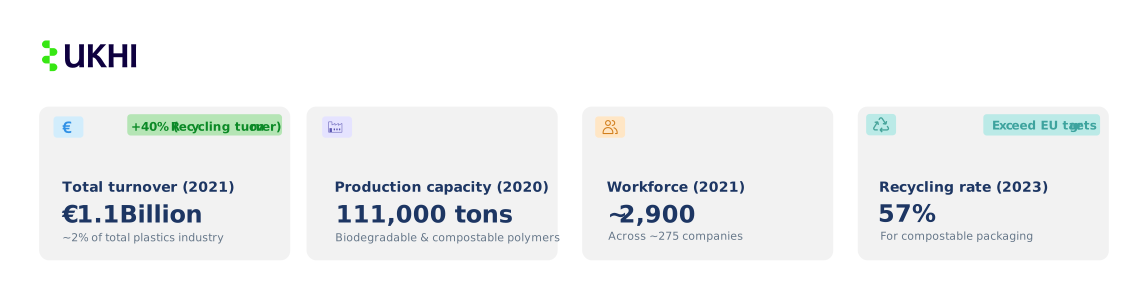
The country’s influence is regional and global. Italy’s bioplastics sector is cited as a model across Europe due to the integration of compostable products with widespread organics recycling. For example, 44,300 tonnes of compostable packaging were recycled in 2023 — a 57% recycling rate that already exceeds both the EU’s 2025 and 2030 targets.
Table: Italy – Bioplastics Market Headline Indicators
| Metric | Value | Year |
|---|---|---|
| Bioplastics production | 111,000 tonnes | 2020 |
| Sector turnover | €1.1 billion | 2021 |
| Companies / Employees | 275 / 2,900 | 2021 |
| Compostable packaging recycled | 44,300 tonnes | 2023 |
| Recycling rate | 57% | 2023 |
Italy’s model is effective: bioplastics are used where they are most appropriate, collected through established systems, and processed at scale.
2.5.2 Growth Rate and Market Trajectory
Italy’s bioplastics sector is characterised by regulation-driven growth.
Explosive growth periods
- production growth of approximately 180% in 2012 as organics collection expanded
- growth of about 59% between 2013 and 2016 following new carrier bag legislation
- annual growth exceeding 9% in 2020
Sustained increases
- recycling rate for compostable packaging increased from 51.9% in 2021 to 57% in 2023
Packaging penetration
- in 2016, compostable plastics represented about 2% of all packaging
- in flexible packaging, compostable materials accounted for around 4%

Italy’s policy is also efficient at reducing total plastics use, not just substituting materials. Total plastic bag consumption fell nearly 60% from 2010 to 2020—from about 180,000 tonnes to 74,500 tonnes—after bans on conventional bags and mandates on certified compostable ones.
Looking ahead, legislation such as D.L 123/2017 (requirements for ultralight produce bags) is expected to keep demand strong. Long-term scenarios suggest that bio-based plastics could reach up to 14.6% of total plastics consumption by 2030 if current policy momentum continues.
2.5.3 Market Evolution: History and Policy Context
Italy’s bioplastics sector is rooted in food-waste management—a major challenge turned into a powerful innovation driver.
- 1990s: Italy began separate collection of food waste before any other EU country, building the foundation for a large organics infrastructure.
- 2010–2011: Food waste collection rules mandated compostable EN 13432-certified bags; conventional shopping bags were banned and replaced by compostable alternatives.
- 2017–2019: Compostable bag requirements were extended to all shopping bags, including ultralight produce bags.
- 2020s: A fully linked national system now connects shopping bags, food-waste sorting, and composting, with 350+ plants processing ~5 million tonnes of organics annually.
System impact
Consumers commonly reuse compostable shopping bags as food-waste bin liners. This reduces contamination and increases capture rates—demonstrating how designing for a specific waste stream can drive national-scale adoption.
2.5.4 Most Common Bioplastics and Sectoral Highlights
Italy’s bioplastics demand is concentrated in mandated applications, especially bags and packaging linked to organics collection.
- Compostable shopping and produce bags: represented ~73% of bioplastics produced in 2016 (about 50,500 tonnes); historically >90% of market share.
- Organic waste bin liners: manufactured to EN 13432 standards, essential to the municipal organics system.
- Key polymers:
- Mater-Bi (Novamont): flagship starch-based compostable polymer
- PLA & PHA: used in coatings, cups, packaging, and agricultural films
- Hybrid packaging: paper trays/sacks with compostable bioplastic coatings or windows to allow correct recycling or composting.
- Agriculture: biodegradable mulch films designed to break down in soil, replacing conventional plastic films.
Table: Typical Italian Bioplastics Applications
| Product Type | Main Use | Certification |
|---|---|---|
| Shopping bags | Groceries, produce | EN 13432 |
| Bin liners | Food waste | EN 13432 |
| Mulch films | Agriculture | EN 17033 |
| Foodservice ware | Packaging, trays | EN 13432 |
2.5.5 Unique Trends, Real-World Examples, and Challenges
Systemic “dual-use” design
Italy’s model uniquely uses the same compostable shopping bag twice—first as a carrier and then as a food-waste bin liner—cutting waste and simplifying behaviour.
Paper / bioplastic hybrids
Rapid growth exists in paper trays with Mater-Bi or PLA coatings and paper sacks with compostable windows, enabling appropriate recycling or composting paths.
Bio-content and feedstock innovation
- Minimum renewable content requirements raised from 40% (2018) to 60% (2021).
- Projects such as Novamont–Melinda develop polymers from apple waste, reducing reliance on food crops.
Agricultural impact
Biodegradable mulch films degrade directly in soil, avoiding costly recovery and reducing pollution.
Measurable recycling outcomes
- ~80% of compostable plastics are organically recycled.
- Strict enforcement limits fraudulent “look-alike” bags and protects market credibility.
Challenges
- Enforcement: preventing non-compliant bags.
- Cost: compostable plastics remain more expensive but viable via policy and procurement.
- Consumer clarity: ongoing education needed for correct disposal.
Conclusion
Italy’s bioplastics sector shows what alignment between law, infrastructure, and product design can achieve. For countries aiming to scale bioplastics, Italy’s message is clear: build systems for your waste streams, and invest in both end-of-life solutions and public trust.
Next: Upcoming sections examine additional regional leaders and their distinct pathways for building bioplastics markets suited to the 2030s.
2.6 United States: Bioplastics Market Profile (2025)
The United States is a global innovation hub for plastics and materials science, but its bioplastics market—although influential in technology and investment—remains a niche within a very large conventional plastics economy.
2.6.1 Current Size and Global Share
Measuring the size of the US bioplastics market requires triangulating industry reports and production estimates, as there is no single federal definition of “bioplastics” in official statistics.
- Global baseline: bioplastics represent less than 1% of global plastics production.
- US share of global capacity: about 18.9% (≈404,000 tonnes in 2021 from ~2.2 million tonnes globally).
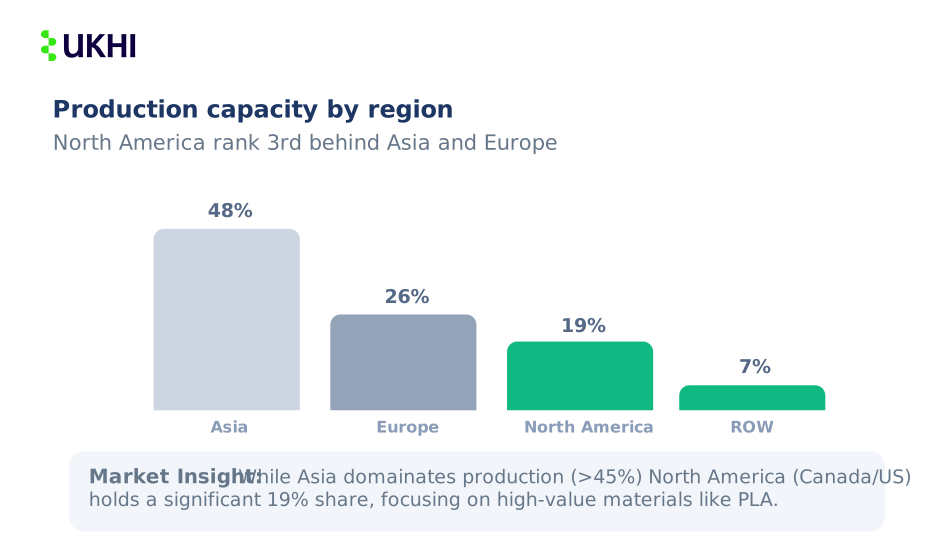
- North American capacity: about 19% of global bioplastics (≈420,000 tonnes in 2022), largely driven by US production.
- US market value: estimated at about US$870.5 million in 2021.
- Relative size: bio-based resin represented only 0.71% of total US resin production in 2022, compared with 125.5 billion pounds of total resin output.
Example breakdown (PLA)
Polylactic acid (PLA), a leading US bioplastic, accounted for about 82,000 tonnes in 2018, with major uses including:
- food-service ware: approx. 27,000 tonnes
- packaging: approx. 18,000 tonnes
- non-durables (apparel, footwear, etc.): approx. 36,000 tonnes
Table: US Bioplastics Market Snapshot, 2021–2022
| Indicator | Estimate |
|---|---|
| US share of global capacity | 18.9% |
| US bioplastics capacity | 404,000 tonnes |
| Market value | US$870.5 million |
| PLA production (2018) | 82,000 tonnes |
| Share of US resin market | 0.71% |
Bottom line
The United States is a major contributor to global bioplastics capacity, but in the context of its large domestic plastics industry, bioplastics still represent a relatively small share.
2.6.2 Growth Rate and Market Trajectory
The US bioplastics sector is growing, but at a pace below what would be required to meet long-term federal substitution and climate goals.
Historic trend
- bioplastics manufacturing declined at an estimated CAGR of about −1.5% over the five years prior to 2023, reflecting pandemic and economic disruption
Near-term growth
- industry revenue is forecast to grow at about 1.9% CAGR through 2028, reaching approximately US$1.2 billion
PLA and PHA market segments (global reference)
- PLA: projected CAGR about 12.2% (2021–2026)
- PHA: projected CAGR about 15.3% (to 2027)
Big-picture policy context
The US government has announced a “Bold Goal” to replace 90% of today’s plastics with bio-based alternatives by 2043. Meeting this ambition would require growth rates exceeding 27% CAGR—far higher than current market expectations, which are typically 10–15% CAGR for most bioplastic segments.

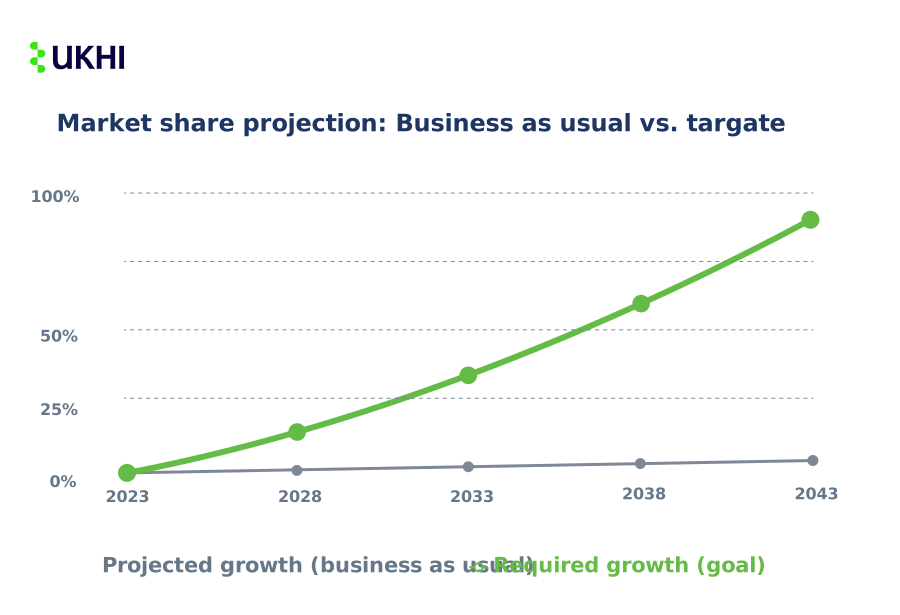
While innovation is robust and new investments are being made, the sector needs substantial acceleration in manufacturing capacity, supply chains, and end-of-life systems to meet its ambitions.
2.6.3 Market Evolution: History and Policy Context
The US bioplastics story is closely linked with national bioeconomy policy and sustained R&D investment.
- Early 2000s: The 2002 Farm Bill created the USDA BioPreferred Program (BPP), mandating federal purchasing of biobased products and introducing certification and labelling.
- Biofuel infrastructure: The Renewable Fuel Standard (2005/2007) supported feedstock supply chains and biorefinery capacity, indirectly boosting biopolymer production, especially PLA.
- 2010s: Expansion of US-based biopolymer firms—NatureWorks (PLA), Danimer Scientific (PHA)—and collaborative innovation in bio-PET.
- Recent acceleration:
- Executive Order 14081 (2022): directed agencies to procure biobased materials, fund R&D, and expand US manufacturing.
- “Bold Goal” (2023): 90% substitution of today’s plastics with biobased alternatives by 2043.
Takeaway
The US has laid policy and R&D foundations, but market signals, infrastructure, and scale-up of capacity must accelerate to unlock mass adoption.
2.6.4 Most Common Bioplastics and Sectoral Highlights
The US bioplastics portfolio combines compostable materials for food service and waste diversion with “drop-in” bio-based resins suited to existing recycling systems.
A. Bio-based and biodegradable (compostables)
- PLA: most common; used in cutlery, cups, clamshells, and coatings; major producer NatureWorks.
- PHA: rapidly expanding; straws, films, and single-use packaging; valued for marine and soil degradability (Danimer Scientific is a key US player).
- Starch blends: widely used in tableware, shopping bags, and liners for organics collection.
B. Bio-based, non-biodegradable (“drop-ins”)
- Bio-PET: beverage bottles, trays, textiles; recyclable with conventional PET.
- Bio-PE / Bio-PP: recyclable and chemically identical to fossil versions; US firms are exploring carbon-negative bio-PP production.
Sectoral highlights
- Food service and events: compostables grow fastest where local rules and organics collection exist (e.g., Seattle mandates).
- Retail packaging: major brands adopt bio-PET and bio-PE to cut carbon while retaining recyclability.
- Automotive: bio-nylons and engineered biopolymers are emerging for lightweight interior and structural parts.
2.6.5 Unique Trends, Examples, and Challenges
Carbon-negative drop-in innovation
Companies such as Braskem are piloting carbon-negative bio-PP using US-grown ethanol—appealing to brands needing emissions cuts without equipment changes.
Compostables for food-waste diversion
Seattle and San Francisco require food vendors to use recyclable/compostable packaging and join organics programs; closed-venue systems (stadiums, campuses) are trialling certified compostables to capture food waste.
Feedstock diversification
- industrial corn and sugar feedstocks
- agricultural residues and used cooking oil
- algae-based next-generation sources
Shift to durable / high-performance applications
Engineered bioplastics are targeting automotive, electronics, and building materials where heat, toughness, and longevity are critical.
Market constraints
- End-of-life systems: composting access is limited; curbside organics collection varies widely.
- Labelling and standards: confusion persists despite BPI, USDA BioPreferred, and How2Compost labels.
- Cost: bioplastics generally command a premium; adoption relies on policy and procurement more than price parity.
Conclusion
The US bioplastics market blends world-class innovation with structural hurdles in scale, economics, and end-of-life systems. Growth is strongest where policy, collection, labelling, and end-use systems align.
2.7 Canada: Bioplastics Market Profile (2025)
Canada’s bioplastics market sits at the intersection of strong policy ambition and practical constraints. While regulation is reshaping single-use plastics, Canada’s bioplastics economy remains closely connected to US supply chains and data sources.
Policy is clearly stimulating demand, but domestic manufacturing capacity and end-of-life infrastructure still need to expand substantially.
2.7.1 Current Size and Global Share
There is no single official federal estimate for Canada’s bioplastics production or consumption. Most available statistics aggregate Canada with the United States, reflecting deep North American market integration.
- North America (US + Canada): about 19% of global bioplastics capacity (~420,000 tonnes out of 2.2 million tonnes worldwide in 2022).
- Canada’s role: Canada is generally a net importer of bioplastic resins and finished products; domestic production is limited to a small number of manufacturers and pilot facilities.
- End-of-life infrastructure: in 2021, total organic-waste processing capacity (excluding Quebec) was about 5.7 million tonnes/year, with ~3.1 million tonnes/year capable of processing food waste.
- Acceptance in practice: only a limited number of composting facilities accept compostable packaging beyond bags and liners—currently the largest constraint on scaling compostable bioplastics.
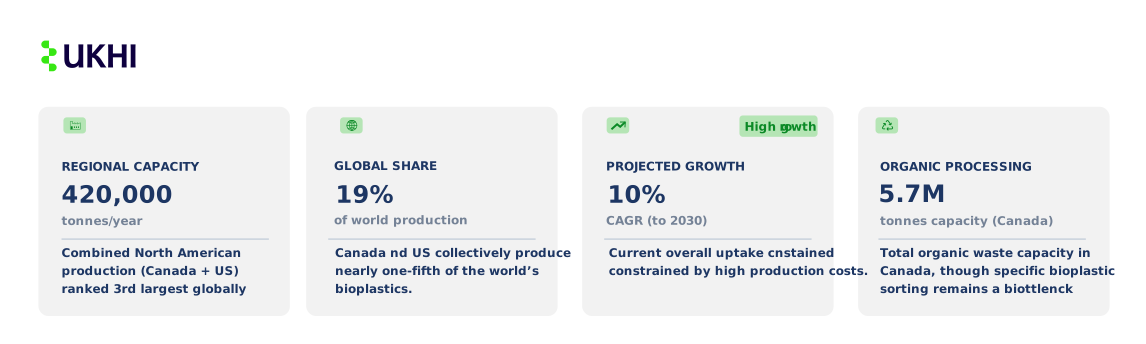
Table: Bioplastics Market Context — Canada (2022)
| Indicator | Canada-specific data? | Best available proxy |
|---|---|---|
| Market size (production/consumption) | No | North America: ~420,000 tonnes (2022) |
| Share of global capacity | No | North America: 19% |
| Organic waste processing | Yes | 5.7 million tonnes/year (excluding Quebec) |
| Compostable packaging accepted | Limited | < 10 sites (estimate) |
Bottom line
Canada’s bioplastics market is largely policy-driven and demand-led. Supply is mostly imported, and real circularity is constrained by uneven access to composting infrastructure across provinces and municipalities.
2.7.2 Growth Rate and Market Trajectory
Because Canada-specific datasets are limited, North American growth trends are used as proxies; these trends broadly align with global bioplastics market momentum.
- CAGR (North America, 2022–2030): projected at approximately 10% in both value and volume.
Regulatory push
- Single-Use Plastics Prohibition Regulations (SUPPR, 2022): banned selected categories of single-use plastics nationwide.
- 2023 onward: new rules advanced for recyclability and compostability labelling, along with work on a federal plastics registry.
Private-sector response
- multinational consumer-goods and food-service brands are piloting compostable and drop-in bioplastics to comply with regulation and meet consumer expectations
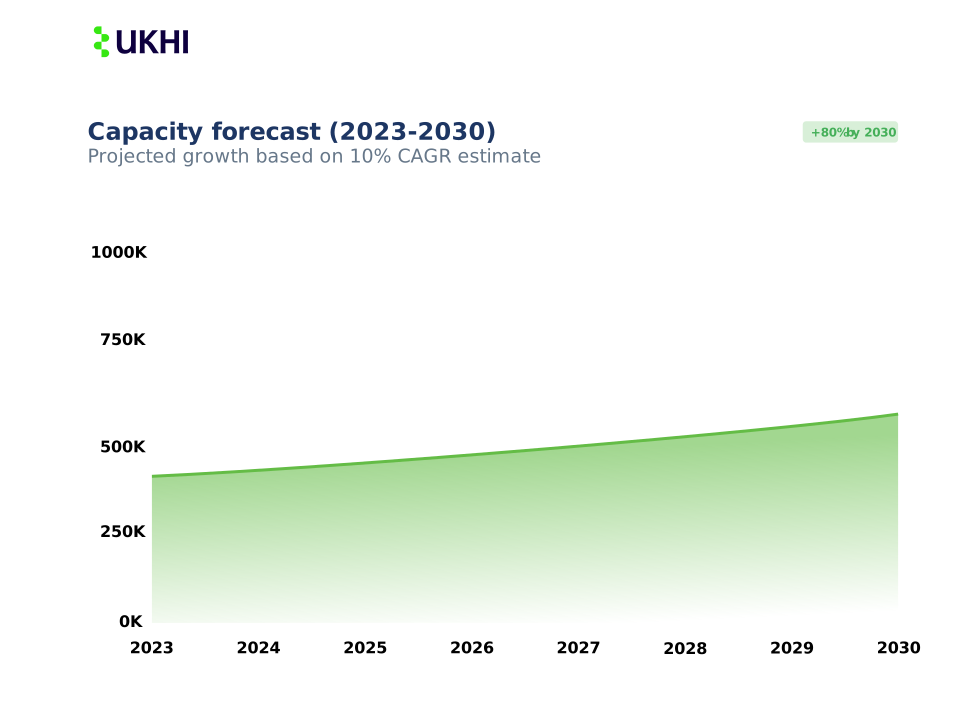
Growth is episodic rather than linear. Spikes occur when brands or municipalities switch product lines to comply with new regulations, after which growth stabilises. The lack of widespread industrial composting for packaging limits the full impact of demand-side expansion.
2.7.3 Market Evolution: History and Policy Context
Canada’s bioplastics “take-off” has been driven more by regulation and consumer demand than by major investments in domestic manufacturing capacity.
- 2010s: bioplastics largely remained pilot projects; production was limited and most materials were imported or licensed from US companies.
- 2022: the Single-Use Plastics Prohibition Regulations (SUPPR) made Canada one of the first countries to ban multiple single-use plastic items (bags, cutlery, stir sticks, certain straws, etc.).
- 2023–2025:
- federal government began drafting labelling standards to clarify which plastics are genuinely recyclable or compostable and to limit greenwashing
- a federal plastics registry is being created to improve data on production, imports, and waste flows
- Organics policy: provinces and cities are expanding green-bin programs and food-waste diversion, although acceptance of compostable packaging remains highly variable.
Overall, the regulatory environment is advancing rapidly, while practical implementation and infrastructure are still catching up.
2.7.4 Most Common Bioplastics and Sectoral Highlights
Because supply chains are integrated across North America, Canada’s bioplastics mix closely mirrors that of the United States.
- PLA (Polylactic Acid): dominant by volume; used in cups, clamshells, food-service ware, and liners; largely supplied by US producers such as NatureWorks.
- Starch blends: widely used for compostable shopping bags and organics-collection liners, particularly where municipal programs require certified compostables.
- PHA (Polyhydroxyalkanoates): emerging segment used in specialty packaging, agricultural films, and some medical applications where biodegradability is essential.
- Bio-PE, Bio-PET, Bio-PA: drop-in bioplastics compatible with existing recycling systems; used in beverage packaging, rigid consumer-packaged-goods containers, and automotive components.
Key sectors
- Packaging and food service: largest application area, particularly where municipal or federal rules favour compostables.
- Automotive: bio-PA (nylon) composites used in vehicle components, supported by Canada’s integration into the North American auto corridor.
- Agriculture: adoption of biodegradable mulch films and twines varies by province and is tied to local environmental policies.
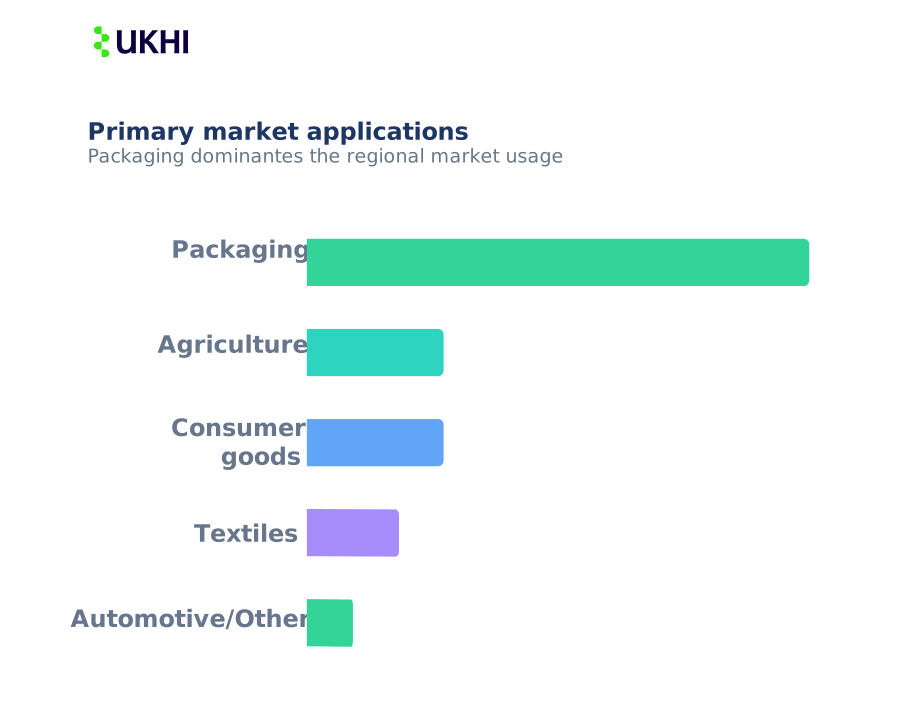
Table: Main Bioplastic Applications in Canada (2025)
| Sector | Dominant Bioplastics | Key Applications |
|---|---|---|
| Packaging | PLA, Bio-PET, Starch | Cups, trays, wraps, beverage bottles |
| Foodservice | PLA, Starch blends | Cutlery, plates, compostable liners |
| Automotive | Bio-PA, Bio-composites | Panels, lightweight components |
| Agriculture | Starch blends, PHA | Mulch films, twine |
2.7.5 Unique Trends, Real-World Examples, and Challenges
Policy outpaces infrastructure
Canada’s federal bans and EPR policies are moving faster than the ability of waste facilities to accept and process compostable plastics. This has led to:
- compostable packaging often being sent to landfill or incineration
- only a minority of composting facilities accepting compostable items beyond bags and liners
- pilot programs in cities such as Vancouver and Toronto testing full food-service compostable systems, though most systems remain fragmented
End-of-life mismatch
Sorting and processing limitations mean contamination risk remains high. Most facilities rely on visual or manual sorting, which cannot reliably distinguish compostable plastics from conventional plastics.
Data gaps and evolving standards
The upcoming federal plastics registry and clearer labelling rules are expected to improve transparency, but currently Canada lacks consistent public data on bioplastics production, imports, and end-of-life outcomes.
What works now
- Closed-loop systems: universities, stadiums, airports, and corporate campuses where waste streams can be carefully controlled successfully deploy certified compostables
- Drop-in bioplastics: bio-PE and bio-PA are gaining traction in packaging and automotive because they run on existing machinery and fit current recycling systems
Looking ahead
Future growth will depend on:
- broader acceptance of compostable plastics at industrial composting facilities
- standardised labelling and clearer public guidance to reduce confusion and contamination
- closer integration of bioplastic supply chains with Canadian manufacturing bases
Conclusion
Canada’s bioplastics market is policy-led, import-dependent, and unevenly circular. Demand is increasing rapidly—especially in packaging and food service—driven by national bans and extended producer responsibility rules. However, infrastructure constraints and inconsistent end-of-life standards continue to limit large-scale impact.
2.8 Brazil: Bioplastics Market Country Profile
Brazil stands out in the global bioplastics landscape for one key reason: it has successfully scaled bio-based plastics using its vast agricultural resources, especially sugarcane. The Brazilian market is anchored in large-scale production of bio-based polyethylene (bio-PE), supported by mature agro-industrial infrastructure and export-oriented value chains. Below, we outline the size, growth trajectory, history, product mix, and distinctive challenges of Brazil’s bioplastics sector.
2.8.1 Current Size and Global Share
Brazil is a genuine heavyweight in global bio-based plastics capacity, even though its market is concentrated around a few high-volume products.
Production scale
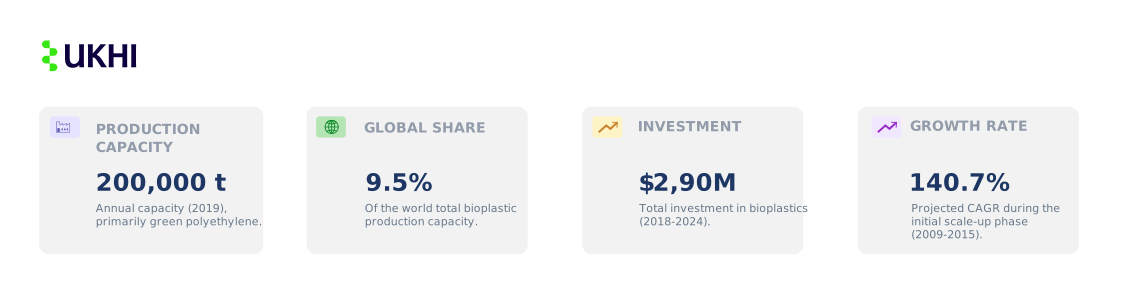
- as of 2019, Brazil produced approximately 200,000 tonnes of bioplastics annually
- the overwhelming majority of this capacity is bio-based polyethylene (bio-PE)
- bio-PE is produced from sugarcane-derived ethanol rather than fossil feedstocks
Global share
- Brazil accounted for roughly 9.5% of total global bioplastics production capacity in 2019
- for comparison, the entire South American region represented about 12% of global capacity
Anchor asset
- Braskem’s I’m green™ bio-PE complex, operational since 2010, is the world’s only industrial-scale facility converting sugarcane ethanol into polyethylene at this magnitude
- the plant supplies both domestic converters and major international brands
Climate impact
- substituting sugarcane-based PE for fossil-based PE is estimated to have avoided about 5.54 million tonnes of CO₂ emissions over 2010–2020
- bio-PE also benefits from Brazil’s highly efficient sugarcane sector, which typically demonstrates strong carbon performance compared with many first-generation biofuels
Bottom line
Brazil is not the most diversified bioplastics market, but it is one of the most significant in scale. Its leadership rests on bio-PE derived from sugarcane ethanol, backed by large agribusiness capacity, established export markets, and measurable climate advantages.
2.8.2 Growth Rate and Market Trajectory
Brazil’s bioplastics sector has not followed a simple linear growth path. Instead, it experienced a rapid initial scale-up driven by a single flagship investment, followed by a period of consolidation and steadier expansion.
Historic growth
- following the launch of Braskem’s bio-PE plant, analysts projected an exceptional Compound Annual Growth Rate (CAGR) of about 140.7% for the period 2009–2015
- this reflected the transition from pilot-scale activities to full commercial production, rather than incremental market growth
- no other country recorded a comparable ramp-up in bioplastics capacity during this phase
Current investment dynamics
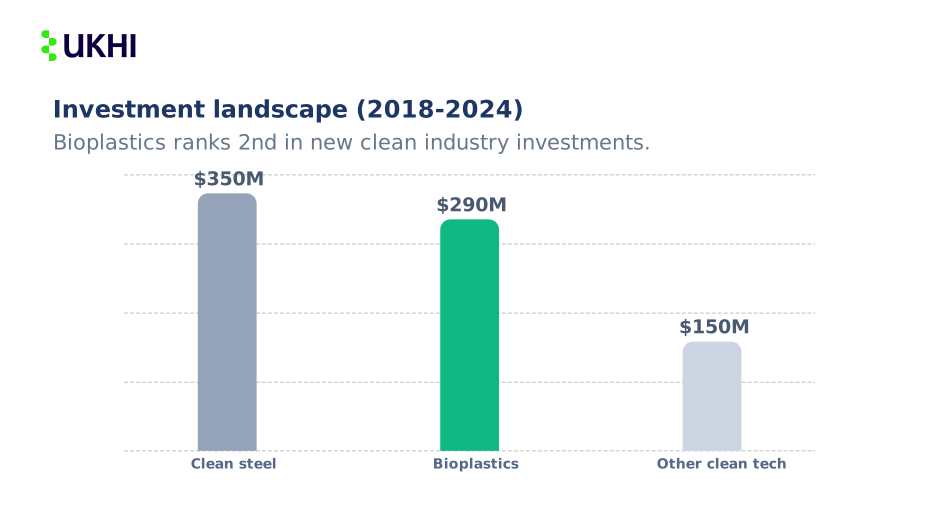
- between 2018 and 2024, bioplastics attracted approximately US$290 million in new investments in Brazil
- this places bioplastics as the second largest clean-industry investment category in the country, after clean steel
- capital is concentrated in bio-PE expansion, logistics, and integration with sugarcane-to-ethanol value chains
Overall trajectory
After an initial surge driven by the commissioning of world-scale facilities, Brazil’s growth has shifted toward steady, investment-led expansion focused on export markets and downstream applications rather than rapid capacity multiplication.
- Trajectory today: Brazil remains primarily a platform producer and exporter, with further expansion tied to:
- growth in global demand for bio-based packaging
- sugarcane feedstock costs and supply
- the economics of ethanol relative to fossil feedstocks
- trends in major export markets
Data gap: recent, consistent public data on Brazil’s exact post-2019 CAGR in bioplastics is limited. What is clear is that any new capacity will most likely follow sugarcane-based pathways, where Brazil has unique competitive advantages.
2.8.3 Market Evolution: History and Policy Context
The evolution of Brazil’s bioplastics sector is best understood through a handful of major milestones.
- Pre-2010: the sector was still in its infancy, valued at about US$4.4 million in 2009
- production was largely pilot-scale
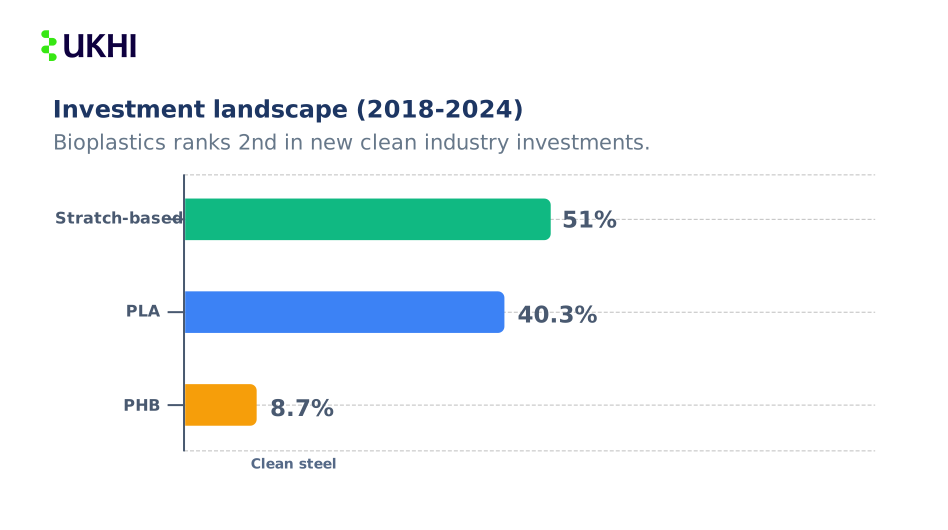
- dominant resins were starch-based plastics (≈51%)
- PLA accounted for ≈40.3%
- PHB represented ≈8.7%
- 2010 take-off: large-scale production of bio-based PE marked the real transformation of the sector, allowing Brazil to leapfrog from pilot projects to world-scale production almost overnight
- Industry coordination: the Brazilian Association of Compostable Biodegradable Polymers (ABICOM) was founded in 2009 to promote standards, support R&D, and address risks of false or exaggerated product claims
- Policy and infrastructure:
- end-of-life management of plastics—particularly compostables—remains underdeveloped
- laws sometimes mandate use of biodegradable/compostable plastics, yet recycling and composting facilities for them are scarce
- misleading claims about “biodegradable” plastics persist in the market
2.8.4 Most Common Bioplastics and Sectoral Highlights
Brazil’s market is shaped by its sugarcane feedstock base and its focus on large, export-oriented technologies.
- Dominant product: Green PE (bio-based, non-biodegradable) branded as I’m green™ by Braskem:
- produced at world scale from sugarcane ethanol
- used mainly in packaging: films, bottles, caps
- drop-in compatible with conventional PE recycling systems
- Legacy and emerging materials:
- PLA: transparent, compostable; typically made from corn globally but has sugarcane potential in Brazil
- Starch-based blends: previously dominant but now smaller in market share
- PHB: biodegradable biopolymer, still niche
- Feedstock advantage: cheap, abundant sugarcane with a mature logistics chain delivers strong cost advantages
- Other innovations:
- pilot-scale potential for bio-based PP and EVA via green ethylene routes
Table: Main Bioplastics Produced in Brazil
| Material | Bio-based | Biodegradable | Main Use | Scale (t/year) | Main Producer |
|---|---|---|---|---|---|
| Green PE (I’m green™) | Yes | No | Packaging | 200,000 | Braskem |
| PLA | Yes | Yes | Packaging | Small | N/A |
| Starch-based blends | Yes | Yes | Bags, films | Small | N/A |
| PHB | Yes | Yes | Niche applications | Small | N/A |
2.8.5 Unique Trends, Real-World Examples, and Challenges
Unique trends
- Monomaterial packaging: entire packs (bottle, body, cap) designed in a single resin—especially PE—to simplify recycling
- Smart packaging: pilots of active/intelligent packs with freshness and time–temperature indicators
- Certification vs. greenwashing: agencies are tightening enforcement due to widespread misleading claims in single-use markets
Key challenges
- Infrastructure gap: few facilities actually process compostables, so many such products end up in landfill
- Cost premium: bio-based plastics remain about 50% more expensive than conventional plastics
- Consumer awareness: low public understanding limits market pull and slows adoption
Brazil’s experience demonstrates that feedstock advantage and drop-in chemistry can deliver global-scale volumes even when recycling and composting systems lag behind.
2.9 Russia: Bioplastics Market Country Profile
Russia’s bioplastics sector remains at an early stage of development. The country currently shows high potential rather than large installed capacity, with growth depending heavily on investment, technology transfer, and supportive policy frameworks.
2.9.1 Current Size and Global Share
The overall scale of Russia’s bioplastics market is modest in global terms.
- as of 2024, total domestic capacity for biodegradable plastics is estimated at no more than 10,000 tonnes per year
- most capacity is in pilot or early-commercial plants, including:
- a new PLA plant supported by the Eurasian Development Bank and BIO PLANETA targeting 10,000 tonnes per year
Perspective and comparison
- historical capacity: by 1999, CJSC Policell reportedly reached 15,000 tonnes/year in biodegradable plastics, though continuity and market impact are poorly documented
- biodegradable packaging demand: Russian market value for biodegradable packaging materials is forecast to reach about US$2 billion by 2028
- global share: even if all currently announced projects materialise, Russia’s share of global bioplastics capacity today remains very small; optimistic policy-driven scenarios suggest 7.5–10% by 2030
2.9.2 Growth Rate and Market Trajectory
Although Russia’s current bioplastics production base is small, growth expectations are comparatively ambitious and largely policy driven.
- Annual growth rate: sector assessments indicate an expected growth rate of about 12% per year, which is significantly higher than growth forecasts for the wider plastics industry in Russia.
- Long-term ambitions: national policy targets envisage increasing the share of bioplastics and other biodegradable materials from roughly 10% to 25% of total polymer consumption.
- Potential scale: achieving these goals could translate into a domestic market volume of approximately 640,000 tonnes per year in the future.
In practice, the realisation of these projections will depend on capital investment, technology access, and the development of end-of-life infrastructure, as well as broader economic conditions.
- Market value: the broader biodegradable packaging market (including paper, plastics, and bagasse) is forecast to reach about US$2 billion by 2028
However, these projections depend on several structural prerequisites:
- successful commissioning and upscaling of pilot facilities to full industrial capacity
- new policy incentives, such as taxes or bans on conventional single-use plastics
- competitive economics, where bio-based alternatives reduce the price gap with fossil-based resins
2.9.3 Market Evolution: History and Policy Context
Bioplastics in Russia have their roots in early industrial and research activities in the 1990s, with real momentum driven by national biotechnology strategies over the past decade.
- Early roots: CJSC Policell produced biodegradable products as early as the mid-1990s, reaching notable capacity by 1999.
- Policy drive: the 2012 State Coordination Program “BIO-2020” prioritised biodegradable polymers to modernise industry, improve environmental performance, and build a bioeconomy targeting 3% of GDP by 2030.
- Strategic priorities: Russia’s biotechnology roadmaps emphasise:
- bio-based plastics for packaging
- biocompatible polymers for medical and pharmaceutical applications
- Regulatory lag: despite policy ambition, strong bans on fossil single-use plastics are largely absent and recycling/composting infrastructure remains underdeveloped.
2.9.4 Most Common Bioplastics and Sectoral Highlights
While biodegradable paper dominates the broader eco-packaging market, Russian bioplastics are characterised by several key material families:
- Cellulose-based plastics: most common biodegradable plastics, used in food packaging and consumer goods.
- PLA (polylactic acid): major growth area with the country’s first PLA facility being piloted; attractive because it is both bio-based and compostable.
- Starch-based bioplastics: derived from domestic agricultural resources for bags and disposable packaging.
- PHAs and related polymers: under active R&D, with niche and medical applications.
Table: Main Bioplastics in Russia (2025)
| Material | Bio-based? | Biodegradable? | Main Uses | Status / Scale |
|---|---|---|---|---|
| Cellulose-based | Yes | Yes | Food packaging | Most common, small scale |
| PLA | Yes | Yes | Packaging, R&D, medical | ≈10,000 t/year pilot plant |
| Starch-based blends | Yes | Yes | Bags, films | Niche, pilot scale |
| PHAs (incl. PHB) | Yes | Yes | Medical materials, R&D | Early R&D, low volume |
2.9.5 Unique Trends, Real-World Examples, and Challenges
Trends and examples
- Medical polymers: emphasis on biocompatible/biodegradable materials for sutures, drug-delivery systems, and implants; most currently imported.
- Use of agro-waste: large agricultural base provides potential feedstocks such as wheat straw and hemp.
- Bio-canisters: Omsk companies have piloted bio-canisters decomposing in natural conditions within ~20 years.
- Eco-design research: universities are exploring mycelium-based packaging and other bio-based alternatives.
Key challenges
- bio-based plastics often cost 30% or more than fossil plastics
- regulatory bans and incentives are limited compared with the EU or China
- investor appetite is constrained by long payback periods
- low overall recycling rates (≈7–20%) and no dedicated compostable-plastics system
Overall, Russia’s bioplastics sector represents an early-stage innovation ecosystem with ambitious policy goals but heavy reliance on investment, regulation, and broader economic developments.
2.10 Israel: Bioplastics Market Profile (2025)
Israel’s bioplastics sector is distinguished by strong investment in R&D, bioconvergence, and circular-economy startups. Commercial volumes are still small, but the innovation pipeline is exceptionally active.
2.10.1 Current Size and Global Share
Hard figures for Israel’s production capacity are not yet publicly available. What is measurable is the direction and magnitude of investment.
- Global context: bioplastics account for about 1% of global plastics; Israel remains in the pilot and innovation phase, contributing more technology than tonnage.
- Public investment:
- National Bioconvergence Program (2022): NIS 435 million (≈US$133m) committed to integrating biology, engineering, and computation, with bioplastics as a core pillar
- Bioplast Consortium: allocated about NIS 25 million to advance biodegradable and bio-based polymers
- R&D portfolio: in 2023–2024, “environment” projects—including bioplastics—accounted for about 12% of bioconvergence R&D funded by the Israel Innovation Authority.
- Industrial activity: focus remains on startups and applied research rather than commodity-scale resin plants; infrastructure such as YDLabs supports fermentation pilots up to ~1,000 L.
Table: Key Indicators — Israel Bioplastics and Bioconvergence (2025)
| Indicator | Value / Context |
|---|---|
| National bioconvergence funding | NIS 435 million (2022) |
| Bioplast Consortium funding | NIS 25 million (2023) |
| Share of R&D – environment projects | ≈12% of projects (2023–2024) |
| Pilot fermentation infrastructure | Up to 1,000 L (YDLabs) |
| Global bioplastics market share | <1% (Israel contributes a small fraction) |
Bottom line
Israel’s measurable presence is in science rather than tonnage. Its primary contribution is a pipeline of ideas, patents, and novel materials rather than commodity-scale polymer output.
2.10.2 Growth Rate and Market Trajectory
There are no robust AGR or CAGR figures for Israel’s bioplastics market because the sector is still emerging. However, strategic investment and R&D activity are accelerating markedly.
- R&D-first sector: growth presently appears in funding flows, patents, university–industry projects, and new startups rather than in production tonnage or revenue.
- Policy and investment:
- short term: the Ministry of Environmental Protection supports investment in bioplastics while Israel simultaneously works to reduce overall plastic consumption
- long term: the national strategy aims to leapfrog commodity resins and develop high-value bio-based materials for packaging, agri-tech, medical, and industrial sectors
- Path to scale: future growth will depend on:
- expanding pilots from hundreds to thousands of litres
- early procurement by government, defence, and large corporations
- clear demonstration of environmental and commercial benefits in pilots
With funding and R&D momentum accelerating, Israel is positioning itself as a testbed for next-generation sustainable plastics.
2.10.3 Market Evolution: History and Policy Context
The environmental rationale for bioplastics in Israel is strong and immediate. Mediterranean marine pollution and microplastics have been an escalating concern for decades.
- Environmental urgency:
- by 2016, about 92% of fish sampled off Israel’s coast contained microplastics, compared with roughly 10% in the 1960s
- Israel’s Mediterranean coastline is among the three largest hotspots for beached plastics in the region
Strategic shift
- 2018: Bioconvergence was identified as a national economic and R&D priority.
- 2022: The National Bioconvergence Program was formally approved, with a strong focus on sustainable materials.
- 2022–2023: Creation of the Bioplast Consortium and new R&D consortia on waste valorization and biomanufacturing.
Circular economy
- Israel’s strategy extends beyond conventional bioplastics and funds projects that convert:
- household waste
- agricultural residues
- macroalgae and seaweed
- Black Soldier Fly (BSF) waste valorization
into new bio-based materials and chemicals.
2.10.4 Most Common Bioplastics and Sectoral Highlights
In Israel, “most common” refers to materials most targeted by R&D and startups rather than highest mass-production volumes.
- Biodegradable polymers
- R&D focuses on PLA, PHA, and starch-based polymers
- emphasis on end-of-life improvements such as compostability and marine degradation
- the Bioplast Consortium is developing materials tailored to local markets and climates
- Novel feedstocks
- Biotic: marine-derived bioplastics from macroalgae
- UBQ: converts mixed household waste into bio-based thermoplastic
- Drop-in bioplastics
- interest in bio-PE, bio-PET, and bio-PA
- focus on recyclable, export-oriented packaging and automotive components
- Medical and construction sectors
- biopolymers for medical devices
- “bio-cement” and biomineralization solutions for the construction sector
Table: Israel’s Bioplastics R&D Focus (2024)
| Material / Approach | Lead Company / Consortium | Application |
|---|---|---|
| Macroalgae-based PLA | Biotic | Packaging, agriculture |
| Waste-to-bioplastic | UBQ | Durable goods |
| BSF waste valorization | BugEra / BSF Consortium | Feed, bioproducts, materials |
| Bio-cement / biomineralization | Starstone | Construction |
2.10.5 Unique Trends, Real-World Examples, and Challenges
Pioneering feedstocks and circularity
- macroalgae-based polymers and waste-derived plastics demonstrate Israel’s focus on:
- resource resilience
- reduced land and water use
- domestic supply-chain security
Systems innovation
- Black Soldier Fly (BSF) projects (BugEra) convert waste into oil, protein, and bioproducts
- Starstone’s bio-cement applies biological pathways to heavy-emissions construction sectors
Infrastructure and market readiness
- pilot fermentation platforms such as YDLabs enable scaling from lab to demo level
- full commercialization will require:
- larger capital investment
- standards and certification
- anchor customers and proven demand
Regulatory ambition and honest limitations
- Israel openly acknowledges risks of greenwashing
- policy emphasizes that reducing overall plastic use remains essential
Conclusion
Israel’s bioplastics economy is science-driven and still forming. Defined more by innovation than current output, its next five years will reveal whether deep-tech approaches can scale into commercially viable, circular bioplastic systems.
2.11 South Africa: Bioplastics Market Country Profile
South Africa’s bioplastics market is emerging. Foundations are being laid through regulation, multinational companies, and public research institutions.
2.11.1 Current Size and Global Share
- domestic bioplastics capacity is currently limited
- industry is fragmented and mostly at pilot or demo scale
- agriculture used about 150,400 tonnes of virgin plastics in 2019 (≈10% of national plastics use)
- as recently as 2016 there was almost no large-scale bioplastics production anywhere in Africa
- plans exist for a bio-PET MEG plant (≈150,000 t/yr) — almost twice the size of the entire South African PET market
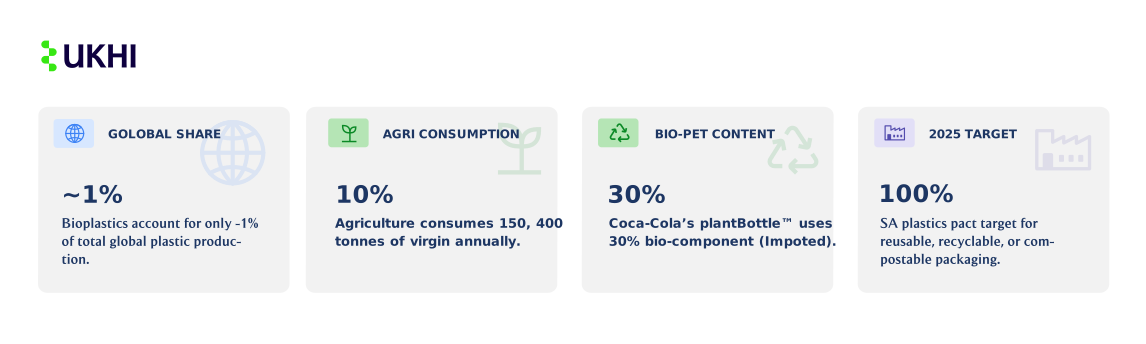
2.11.2 Growth Rate and Market Trajectory
No credible annual growth rate or 5-year CAGR figures exist specifically for South Africa’s bioplastics sector. However, the trajectory can be understood from global and local signals.
- Global context – global bioplastics capacity is increasing from about 2.1 million tonnes in 2019 to roughly 2.4 million tonnes by 2024.
- growth is driven mainly by PLA and PHA
- South Africa is expected to follow these trends on a smaller scale
- Domestic demand is currently small, but signals are strong
- multinationals such as Coca-Cola (PlantBottle™) and retailers such as Woolworths are demanding bioplastic packaging
- the South African Plastics Pact (2020) targets 100% reusable, recyclable, or compostable plastic packaging by 2025
- Early growth will focus on drop-in bioplastics
- bio-PET and bio-PE
- compatible with existing machinery and recycling streams
Growth depends on overcoming key barriers
- higher cost premium over fossil plastics
- reliable access to biomass feedstock (sugarcane, residues)
- clear national standards for compostability and biodegradability
2.11.3 Market Evolution: History and Policy Context
South Africa’s bioplastics sector has grown out of state strategy and public research, with momentum building over the last decade.
- 2013–2014: launch of the Bio-Economy Strategy and the 10-year Waste RDI Roadmap
- 2015–2016: policy and industry workshops highlighted lack of domestic capacity and the need for action
- 2016: reports showed Africa had almost no measurable bioplastics capacity, motivating national initiatives
- 2016–2020:
- Woolworths launched the Green Bottle (milk) based on sugarcane-derived bio-polymers from Brazil
- Coca-Cola rolled out PlantBottle™ in South Africa
- Safripol became the only local bio-PET producer
- CSIR opened the Biorefinery Industry Development Facility (BIDF) in Durban
- South African Plastics Pact (2020) committed industry to circular packaging goals
State-led R&D remains central, while large retailers and FMCG firms are driving real market demand.
2.11.4 Most Common Bioplastics and Sectoral Highlights
South Africa’s commercial bioplastics landscape is shaped by a few leading material streams and flagship applications.
| Material | Bio-based? | Biodegradable? | Main Uses | Local Status |
|---|---|---|---|---|
| Bio-PET (PlantBottle™) | Yes | No | Beverage bottles (e.g., Coca-Cola Valpré) | Safripol produces; bio-component imported |
| Bio-PE / Polyolefins | Yes | No | Milk bottles, films, rigid packaging | Imported resin, local converting |
| PLA | Yes | Yes | Packaging, niche bottles, foodservice ware | Limited; mostly imported |
| Biocomposites | Mixed | Mixed | Automotive and aerospace panels | R&D and pilots (CSIR, Airbus, Bombardier) |
Unique sectoral activity
- bio-PET leads due to beverage and retail demand, despite imported inputs
- Woolworths Green Bottle created strong local proof-of-concept
- PLA remains niche due to higher costs and limited composting infrastructure
- biocomposites for automotive/aerospace are advancing via global partnerships
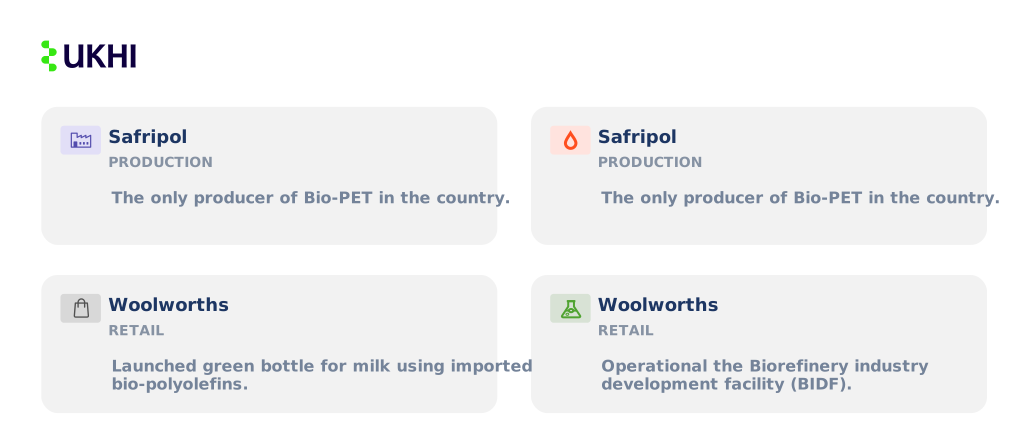
2.11.5 Unique Trends, Examples, and Challenges
Trends and Examples
- Retailer-driven innovation – Woolworths and Coca-Cola are practical pioneers.
- initial focus on “drop-in” bioplastics
- gradual shift toward compostable and recyclable SKUs as standards mature
- Agricultural focus – strong interest in compostable mulch films and ties.
- plastic recovery from farms is difficult
- risk of soil and water pollution is high
- Platform biochemicals – policy and R&D now emphasize feedstock molecules such as:
- ethylene
- butanols
- lactic acid
- succinic acid
which can be converted into multiple downstream materials, including bioplastics.
Challenges
- Cost competitiveness – biomaterials remain more expensive at current scale.
- Feedstock uncertainty – no national system to catalogue or secure agricultural waste streams.
- Lack of compostability standards – imported “biodegradable” products may not degrade in local soil or facilities.
- State-dominated innovation – R&D and commercialization depend heavily on public sector funding, with limited private risk capital.
South Africa’s market is defined by its future potential, with policy frameworks and major retailers leading early adoption.
3. Competitive Landscape: Top Companies & Regional Champions
The bioplastics industry is evolving rapidly. In 2025, it is no longer dominated only by a few chemical giants or small experimental start-ups.
Instead, today’s market is shaped by companies of many types:
- large resin producers integrated into global plastics supply chains
- specialists scaling single families of bioplastics such as PLA or PHA
- innovators focused on high-value applications in medical, automotive, or electronics
Across these companies, three themes are consistent:
- technical commitment to the future of bioplastics
- investment in new capacity, technologies, or feedstocks
- global partnerships across India, Europe, the Americas, and Asia–Pacific
Some companies, such as BASF and Braskem, leverage existing petrochemical logistics to scale “drop-in” bioplastics.
Others, such as NatureWorks, Danimer Scientific, or TIPA, specialise in one category—like PLA or compostable films—but do so at global scale.
Note: In several cases, precise production volumes are not publicly reported. Where verified figures were unavailable, speculative estimates have been avoided.
The profiles below present a clear, practical picture of the companies shaping the global bioplastics industry.
1. NatureWorks LLC

1. NatureWorks LLC
NatureWorks is one of the world’s leading producers of PLA (polylactic acid) biopolymers, supplying its signature Ingeo® materials into packaging, food-service, textiles, and industrial applications. The company is recognized for connecting biotechnology with large-scale manufacturing and for ongoing work to make PLA production less resource-intensive.
- Headquartered in: USA (Minnesota)
- Major markets served: North America, Europe, Japan, Asia–Pacific
- Year founded: 1989
- Annual bioplastics production capacity: ~150,000 tonnes/year (Blair, Nebraska)
- Main bioplastic focus: PLA biopolymers and lactides derived from plant sugars
- Key products: Ingeo® PLA portfolio; Ingeo™ Extend high-performance grades
Notable strengths
- largest dedicated PLA production capacity globally
- active R&D on methane-to-lactic acid pathways to reduce carbon and agricultural footprint
- supports multiple end-of-life options:
- mechanical recycling
- chemical recycling
- industrial composting
2. TotalEnergies Corbion
TotalEnergies Corbion is a global leader in PLA bioplastics. It is best known for its Luminy® product family, which includes standard PLA, high-heat PLA, and recycled PLA grades. The company is notable for enabling certified low-carbon PLA supply chains and for expanding PLA into higher-performance applications that traditionally relied on petrochemical plastics.
- Headquartered in: Netherlands (joint venture with France-based TotalEnergies)
- Major markets served: packaging, consumer goods, textiles, automotive, medical applications (global)
- Year founded: 2017 (as a JV)
- Annual bioplastics production capacity: 75,000 tonnes/year (Thailand) + 100,000 tonnes/year planned (Grandpuits, France)
- Main bioplastic focus: PLA and advanced PLA polymer chemistries
- Key products: Luminy® PLA (including recycled PLA and PDLA high-heat grades)
Notable strengths
- first to introduce certified recycled PLA grades at scale
- Bonsucro-certified renewable feedstock supply chains
- Luminy® PLA shows up to ~85% lower carbon footprint than conventional fossil plastics
3. Braskem

3. Braskem
Braskem is the world’s largest producer of bio-based polyethylene, marketed under the “I’m green™” brand. Using sugarcane-derived ethanol, Braskem manufactures drop-in polyolefins that are compatible with existing processing and recycling systems, allowing rapid adoption without new industrial infrastructure.
- Headquartered in: Brazil
- Major markets served: Americas, Europe, Asia (customers in 70+ countries)
- Year founded: 2002
- Annual bioplastics production capacity: ~275,000 tonnes/year of bio-ethylene (2025 target)
- Main bioplastic focus: bio-based PE and emerging bio-PP
- Key products: “I’m green™” Polyethylene (PE) and EVA
Notable strengths
- largest bio-PE producer globally
- investing in ~37% capacity expansion to meet sustainable packaging demand
- strong partnerships with major FMCG, cosmetics, consumer goods, and retail brands
4. BASF SE

BASF SE is a pioneering force in global bioplastics, combining decades of polymer innovation with a strong commitment to sustainability. Its flagship bioplastics ranges—Ecoflex® and Ecovio®—are engineered to be certified compostable, while BASF’s global reach and R&D scale make it one of the most influential players in the sector.
- Headquartered in: Germany
- Major markets served: 80+ countries worldwide across Europe, North and South America, Asia–Pacific, and Africa
- Year founded: 1865 (bioplastics R&D for over 30 years)
- Annual bioplastics production capacity: Ecoflex® expanding from 14,000 to 60,000 tonnes/year
- Main bioplastic focus: biodegradable and compostable polymers
- Key products: Ecoflex® (biodegradable polyester), Ecovio® (compostable blend of Ecoflex® and PLA)
Notable strengths
- extensive global production and supply chain footprint
- leading innovations in compostable packaging, coffee capsules, waste bags, and agricultural films
- aggressively expanding capacity to support rising global demand for certified compostable plastics
5. Versalis (Novamont)
Versalis (Novamont) is a European and global leader in biodegradable and compostable bioplastics. Acquired by Versalis (Eni) in 2023, Novamont’s Mater-Bi® product family is at the forefront of the transition toward a circular bioeconomy, integrating renewable feedstocks, local production chains, and certified end-of-life solutions.
- Headquartered in: Italy
- Major markets served: 40+ countries (with sales and offices in Germany, France, Spain, U.S., Belgium)
- Year founded: 1989
- Annual bioplastics production capacity: not publicly disclosed; operates four major manufacturing sites in Italy
- Main bioplastic focus: biodegradable and compostable plastics from renewable sources within a circular bioeconomy model
- Key products: Mater-Bi® biodegradable and compostable plastics for packaging, agricultural films, and consumer goods
Notable strengths
- acquisition by Versalis (Eni) in 2023 strengthens scale, integration, and market reach
- portfolio of more than 1,400 patents and proprietary technologies
- recognized leader in European and global bioeconomy initiatives and policy dialogues
6. Mitsubishi Chemical Group

Mitsubishi Chemical Group is an advanced materials powerhouse. Its DURABIO™ and BioPBS™ product families are widely used in automotive interiors, food packaging, and other high-performance applications. Guided by its KAITEKI philosophy, the company focuses on circularity and long-term well-being for people and the planet.
- Headquartered in: Japan
- Major markets served: Asia, Europe, and the Americas (automotive, electronics, food, and pharmaceutical industries)
- Year founded: 1933
- Annual bioplastics production capacity: not publicly disclosed; operates a broad global manufacturing footprint
- Main bioplastic focus: bio-based engineering polymers and biodegradable plastics within circular economy models
- Key products: DURABIO™ (bio-based engineering polymer), BioPBS™ (biodegradable plastic), Statera™ recycled materials
Notable strengths
- comprehensive polymer portfolio for specialty and engineering markets
- materials supplied to high-performance, sustainability-focused applications
- longstanding R&D investment and global industry partnerships
7. Corbion N.V.

p>Corbion N.V. is a global leader in lactic acid and PLA ingredient technologies. Deeply embedded in the food, medical, and bioplastics sectors, Corbion drives circular and low-carbon solutions with strong scientific credibility and a century-long industrial heritage.
- Headquartered in: Netherlands (Amsterdam area, Piet Heinkade 127)
- Major markets served: Europe, Americas, Asia, Middle East (food, pharmaceutical, medical, and bioplastics sectors)
- Year founded: 1919 (as CSM); rebranded as Corbion in 2013
- Annual bioplastics production capacity: directly linked to the TotalEnergies Corbion JV’s 75,000 tonnes/year PLA plant (with planned expansion)
- Main bioplastic focus: lactic acid, lactates, and derivatives as PLA precursors; bioresorbable polymers for medical and pharmaceutical use
- Key products: PURAC® lactic acid; bioresorbable medical-grade polymers
Notable strengths
- global R&D leadership in fermentation and chemical process innovation
- original ingredient supplier enabling PLA production worldwide
- major player in sustainable materials and ingredient science across multiple sectors
8. Plantic Technologies
Plantic Technologies is a trailblazer in corn-based, biodegradable food packaging, built on unique high-amylose starch technology. Now part of Kuraray, Plantic specializes in ultra-high-barrier multilayer films for fresh food and works with major global retailers and packaging converters.
- Headquartered in: Australia (with major ties to Kuraray, Japan)
- Major markets served: Australia, Germany, UK, U.S. – strong presence in food packaging retail
- Year founded: 2001
- Annual bioplastics production capacity: not publicly disclosed; Altona plant reported 400% output expansion in 2012
- Main bioplastic focus: corn-based biodegradable polymers for food packaging
- Key products: Plantic™; Plantic eco Plastic™ R (renewable/recyclable, ultra-high-barrier films)
Notable strengths
- specialist in starch-based, multilayer high-barrier films
- innovations that combine compostability with high performance in food preservation
- acquisition by Kuraray enhances international scale, R&D capability, and market reach
9. Danimer Scientific

Danimer Scientific is a technology-driven leader in biodegradable and compostable plastics focused on replacing conventional plastics in everyday use. With its patented Nodax™ PHA and PLA-based resins, the company delivers sustainable solutions for packaging, cutlery, films, and a wide range of consumer goods.
- Headquartered in: USA (Georgia)
- Major markets served: United States, Europe, and global markets (operations in Germany, Poland, Belgium, and Austria)
- Year founded: 2004
- Annual bioplastics production capacity: not publicly stated; maintains a notable global manufacturing and R&D footprint
- Main bioplastic focus: Nodax™ PHA (polyhydroxyalkanoate) and PLA-based biopolymers
- Key products: Nodax™ PHA; Rinnovo™ resins used in films, cutlery, and food containers
Notable strengths
- holder of 480+ global patents in biopolymers and related technologies
- focus on fully biodegradable and compostable materials across multiple environments
- drives innovation toward a circular, fossil-free plastics economy
10. TIPA Corp Ltd.
TIPA Corp Ltd. is an innovation-driven company transforming the world of flexible packaging with fully compostable films and laminates. TIPA enables food, coffee, and fashion brands to move away from hard-to-recycle plastics by offering drop-in, high-performance compostable alternatives.
- Headquartered in: Israel
- Major markets served: North America, Europe, Australia (strong global B2B partnerships, especially in food and fashion packaging)
- Year founded: 2010
- Annual bioplastics production capacity: not publicly listed; operates via global film supply and technology licensing
- Main bioplastic focus: certified compostable flexible packaging films and laminates for industrial and home composting
- Key products: TIPACLEAR, TIPAMET, TIPAPAPER, TIPACOLOR compostable packaging solutions
- unique high-barrier compostable films for fresh food and consumer goods
- solutions certified to degrade safely within 6–12 months in composting environments
- partners with major global brands where conventional recycling is impractical
- recognized for rapid technology rollout and sustainability leadership in hard-to-solve flexible packaging segments
4. Opportunities, Risks & Outlook
4.1 Key Market Opportunities
The bioplastics sector stands at a decisive juncture.
While it remains a small fraction of the overall plastics market, its trajectory is shaped by rapid innovation, shifting policy, growing consumer awareness, and global investment.
In this section, we outline where the most compelling opportunities lie, the white spaces yet to be addressed, and the main risks that all players need to navigate.
4.1.2 Where Is the Growth?
Global bioplastics production is forecast to grow at double-digit CAGRs in most leading markets. Numbers are especially strong in Asia and Europe.
For example, India’s market is expanding at over 22% per year.
Germany has posted historical growth rates near 16% by volume.
The US and Italy show similar momentum, driven by both regulatory pushes and new consumer segments.
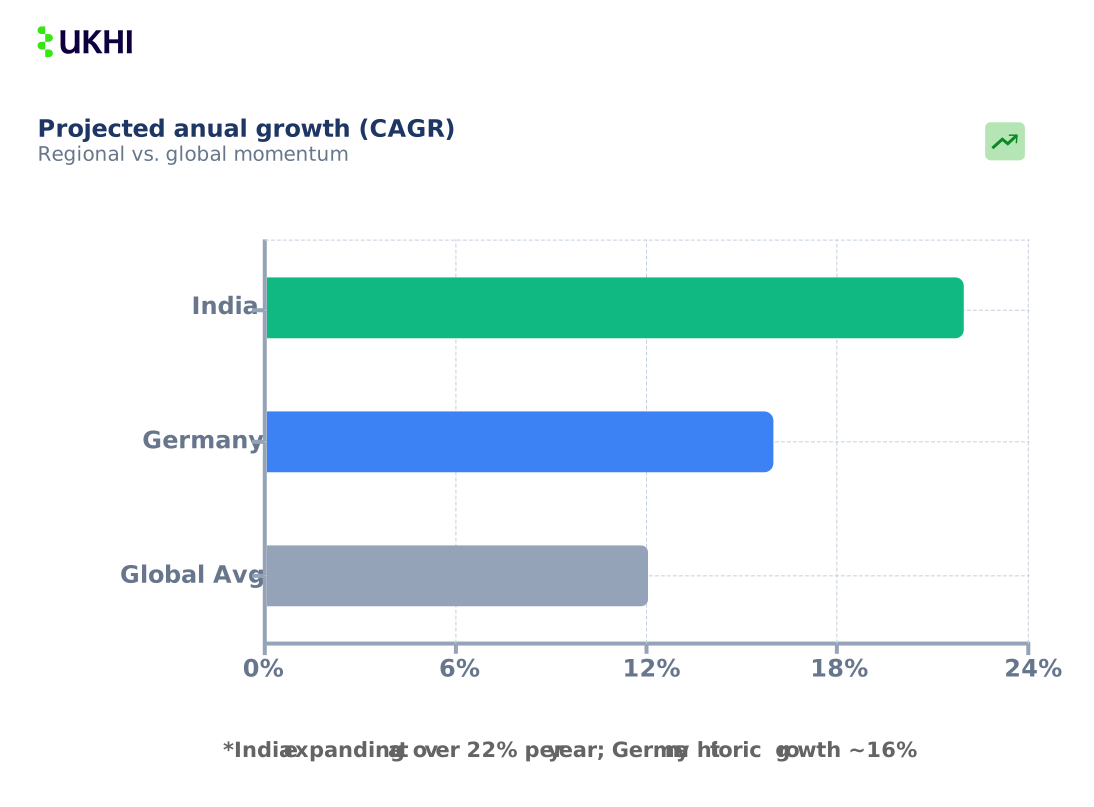
4.1.2 Global Growth Vectors of the Bioplastics Market
The global growth story of bioplastics can be understood across four main vectors.
By polymer type
- PLA (Polylactic Acid)
- market workhorse for rigid and semi-rigid applications
- compatible with most existing plastics machinery
- PBAT, PHA, and starch blends
- rapid growth in flexible films and compostable bags
- strongest adoption where composting infrastructure exists (e.g., Italy, Germany)
- Bio-based drop-ins (Bio-PE, Bio-PET)
- favoured where mechanical recycling systems already exist
- key markets include the USA and Germany
By region
- Asia–Pacific
- largest and fastest-growing regional market
- feedstock advantage (e.g., India’s sugarcane)
- Europe
- global leader in adoption and policy
- strong waste-management and composting infrastructure
- North America
- investment-led growth
- major PLA and PHA facilities in Illinois and Georgia
By new uses
- packaging – food-service ware, trays, bottles, films
- agriculture – mulch films, plant pots, clips
- automotive and construction – lightweight biocomposites
- medical and electronics – high-value niche applications
By investment trend
- strategic global partnerships
- government incentives and plastic bans
- bio-manufacturing hubs and pilot plants
4.1.3 White Space and Unmet Market Needs
- Cost competitiveness
- PLA is often ≈ 2× the price of fossil plastics
- example: India – PLA ₹250–280/kg vs PE/PET ₹120–140/kg
- End-of-life infrastructure
- industrial composting capacity remains limited outside Europe
- Domestic manufacturing
- heavy reliance on imports in emerging markets
- Standardisation and consumer trust
- “bioplastic” does not always mean biodegradable
- clear labelling and harmonised standards are required
- Socio-economic research gap
- impact on jobs, farmer income, and rural economies remains under-studied
4.2 Key Process Technologies Relevant to Current and Future Markets
Processing innovation is a major driver of scale, cost reduction, and performance improvement in bioplastics.
Mainstream processing methods
- extrusion – films, sheets, and profiles
- injection molding – cutlery and components
- blow molding and thermoforming – bottles and trays
- compounding – blending systems such as PLA + PBAT
Advanced and emerging technologies
- synthetic biology and metabolic engineering
- biofoundries and digital design hubs
- fermentation platforms for PLA and PHA
- AI-driven advanced recycling and sorting
- industrial composting and anaerobic digestion
References
General- BBIA. (n.d.). Biodegradable and compostable plastics: Challenges and opportunities. BBIA.
- (n.d.). Development and applications of next-generation bioplastics. Biopolymers Research.
- Inamuddin, & Altalhi, T. (Eds.). (2023). Handbook of bioplastics and biocomposites engineering applications (2nd ed.). Wiley / Scrivener.
- Kuddus, M., & Roohi (Eds.). (2021). Bioplastics for sustainable development. Springer Nature Singapore.
- Walker, S., & Rothman, R. (2020, March 20). Life cycle assessment of bio-based and fossil-based plastic: A review. Journal of Cleaner Production.
- Cecchi, T., & De Carolis, C. (2021). Biobased products from food sector waste: Bioplastics, biocomposites, and biocascading. Springer Nature Switzerland.
- (n.d.). Some countries can say “No!” to single-use plastics, others cannot: Why do seemingly similar policies have different outcomes? Journal of Sustainability Research (Hapres).
- Borrello, M., Cecchini, L., Vecchio, R., Caracciolo, F., & Cembalo, L. (2022, March). Agricultural landscape certification as a market-driven tool to reward the provisioning of cultural ecosystem services. Ecological Economics, 193.
- Grewell, D. (Ed.). (2024). Bioplastics and biocomposites: A practical introduction (Green Chemistry Series No. 79). Royal Society of Chemistry.
- Choubey, V., Govind, M., & Arjune, V. (2023). Emergence of bioplastic as a sustainable polymer in the Indian food packaging industry: A scientometric analysis. Journal of Data Science, Informetrics, and Citation Studies, 2(1), 1–12. [JCitation-2-1-1.pdf]
- Ernst & Young LLP, & ASSOCHAM. (2024). Incentivising bioplastics, a biopolymer: A move towards a circular and sustainable economy. [Incentivizing Bioplastics_3 Sep_digital.pdf]
- Kalaivani, R., Nasreen, K., & Vinodhini, V. (2016, February). An outlook on upshot of bioplastics in India. [Research paper]
- Schulte, M. L., & Busch, P.-O. (2024). Plastic policies in India: Country profile. EU SWITCH-Asia Policy Support Component.
- Singh, P., & Singh, N. L. (2025). Bioplastic diffusion in the agriculture sector and business growth prospects. Indian Journal of Scientific Research, 15(2), 67–74. [2106946786Chapter_13.pdf]
- Suresh, N., & Chandan, S. R. (2024). India BioEconomy Report 2024. ABLE for BIRAC. [IBER_2024.pdf]
- nova-Institut GmbH. (2024, May 28). New market analysis: Bio-based and biodegradable plastics industries in China (Policy, market trends, technologies, outlook). [Press release]
- (n.d.). China: Banking on biodegradables. In Talking trash: The corporate playbook of false solutions to the plastic crisis (Sec. 4.9). [Author/publisher not specified]
- Mou, K. (2023). Application and research of biodegradable plastics in China and the United States. Highlights in Business, Economics and Management EDMS 2023, 23.
- Brown, A., & Groenewegen-Lau, J. (2025). Lab leader, market ascender: China’s rise in biotechnology. MERICS.
- Vaessen, J. (Del. leader). (2024, September). Innovation Mission China—Green Chemistry and Circular Plastics. Netherlands Innovation Network China et al.
- CSIRO. (2024). State of bioplastics in Australia. [24-00426_ENV_REPORT_EPWStateOfBioplastics_WEB_241204.pdf]
- Australasian Bioplastics Association. (2023, June 21). Submission to the Senate inquiry into greenwashing.
- Aburto Medina, A., Hassan, S., Dekiwadia, C., Chen, C., & Ball, A. S. (2025). Bio-based plastics: A sustainable solution to plastic pollution. Microbiology Australia, 46, 96–101. https://doi.org/10.1071/MA250273
- Berry, F., Retamal, M., Kuzhiumparambil, U., & Ralph, P. (2022). Market and sustainability potential for algal bioplastics in Australia. UTS Institute for Sustainable Futures & UTS Climate Change Cluster.
- (n.d.). The complexities of plastic biodegradability and recycling. [Document title used; author/publisher not specified]
- Germany Trade & Invest (GTAI). (2025, September). The plastics industry in Germany: Fact sheet [“20250919_FS Plastics_WEB.pdf”].
- GlobalData Plc. (2025). Market size of bioplastics in Germany (2017–2021).
- Beucker, S., & Marscheider-Weidemann, F. (2007). Potentials and challenges of bioplastics—Insights from a German survey on “green” future markets. Borderstep Institute / Fraunhofer ISI.
- Innovhub – Stazioni Sperimentali per l’Industria. (n.d.). Deliverable D.T1.1.4: Analysis of paper-plastic value chain and innovation system.
- Newman, D. (n.d.). Organic recycling within the circular economy: The role of compostable plastics—The case study of Italy.
- ECCO; Cluster SPRING; Greenpeace; Universities of Padua & Palermo. (2022, April). Plastics in Italy: A vice or a virtue? Technical report.
- Fondazione per lo Sviluppo Sostenibile. (2024). Recycling in Italy 2024: Summary (Curated by E. Ronchi).
- Plastic Consult. (n.d.). The Italian market of compostable biodegradable bioplastics (Prepared for Assobioplastiche).
- The European House – Ambrosetti. (2022, September). The circularity of plastics: Industrial opportunities, innovation and economic-occupational benefits for Italy (Executive summary).
- Barnett, P., Hyyppa, R., Reynolds, G., & Roberton, K. (2023, April 28). Could a sustainable bio-based plastics supply chain become a commercial reality? Master’s project, Duke University.
- Commission for Environmental Cooperation (CEC). (2024, December). Milestone study on bioplastics waste management in the US & Canada. CEC.
- Golden, J. S., Handfield, R. B., Daystar, J., & Pires, S. (2024). An economic impact analysis of the U.S. biobased products industry: 2023 update (Vol. V). Syracuse University & NC State University.
- Plastics Industry Association (PLASTICS), Bioplastics Division. (2023, October 5). Biden Administration Bioeconomy Bold Goals Report: PLASTICS response and recommendations.
- Shah, K. U., & Gangadeen, I. (2023). Integrating bioplastics into the US plastics supply chain: Towards a policy research agenda for the bioplastic transition. Frontiers in Environmental Science, 11, 1245846. https://doi.org/10.3389/fenvs.2023.1245846
- Tatar, K. V., & Dhabarde, S. S. (2022). Bioplastic contribution in the plastics industry and its economic development. UGC CARE Listed Journal, 11(10).
- Bugarčić, M., Jovanović, A., Petrović, J., Mišić, M., Sokić, M., & Milivojević, M. (2024). Advances in biopolymer production and applications: A comprehensive review of key biomaterials. Metallurgical and Materials Data, 2(3), 81–98. https://doi.org/10.56801/MMD37
- Alvarez Chavez, B., Raghavan, V., & Tartakovsky, B. (2022). A comparative analysis of biopolymer production by microbial and bioelectrochemical technologies. RSC Advances, 12(25), 16105–16118. https://doi.org/10.1039/D1RA08796G
- Commission for Environmental Cooperation (CEC). (n.d.). Milestone study on bioplastics waste management in the US & Canada: Executive summary.
- Baptista, T. A., Grando, R. L., Jablonka, W., & Angeli, R. (2019). Environment and bioeconomics: An analysis of the Brazilian ecosystem in bioproducts development. Journal of Environmental Science and Engineering B, 8(4), 156–164. https://doi.org/10.17265/2162-5263/2019.04.005
- BloombergNEF. (2025). Brazil Transition Factbook 2025.
- Frost & Sullivan. (2010). Strategic assessment of the bioplastics market in Brazil and Mexico: Executive summary.
- IRENA. (2025). Brazil’s biofuel industry: Lessons, challenges and opportunities.
- Sereda, L., & Flores-Sahagun, T. H. S. (2023). Panorama of the Brazilian plastic packaging sector and global technological trends. BRIAC, 13(3), 244. https://doi.org/10.33263/BRIAC133.244
- Viana, F. L. E., Guedes, M. d. S. B., Araújo, F. T. d. V., Figueiredo, M. D. d., & Feitosa, L. I. (2025). Transition to circular economy in the Brazilian plastic industry supply chain. RAE – Revista de Administração de Empresas. http://dx.doi.org/10.1590/S0034-759020250405
- BC Insight. (2018, Jul–Aug). Sustainable small-scale ammonia; Africa’s new fertilizer plants; Urea market outlook; Plant data analysis. Nitrogen + Syngas, (354).
- Bonafide Research. (2023). Russia biodegradable packaging market overview, 2028.
- Ermolaeva, Y. (2025). Plastic waste management in Russia. Revista Tecnologia e Sociedade, 21(66), 72–90. https://doi.org/10.3895/rts.v21n66.20465
- Eurasian Development Bank (EDB). (n.d.). The EDB and BIO PLANETA intend to set up Russia’s first full-cycle production of bio-based and biodegradable plastics. [News release]
- Global Product Compliance (GPC) Gateway. (n.d.). Russia: EPR for waste expected to be implemented in January. [News update]
- GlobalData Strategic Intelligence. (n.d.). The Russian packaging industry amid sanctions.
- Strekalova, G., Kurbanov, S., & Muslimova, M. (2023). Prospects for the production of materials with biodegradable properties in Russian practice. BIO Web of Conferences, 63, 05017. https://doi.org/10.1051/bioconf/20236305017
- Leskinen, P., Lindner, M., Verkerk, P. J., Nabuurs, G. J., Van Brusselen, J., Kulikova, E., … & Lerink, B. (Eds.). (2020). Russian forests and climate change (What Science Can Tell Us 11). European Forest Institute. https://doi.org/10.36333/wsctu11
- Polaris Market Research. (2022, September). Lactic and polylactic acid market by application… segment forecast, 2022–2030.
- Skolkovo IEMS. (n.d.). Perspectives of bioeconomy in Russia.
- Turkmenportal. (2024, October 18). Russia will introduce a ban on certain types of PET packaging starting in fall 2025.
- Volchok, A. A., Shapovalova, E. D., & Osmakova, A. G. (2018). Perspective for the development of the bioplastics market in Russia: Key products and technologies. European Research Studies Journal, XXI(Special Issue 2), 744–753.
- Frame, M. A. (Author), & Lipchin, C. (Supervisor). (n.d.). A new perspective on plastic waste in Israel: A circular economy. Arava Institute for Environmental Studies.
- State of Israel, Ministry of Environmental Protection. (2025, March). Israel’s first Biennial Transparency Report and Fourth National Communication to the UNFCCC.
- World Economic Forum & C4IR Israel. (2025, May). Pathways to bioeconomy and bioconvergence: Perspectives from Serbia and Israel (White Paper).
- World Bank; GreenCape; ACEN Foundation; SAPRO; WRAP; WWF South Africa. (n.d.). Circularity in the plastics value chain in South Africa—Opportunities and barriers: Part 6 of 10—Opportunities for a circular economy for agricultural plastics. [PUBLICATION_6_13_6_22.pdf]
- OPA. (n.d.). Biodegradable plastic in South Africa—Comments on the draft position paper by the South African Initiative to End Plastic Waste. [biodegradable-plastic-in-south-africa-final-1-1.pdf]
- Department of Science and Technology (South Africa). (2016, February). Bioplastic opportunities for South Africa—“Industry-meets-Science” workshop proceedings (Prepared by Dr. Linda Godfrey, CSIR). [bioplastics2016_report.pdf]
- Trade & Industrial Policy Strategies (TIPS). (2019). Developing a biomaterials industry in South Africa: Action plan and implementation strategy. [developingbiomaterialsindustry_insouthafrica.pdf]
- Trade & Industrial Policy Strategies (TIPS). (2022). Unlocking demand for biomaterials in South Africa. [unlocking-demand-for-biomaterials-in-south-africa-final.pdf]
Company Directory Ukhi India Private Limited Plot -141, IMT Main Rd, Industrial Area, Sector 68 Faridabad, Haryana 121004, India Phone: +91-96259 68232 Email: info@ukhi.com Website: www.ukhi.com
About the Authors
This report is a collective effort by the Ukhi Research Division, with support from our leadership team and technical experts.
Lead Authors:
Vishal Vivek
Co-founder & CEO
Email: vishal@ukhi.com
Our Team Profile
Priyanka Kumari
Head – Business Development
Email: priyanka@ukhi.com
Our Team Profile
Rahul Kumar
Technical Lead – Research & Development
Email: rahul@ukhi.com
Contributors:
This work also benefited from contributions by Ukhi’s in-house research, commercial, and product teams.
For Further Inquiries
For questions, permissions, or requests related to this report or other Ukhi publications, please contact:
Research & Publications
Ukhi Bioplastics Private Limited
Email: info@ukhi.com
Phone: +91-96259 68232
Address: Plot -141, IMT Main Rd, Industrial Area, Sector 68, Faridabad, Haryana 121004, India
Website: www.ukhi.com
For media queries or speaking opportunities, please email Vishal Vivek (vishal@ukhi.com).
Note:
For the latest updates, product launches, or to connect with the authors, please visit www.ukhi.com or follow us on LinkedIn and other social media channels.