

How Zara India eliminated plastic from customer packaging: timeline, numbers, and what's next
Disclaimer: This case study is independently researched and published by Ukhi for educational purposes. Ukhi is not affiliated with, endorsed by, or a supplier to Zara or Inditex. All data is sourced from publicly available reports, regulatory filings, and credible media coverage. If you represent any brand mentioned and wish to have information corrected or removed, please contact us at info@ukhi.com.
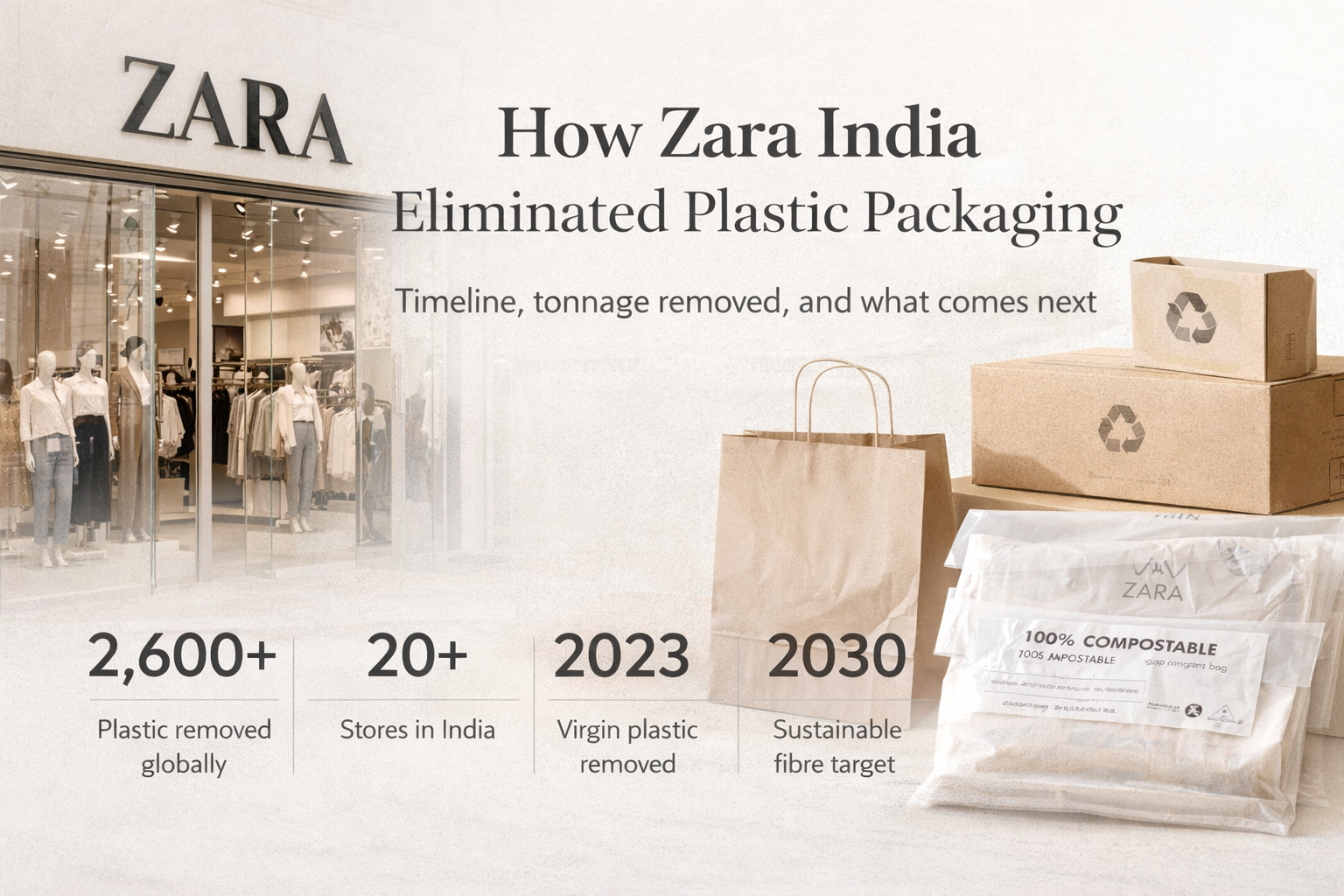
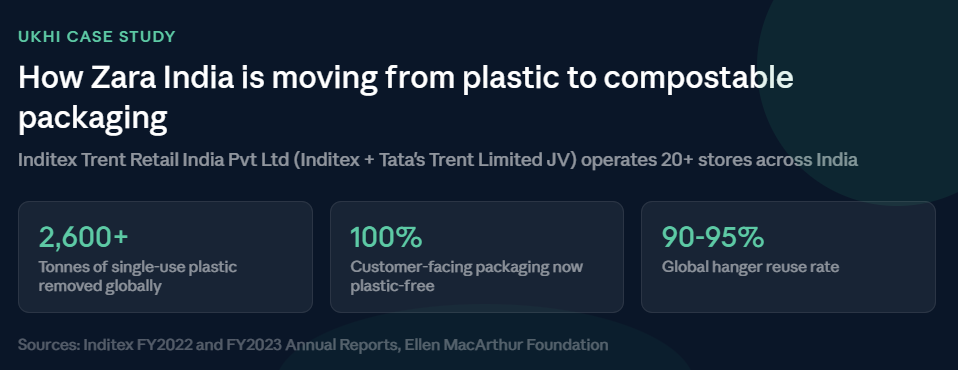
Zara is one of the most recognised fashion brands in the world, and in India it operates around 20 to 22 stores through a joint venture between Spain’s Inditex Group and Tata’s Trent Limited (Inditex Trent Retail India Pvt Ltd).
2,600+ T
Plastic removed globally
20+
Stores in India
2023
Virgin plastic removed
2030
Sustainable fibre target
What makes Zara India particularly interesting for the compostable packaging conversation is that it sits under two layers of accountability.
Very few fashion retailers in India face this kind of dual pressure, and that has pushed Zara India to act faster than most competitors.
This case study tracks what Zara India has actually changed in its packaging, what the numbers show so far, and what comes next.
Inditex's 2023 pledge to eliminate single-use plastic packaging
In July 2019, Inditex publicly committed to eliminating all single-use plastics from customer-facing packaging across its entire global network by 2023.
This commitment was made under the Ellen MacArthur Foundation’s New Plastics Economy Global Commitment, which requires signatories to ensure all plastic packaging is reusable, recyclable, or compostable.
The target covered shopping bags, garment polybags, e-commerce packaging, hangers, tags, and fasteners across more than 5,800 stores worldwide, including every Zara India location.
Paper bags, compostable polybags, recycled cardboard: what Zara India uses now
The most visible change is the shopping bag. Every Zara India store now uses kraft paper bags made from recycled or FSC-certified paper.
This shift happened early. In Maharashtra, a state-level plastic bag ban took effect in June 2018, which meant Zara’s Mumbai and Pune stores moved to paper bags well before the national single-use plastic ban in July 2022. The rest of the Indian stores followed as Inditex rolled out the global policy through 2019 and 2020.
The harder transition has been garment polybags, the thin plastic wrapping around each individual piece of clothing.
Globally, Inditex has been replacing conventional virgin LDPE polybags with compostable bioplastic alternatives made from materials such as PBAT and PLA blends, along with recycled LDPE as an interim step.
These are the same base materials used in certified compostable garment bags across the industry. While Inditex does not publicly break out country-specific formulations, the global transition covers all markets including India.
For e-commerce packaging, Zara India’s online orders through zara.com/in now ship in 100% recycled cardboard boxes with paper-based void fill, replacing plastic mailers and plastic cushioning that were standard until recently.
This is consistent with Inditex’s global declaration that all online shipments use recycled and recyclable cardboard.
Then there are hangers and tags.
2,600 tonnes of plastic removed: Inditex's reported impact
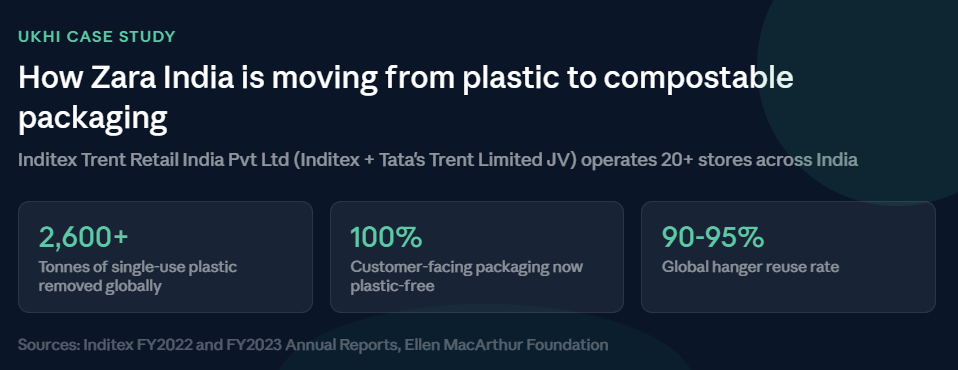
Inditex’s 2,600+ tonnes of single-use plastic removed from customer-facing operations is a global figure. India-specific tonnage is not reported separately, but the scale of change is real.
Consider that each garment polybag weighs roughly 3 to 8 grams. Across 20+ stores and an online channel handling thousands of SKUs, even a single-country operation generates meaningful plastic volumes when every item is individually wrapped.
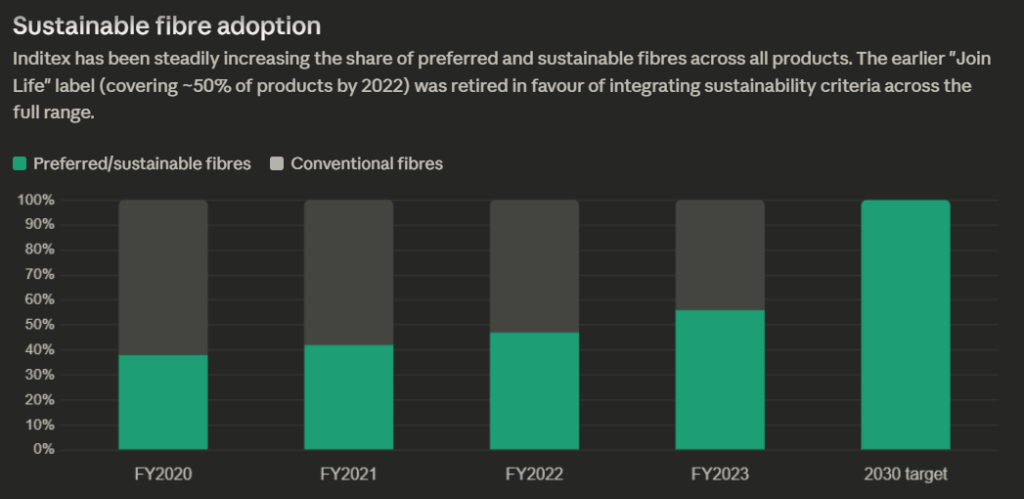
The earlier “Join Life” sustainability label, which covered roughly 50% of Zara products by 2022, has now been retired.
Inditex explained this as a shift toward integrating sustainability criteria across all products rather than marking a separate collection, aligning with stricter incoming regulations like the EU Green Claims Directive.
Three Indian regulations that apply to Zara India's packaging
India’s own regulations have created an independent compliance floor that reinforces Inditex’s voluntary commitments. Three frameworks are directly relevant to Zara India’s packaging.
Zara India vs H&M, Uniqlo, and domestic brands on packaging
Among international fashion retailers in India, Zara is part of a small group leading on packaging reform.
The gap reflects a structural difference: international brands face scrutiny from both home-country stakeholders and Indian regulators, creating a level of accountability that is still developing for domestic players.
2025 to 2030: EPR escalation, zero waste targets, and sustainable fibre goals
For India specifically, the escalating EPR packaging targets will require increasingly detailed documentation and higher collection rates year on year.
The incoming EU Corporate Sustainability Reporting Directive (CSRD) will also push Inditex toward more granular public disclosure on packaging data by market, which could eventually make India-specific numbers available for the first time.
The next frontier for fashion retail packaging in India is the transition of supply chain logistics packaging, not just the bags and boxes customers see, but also the industrial films, pallet wraps, and bulk shipping materials used behind the scenes. That shift is still in its early stages across the industry.
About Ukhi
Ukhi is an Indian compostable packaging platform. We manufacture and supply EcoGran, which consists of compostable bioplastic granules made from PBAT, PLA blends, and starch based formulations. These granules are used by converters and brands to produce compostable garment bags, carry bags, compostable mailer bags, and food packaging films.
EcoGran based films are designed to meet BIS IS 17088 and international compostability standards including EN 13432 and ASTM D6400. Through our distribution partnership with DCGpac, India’s largest B2B packaging platform serving over 60,000 customers, compostable packaging raw material is now accessible at scale across India.
If your brand is exploring a switch from conventional plastic to certified compostable packaging, whether for garment polybags, retail carry bags, or e-commerce mailers, you can connect with us through DCGpac or directly at ukhi.com.