
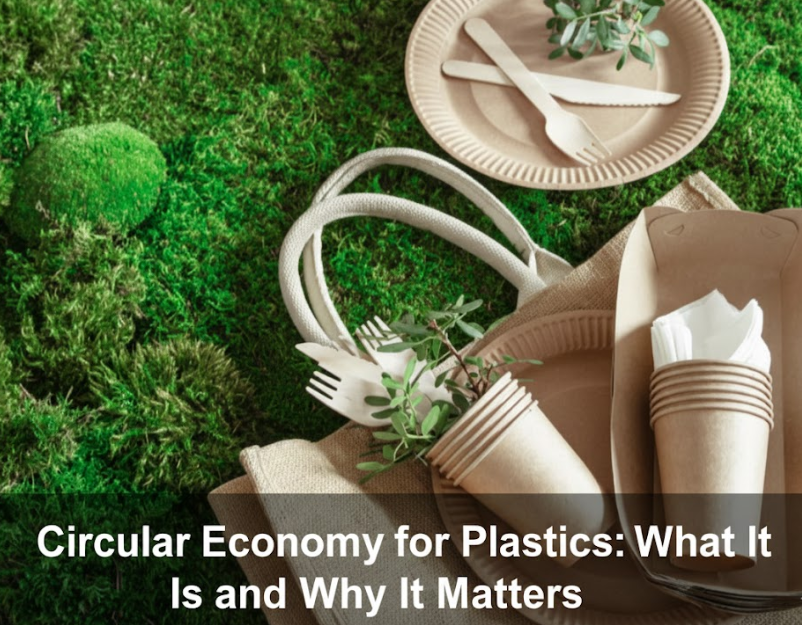
For decades, there has been an established model of production known as the linear model.
Raw materials are extracted. Products are made. They are used for a short time. Then they are thrown away. In brief, the “Take-Make-Waste” model.
Plastics and packaging materials are no exception to this rule. The result – there is a patch of plastic waste measuring 1.6 million sq km (thrice the size of France) floating gently across the Northern Pacific Ocean.
To survive, we need to embrace the circular economy, which is a regenerative system.
A circular economy for bioplastics works in a very different way. It does not accept waste as unavoidable. Instead, it focuses on three clear goals:
- Design out waste and pollution from the beginning
- Keep materials in use for as long as possible
- Restore natural systems rather than harm them
This is the proposition, but how does it work in reality?
Let me explain step by step the various aspects of the circular economy for bioplastics.
What Are Bioplastics, Really?
Before I start, I would like to write a few lines about what bioplastics are because many have no clear understanding.
Bioplastics is a broad term. It does not automatically mean sustainable. The term usually refers to three different types of plastics:
- Bio-based & Biodegradable Plastics – PLA, PHA, Starch Blends, PBS (Polybutylene Succinate).
- Bio-based & Durable Plastics – Bio-PE, Bio-PET, Bio-PA.
- Petroleum-based & Biodegradable – PBAT, PCL.
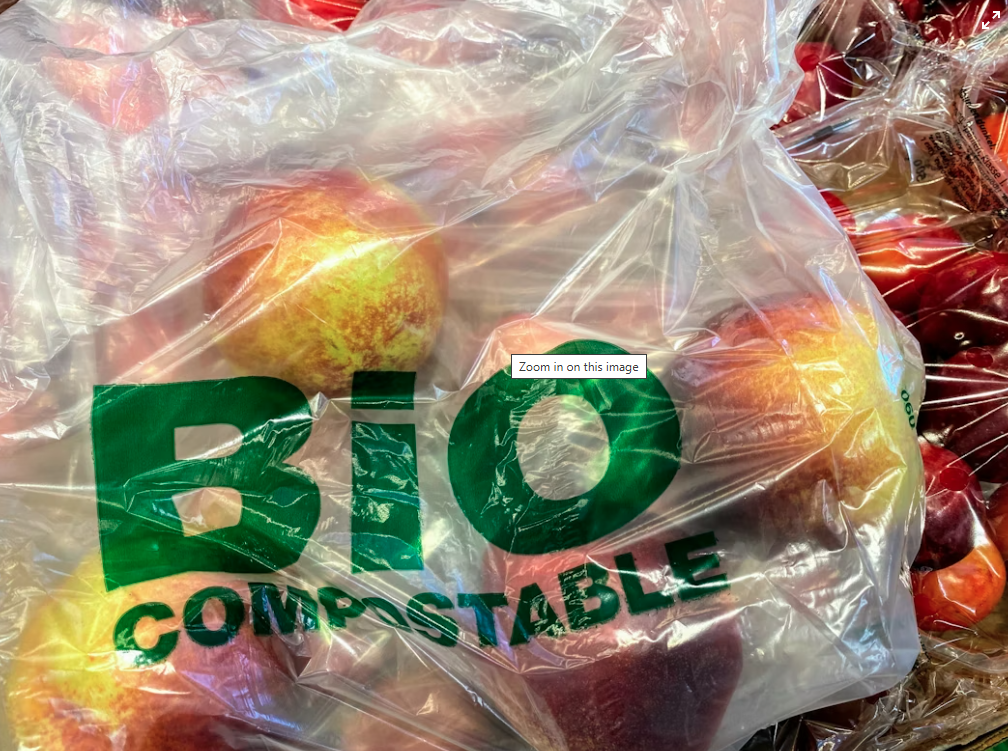
From Unsplash
Thus, a plastic can be bio-based and still not biodegradable. Another can be biodegradable while still partly made from fossil fuels.
Understanding this difference matters because it affects how plastics are labeled, collected, and processed after use. Once this basic clarity is in place, it becomes easier to understand how bioplastics fit into a circular system.
How Does Circular Economy Apply to Bioplastics?
Bioplastics only make sense when they are part of a system, and not just a simple replacement.
In a circular economy for bioplastics, there is a clear order of priority and chain of events:
- First, reduce material use and design products to last longer
- Second, reuse or recycle wherever possible
- Third, compost only when recycling is not practical
- This means different bioplastics serve different roles:
Durable bio-based plastics are better suited for reuse and recycling. Applications include bottles, films, and packaging.
Compostable bioplastics are ideal for products that can’t be recycled cleanly, such as food packaging, cutlery, and coffee pods.
A well-designed system looks at the full plastics lifecycle. This includes responsible sourcing of raw materials, use of clean energy, and a plan for what happens after use.
Why Does Circular Economy for Bioplastics Matter?
But why replace a linear model that has been working well since the end of WWII? Plastics are cheap, they are versatile, strong, and essential for modern life. The supply chain is well established.
But we need to replace it with a circular economy for bioplastics because of several urgent reasons:
- First, plastic pollution is a global problem. The world is indeed being overwhelmed by plastic waste.
- Packaging alone accounts for nearly half of all plastics used today. It makes sense to replace some or all of it with bioplastics. The reduction in landfill waste and litter can be significant.
- Second, plastics are closely tied to climate change. Manufacture of plastics generates significant greenhouse gas emissions. Circular bioplastics reduce dependence on fossil carbon and lower overall emissions.
- Third, there is a strong economic argument. The bioplastics sector is a sunrise industry that is growing quickly. Governments, investors, and markets are paying attention because this change will create new industries, new jobs.
- Finally, there is a social benefit. Using agricultural waste as raw material creates additional income for farmers and rural communities. This is especially relevant in countries like India, which generates over 500 million tonnes of agricultural waste annually.
Where Do Bioplastics Come From, and How Are They Made?
Feedstock holds the key to the sustainability of the circular economy for bioplastics
At present, there are two main categories of raw materials:
- Primary feedstocks – they include starchy materials corn or sugarcane, that are fermented into lactic acid for PLA.
- Secondary feedstocks – such as agricultural residues, used oils, or food processing waste. Waste of one cycle is the raw material for another.
Secondary feedstocks are obviously the better option for a circular economy for bioplastics. They turn waste into value and avoid competition with food production.
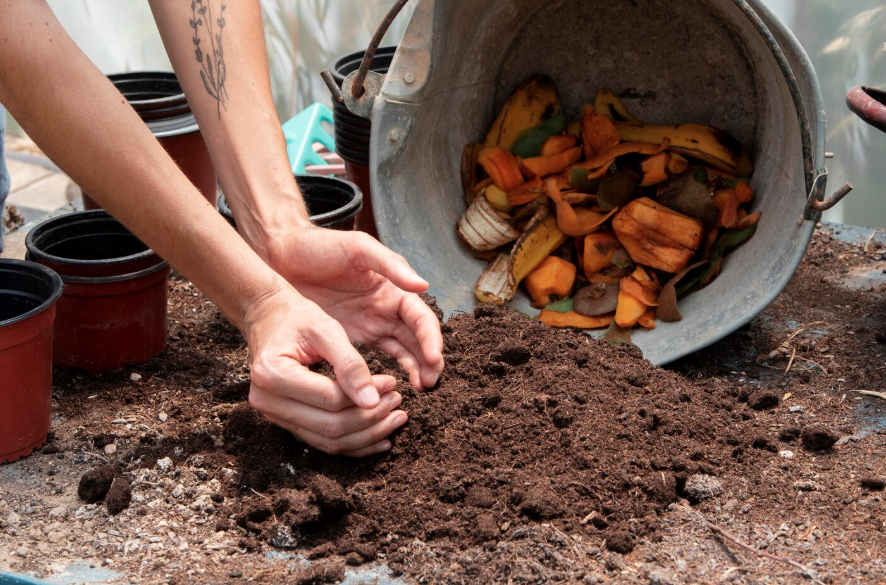
At Ukhi, our focus is on agricultural waste. Crop residues that were once burned or discarded are converted into useful biopolymers. This reduces pollution and creates new income streams for farmers.
From Freepik
Critics of bioplastics often raise the concern of land use. They fear that it will be difficult to balance food security with bioplastic production. Till now, there is no evidence that it will happen. In reality, bioplastics currently use only a very small share of global farmland and far less than what is used for food or animal feed.
Continuous research for the past few decades has also produced several types of bioplastics. There is:
- PLA is commonly used for clear packaging and fibers
- PBAT is flexible and used for films and bags
- PHA can break down naturally in soil and water
- PBS is suitable for more durable applications
Material innovation continues to improve the circular economy for bioplastics. While the cost is a little higher, it is going down gradually as economies of scale kick in.
What Happens to Bioplastics at the End of Life?
How are bioplastics disposed of? End-of-life is where many good intentions either succeed or fail.
There are three main pathways:
- Recycling is definitely the best option for durable bioplastics such as Bio-PE and Bio-PET.
- Industrial composting is ideal for certified compostable materials like PLA and PHA.
- Enzymatic recycling, which uses biological processes to break plastics down into basic components.
Besides, research is on for more advanced recycling processes, including molecular recycling, hydrothermal processing, and solvolysis.
Composting depends heavily on infrastructure, which is lacking in several countries. But this gap will soon be closed thanks to initiatives like the COMPOST Act in the USA. It provides billions in grants and loans to establish more widespread infrastructure. Europe’s composting infrastructure involves around 5,800 facilities, with Germany, Italy, and Austria leading the makeover.
What Is Stopping Circular Bioplastics from Scaling?
The challenges are not only technical. They are systemic.
- The first challenge is infrastructure. Composting and sorting facilities are unevenly distributed. Some regions are well equipped, while others are just beginning.
- The second challenge is confusion since composting standards vary. Consumers often do not know how to dispose of materials correctly. This leads to contamination and inadequate waste disposal.
- The third challenge is economics. Bioplastics cost more by about 50%. But this is getting solved as more companies switch to bioplastics, boosting market volume.
To be fair, the challenges are the same as in other nascent sectors – high initial investment costs and inadequate infrastructure.
Each stakeholder has a clear role in making the circular economy for bioplastics a success:
- Policymakers must create necessary regulatory frameworks and encourage investment.
- Investors have to scale up the existing infrastructure – both manufacturing and recycling.
- Customers have to adopt the change and ask for biodegradable plastics.
The choice before us is simple. We can keep fixing symptoms, or we can redesign the system.
At Ukhi, our vision is clear. The future belongs to those who build systems that work, not just materials that sound good. And the time to build those systems is now.
Frequently Asked Questions
What is the role of bioplastics in a circular economy?
Bioplastics play an important role in the circular economy through the use of renewable resources and a smaller carbon footprint.
Are bioplastics always better than conventional plastics?
That is difficult to answer at this stage of development. Conventional plastics are cheaper than bioplastics and have an established supply chain when compared to bioplastics.
However, with a properly implemented circular economy for bioplastics, the latter is more sustainable and does not degrade the environment in any way.
Can bioplastics replace all single-use plastics?
No, bioplastics likely cannot replace all single-use plastics. They work best where recycling is difficult to achieve.
What challenges do bioplastics face in becoming circular?
The biggest problems are limited composting infrastructure and confusion in labeling. The sector needs investment in research as well as manufacturing facilities.
Do bioplastics naturally break down in the environment?
They should be disposed of via an industrial composting facility. However, even if they are tossed in a landfill, they will break down and return to nature in a few years.