

A bioplastic compostable packaging needs the right label to be compliant. A bioplastic compostable packaging needs the right label to be compliant. The label is for buyers, consumers, waste handlers, and regulators. It informs them about what the packaging is made of and where it can break down.
But the rules are not the same everywhere. USA usually requires ASTM certification and many states have specific compostable packaging labelling rules. In European countries like the UK, bioplastic compostable packaging is normally tested with EN 13432. Meanwhile, CPCB certification and IS/ISO 17088 compliance apply in India.
What does a compostable packaging label actually mean?
A compostable label means the finished product has been tested against a recognised compostability standard. It is not the same as saying the pack is natural, plant-based, recyclable, or better for the planet in every situation.
A correct compostable packaging label answers four questions:
What standard does the pack meet?
Is it industrially compostable or home compostable?
Which certifier or authority has approved the claim?
Can the claim be traced back to a valid certificate?
Industrial composting normally needs controlled heat, moisture, oxygen, and microbial activity.
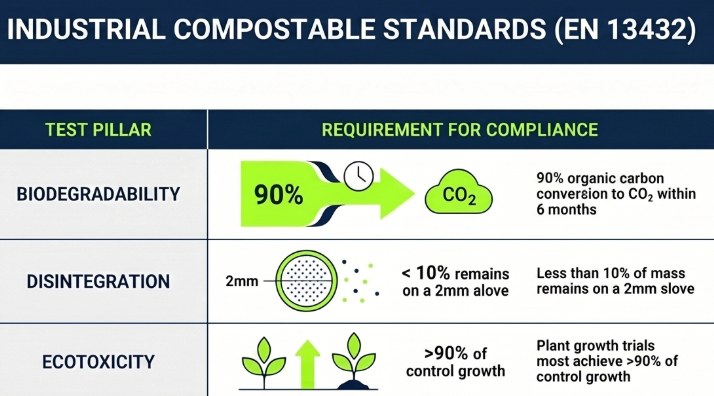
EN 13432, for example, tests biodegradation, disintegration, heavy metals, and plant safety.
“Biodegradable” packaging is weaker. It does not always state where, how fast, or into what the material breaks down.
A product can be biobased and still behave like conventional plastic at end of life. A compostable plastic can also contaminate recycling if it is put into the wrong bin.
So a compostable packaging label must reduce confusion, not create it.
How should compostable packaging be labelled in the USA?
In the USA, compostable packaging labels are shaped by ASTM standards, certifier rules, FTC guidance, and state-level laws.
The main standards are:
- ASTM D6400 for compostable plastic products and films
- ASTM D6868 for paper or other substrates with compostable plastic coatings or additives
A product should not be marketed as compostable unless the finished item meets the applicable standard.
A certified resin alone is also not enough. If the final pack includes ink, adhesive, coating, lamination, or a different thickness, the finished structure needs to stay within the approved certificate scope.
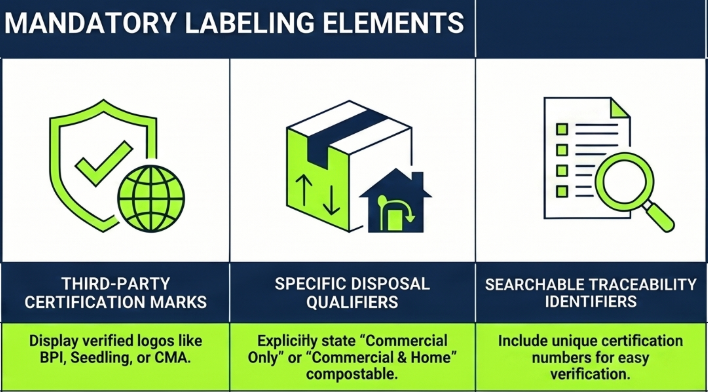
If the product carries the BPI Certification Mark, the use of that mark must be authorised. The BPI mark is not a decorative icon. It is a restricted certification mark linked to a valid certificate and licence. BPI also recommends clear lock-up information such as the word “Compostable,” commercial composting status, and a certificate or licence number for traceability.
US state laws add another layer.
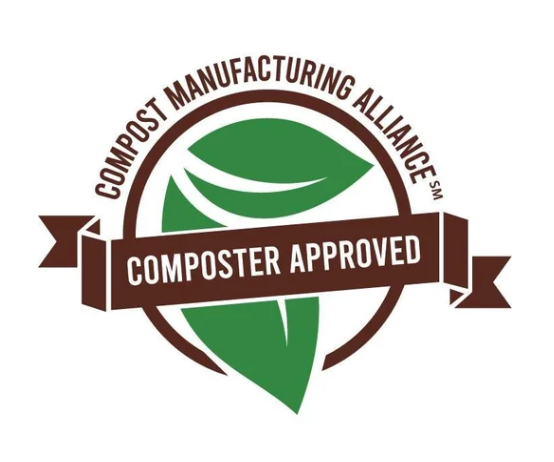
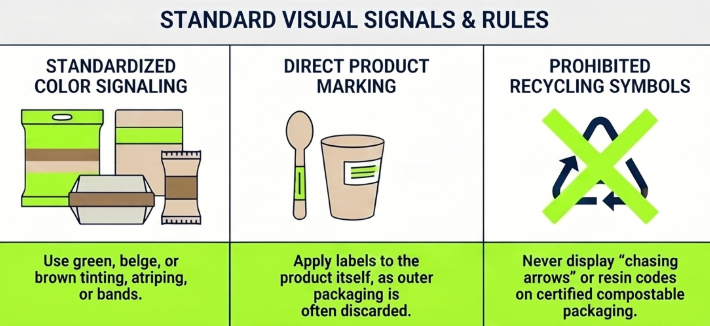
Washington requires compostable products to be clearly and visibly labelled, including the word “compostable,” a certifier logo, and colour signals such as green, beige, or brown.
Film bags may require specific striping or tinting so composters can identify them quickly.
Minnesota has also moved toward stricter compostable product labelling, including third-party certification and clearer industrial composting information.
A compostable packaging label for the US market should avoid vague words such as “biodegradable,” “degradable,” and “eco-friendly.”
The FTC Green Guides warn against environmental claims that imply breakdown will happen anywhere, including landfill, when that is not true.
For exports to the USA, we recommend to check:
- ASTM standard alignment
- certifier mark approval
- product-level visibility
- state-level colour and wording rules
- facility availability disclaimer
- no recycling symbol unless permitted
Europe uses a different standard base and a different certification language.
How should compostable packaging be labelled in Europe?
In Europe, the key reference for industrially compostable packaging is EN 13432.
This standard checks whether packaging can biodegrade and disintegrate under industrial composting conditions without harming compost quality.
The four practical pillars are:
- biodegradation
- disintegration
- heavy metal limits
- ecotoxicity, or plant growth safety
If a pack only meets industrial composting requirements, the label should say “industrially compostable.” It should not suggest home compostability, soil biodegradation, marine biodegradation, or landfill breakdown unless those claims are separately tested and certified.
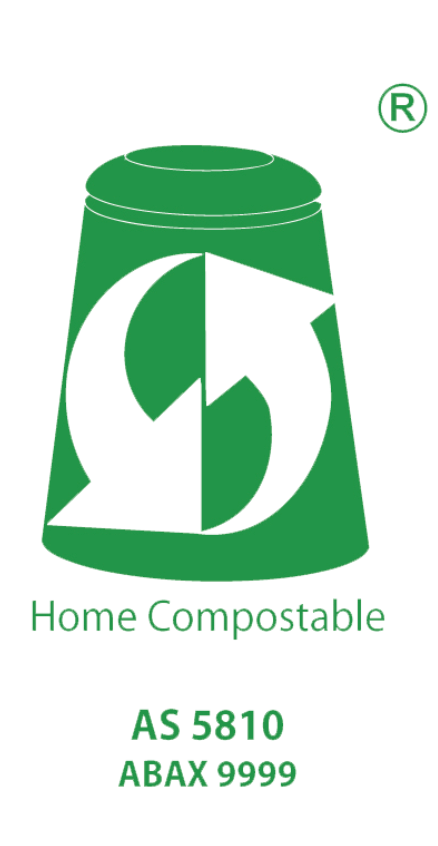
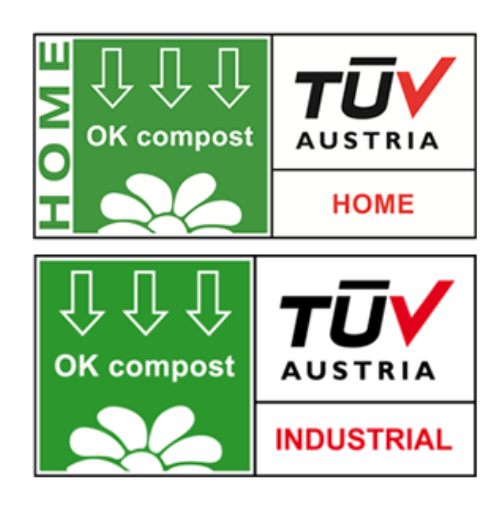
This is a common problem. A buyer sees a compostable symbol and assumes the pack will break down in any compost pile. That is not correct. EN 13432 is an industrial composting standard. Home composting needs separate certification such as “OK compost HOME.”
Europe also relies heavily on certification marks. The Seedling logo, owned by European Bioplastics and licensed through certification bodies such as DIN CERTCO, is widely recognised.
TÜV Austria’s OK compost INDUSTRIAL mark is another common certification logo. These marks usually include licence or traceability codes, so the claim can be verified.
For EU and UK buyers, suppliers are often asked for:
- certificate of compostability
- test report against EN 13432
- declaration of conformity
- certificate scope for the finished format
- ink, coating, adhesive, and compostable label paper declarations
- EPR or national packaging registration details where applicable
Europe is certificate-led. India is certificate-led too, but the label must also satisfy CPCB and Plastic Waste Management requirements.
How should compostable packaging be labelled in India?
In India, compostable plastic packaging is regulated under the Plastic Waste Management Rules.
Manufacturers and sellers of compostable plastic carry bags or commodities must obtain certification from the Central Pollution Control Board before marketing or selling the product.
A certificate held by a raw material supplier does not automatically cover every downstream finished pack.
The relevant standard is IS/ISO 17088:2021, Specifications for Compostable Plastics. It covers the same basic scientific concerns: biodegradation, disintegration, compost quality, and heavy metals.
The label must clearly print “COMPOSTABLE.”
For industrial composting products, the phrase should make the condition clear, such as “Compostable only under industrial composting.”
Indian labels may also need:
- manufacturer name
- CPCB certificate number
- EPR registration number where applicable
- QR code, barcode, or unique identification number for traceability
- required language information for the market of sale
From July 2025, traceability requirements under India’s plastic packaging framework make QR codes, barcodes, or unique identifiers especially important for plastic packaging, including compostable plastics.
Before bulk printing in India, brands should verify the certificate scope. A certificate for film does not automatically validate a bag, pouch, sachet, or laminated structure.
If the finished pack changes in thickness, coating, ink, or adhesive, the compliance position must be checked again.
This is where many label packaging companies and printers need clear instructions from the brand or packaging supplier.
They should not add certification marks from old logo or supplier catalogues without proof that the exact finished pack is covered.
Common mistakes to avoid when labelling compostable packaging
The first mistake is using a certification logo too early. Marks such as BPI, Seedling, and OK compost should only appear when the finished product has a valid approval.
The second mistake is treating certified resin as certified packaging. Compostability depends on the final packaging. Ink, adhesive, coating and label stock can also affect compostability.
Another mistake is labelling only the outer carton. Bioplastic compostable packaging should be included on individual cups, lids, bags, and wrappers, seperate from their shipping packaging before disposal.
Mixing recycling and composting instructions is another common compliance mistake. Compostable plastics usually do not belong in conventional plastic recycling. A recycling symbol on a compostable pack can lead to contamination.
“At Ukhi, we tell buyers to approve the label only after they approve the certificate scope. A compostable claim is not just about the material. It depends on the finished pack, the printing, the market, and the disposal instruction. If the label is wrong, even a good material can become a compliance risk.”
— Vishal, Founder, Ukhi
Get compostable packaging labels checked before printing
Ukhi helps brands and procurement teams compostable packaging raw materials and also review compostable labels before bulk production.
We can check whether the claim, logo, certificate number, wording, and traceability details match the target market.
For USA, Europe, and India projects, ask for a compliance pack or grade recommendation before printing. It is easier to correct a label on screen than after 50,000 packs are already produced.
FAQs
- Is there a compostable symbol for packaging?
There is no single global compostable symbol. You may see BPI in North America, Seedling or OK compost in Europe, or CPCB details in India. The mark should match a valid certificate, not artwork copied from a supplier brochure.
- How can buyers identify compostable bioplastic?
Buyers should check the printed word “compostable,” the composting condition, the certifier mark, and the certificate number. Texture, colour, or a plant-based look does not prove compostability. Always ask for certificate scope before approval.
- Is compostable label paper enough for certification?
No. Compostable label paper helps only if the rest of the pack is also compliant. The adhesive and inks should also be suitable for composting. One certified component does not certify the whole package.
- Can label packaging companies approve compostable claims?
Label packaging companies can only print approved logo or labels. The brand or manufacturer has to get their bioplastic packaging checked by a certifier before printing.
- What does ASTM D6400 mean on packaging?
ASTM D6400 is a US compostability standard for plastic products designed for industrial composting. It tests the bioplastic packaging for biodegradation, disintegration, and compost safety.