
There’s a lot of optimism around bioplastics today, and for good reason. Studies show that using bioplastics can cut greenhouse gas emissions by up to 25% compared to fossil-based plastics.
It sounds like a simple win for the planet.
But as always, the reality is more complex.
Not all bioplastics are created equal. Their true environmental impact depends on three key factors:
- What they’re made from — such as corn, sugarcane, hemp, or starch-based feedstocks
- How they’re processed — whether renewable or fossil energy is used to power the production
- What happens after use — are they composted, recycled, or landfilled
So, a bioplastic made from corn starch in a coal-powered factory can have a higher carbon footprint than one made from hemp residues in a facility using renewable energy.
So when people ask me, “Are bioplastics actually better for the planet?” my honest answer is – it depends.
The key is the carbon footprint.
So in this post I’ll attempt to unpack how different types of bioplastics and conventional polymers compare in terms of their total carbon emissions and what really makes one material better for nature than another.
What is ‘carbon footprint’ and how is it calculated?
The carbon footprint of any material tells us how much carbon dioxide (CO₂) and other greenhouse gases are released throughout its life.
In plastics, that includes every stage:
- Extracting or growing the raw material
- Manufacturing and energy consumption
- Transportation and distribution
- Product use
- Finally, what happens when it’s thrown away or recycled
Each of these stages adds up to a number, expressed in kilos of CO₂ emitted per kilo of plastic produced. We use tools called carbon footprint calculators, which rely on Life Cycle Assessments (LCAs) to calculate it.
For example, 1 kg PET (the plastic used in bottles) production releases ~3 kgs of CO₂. So a ton of PET contributes about 3 tons of greenhouse gas.
In contrast to that, some bio polymers (like PLA made from corn or hemp bioplastics) absorb carbon during crop growth.
Carbon footprint of conventional polymers
Conventional polymers come from fossil fuels like oil and natural gas (for example, polyethylene, polypropylene, polyethylene terephthalate, polystyrene, and polyvinyl chloride).
Their carbon footprint comes from three main sources:
- Extraction: drilling, refining, and cracking hydrocarbons, which are all carbon-intensive steps.
- Manufacturing: high heat and pressure processes, mostly powered by fossil energy.
- End-of-life: when plastics are incinerated or break down into microplastics, they release additional emissions.
To put this into perspective:
- PE (used in packaging) emits around 2 to 2.5 kg CO₂/kg.
- PET (used in bottles) emits around 3 kg CO₂/kg.
- PVC can go even higher because chlorine-based processing is energy-hungry.
Even with recycling, plastic carbon footprint remains significant. The recycling process itself consumes energy, and not all plastic gets recycled. In fact, only 9% of global plastic waste is ever recycled.
So, while conventional plastics are affordable and versatile, their carbon debt keeps growing.
That’s what makes bioplastics so appealing.
Carbon footprint of bioplastics
I must clarify that the term bioplastic covers a broad family of materials made from renewable sources like corn, sugarcane, algae, or hemp.
Some are bio-based but not biodegradable (like bio-PET). Others like PLA or PHA can biodegrade under the right conditions. Unlike fossil plastics that add CO₂ to the atmosphere, plants used to make bioplastics absorb CO₂ while they grow. This gives bio-based materials a head start in reducing net emissions.
However, it’s not always that simple.
The overall footprint depends on:
- Feedstock farming: fertilizers, irrigation, and land-use changes.
- Energy source: whether the factory runs on coal or renewables.
- End-of-life: composting, recycling, or landfill.
So let’s take an example.
Studies show PLA (corn-based) emits about 0.8–1.3 kg CO₂/kg, while PHA (microbial-based) can go as low as 0.6 kg CO₂/kg. And hemp-based bioplastics? Early LCAs suggest emissions between 0.4–0.7 kg CO₂/kg. That’s because hemp absorbs more carbon during growth than it emits during processing.
That’s what makes hemp extraordinary. It’s a carbon sink. It improves soil health, grows with minimal water, and thrives without pesticides.
Quick Comparison of Carbon Footprint of Various Types of Bioplastic
Here’s how different materials perform when it comes to carbon footprint.
| Material Type | Feedstock | Estimated CO₂ Emissions (per kg) | Notes |
| PET | Fossil fuel | ~3.0 kg CO₂/kg | Common in bottles and packaging |
| PE (Polyethylene) | Fossil fuel | ~2.3 kg CO₂/kg | Used in films and containers |
| PVC | Fossil fuel | ~3.5 kg CO₂/kg | Chlorine-based, high emissions |
| PLA (Corn-based bioplastic) | Bio-based | ~1.0 kg CO₂/kg | Compostable under industrial settings |
| PHA (Microbial-based) | Bio-based | ~0.6 kg CO₂/kg | Fully biodegradable, low carbon |
| Hemp-based bioplastic | Bio-based | ~0.5 kg CO₂/kg | Renewable, soil-restorative, strong potential |
So, bioplastic vs conventional plastic carbon footprint difference is striking. Bioplastics can lower emissions by 50–80%.
But even more impressive is how hemp-based bioplastics achieve this with less energy input and minimal ecological stress. Which brings us to an important question.
Are bioplastics really a global climate solution?
It’s tempting to think that switching from fossil plastics to bioplastics will fix climate change. But the reality is that it’s more complex than that.
Bioplastics can absolutely reduce plastic carbon footprint. Yet the scale of their impact depends on infrastructure, technology, and policy alignment.
Here’s why:
- Limited production capacity
Bioplastics make up less than 2% of global plastic production.
- Composting gaps
The industrial composting systems required for materials like PLA are still missing in most countries.
- Feedstock competition
Some crops used for bioplastics compete with food crops for land and water.
- Energy dependency:
If the factory uses fossil electricity, much of the climate benefit is lost.
So yes, bio-based polymers carbon emissions can be lower than conventional ones. But only if the entire system around them becomes cleaner.
That’s why policymakers and investors must think beyond just materials. We need to combine renewable energy, circular waste systems, and smart agricultural practices to truly move the needle.
How to reduce carbon footprint: Practical steps
Reducing the carbon footprint of plastics isn’t one person’s job but a shared mission. Every stakeholder, from farmers to policymakers, has a role to play.
Here’s how we can move forward, together:
- Policymakers should encourage science-backed transitions. Support LCAs and verified carbon footprint calculators to guide decisions. Offer incentives for bio-based polymers and renewable-powered manufacturing.
- Investors should invest not just in the product, but in the process. Fund R&D in low-energy polymerization, better recycling infrastructure, and carbon-neutral logistics. See sustainability not as a cost, but as a long-term value driver.
- Educators and Institutions should bridge the knowledge gap. Create learning programs that explain what bioplastic carbon footprint really means, beyond buzzwords.
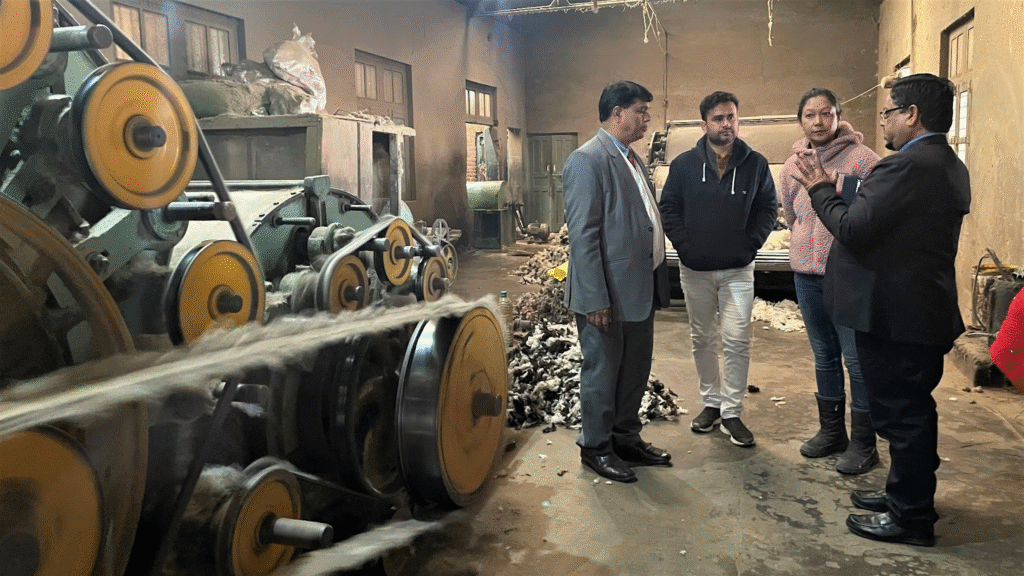
At Ukhi, we develop bioplastics from secondary agricultural waste such as hemp, nettle, and pine needle, using lignocellulosic agriwaste as our primary raw material.
Hemp absorbs CO₂ and restores degraded soil. Plus, it offers abundant feedstock for sustainable polymer production. Plus, it contributes to the local economies where it is grown.
But this is a relay race. We’ve carried the baton this far, now we pass it on to you.
Choose products that lower your footprint. Support regenerative materials. Together, let’s reduce carbon footprint and move toward a cleaner tomorrow.
FAQs
1. How accurate are carbon footprint calculators for plastics?
Most plastic carbon footprint calculators are based on standard LCAs. This gives reasonably accurate estimates for production and use phases.
2. Are bioplastics biodegradable everywhere?
Not necessarily. Some bioplastics like PLA, for example, need industrial composting facilities. Others degrade more naturally under soil or home composting conditions.
3. How to reduce carbon footprint as a consumer?
To reduce your carbon footprint, you should:
- Reuse products
- Avoid single-use packaging
- Choose bio-based materials
- Support sustainable companies
- Opt for products made with hemp-based bioplastics or recycled content.
Every small action compounds into a big climate difference.