
Compostable bakery packaging has a difficult job. It must protect a soft, oily, moist, or delicate product, travel through heat and handling and look good on the shelf.
A bread bag that traps too much moisture can soften the crust. A cookie pouch with a weak barrier can make biscuits lose crunch. Similarly, a cake box with a poor structure can damage frosting before the customer even opens it.
That is why compostable bakery packaging should not be chosen only because it looks sustainable. It should be chosen because it fits the bakery product, the packing line, the delivery route, and the compliance requirement.
For bakeries, sweet stores, cafés, cloud kitchens, and food brands, the right pack is usually a mix of bags, pouches, liners, coated paper formats, and boxes.
What compostable bakery packaging should you use?
The best compostable bakery packaging depends on the food inside the pack.
Dry products need moisture protection and oily products need grease resistance. Meanwhile, decorated products need structure. Fresh bread needs enough protection without trapping excess condensation.
In practical terms, most bakery brands need:
- Compostable bakery bags for bread, buns, rolls, and counter sales
- Coated paper boxes for cakes, pastries, brownies, and sweets
- Butter sheets or liners for croissants, donuts, and oily bakery items
- Bioplastic pouches for cookies, rusks, dry cakes, and branded retail packs
- Window formats where visibility helps the product sell
- Custom bakery packaging for branded, D2C, export, or gifting packs
For compostable bakery packaging, the material must also be food-grade. Compostability and food-contact suitability are not the same thing. A pack can be compostable, but it still needs separate food-contact checks before it is used for direct bakery contact.
Packaging formats that fit bakery use cases
A bakery usually sells several product types from the same counter or catalogue. So the packaging system should be format-led, not material-led.
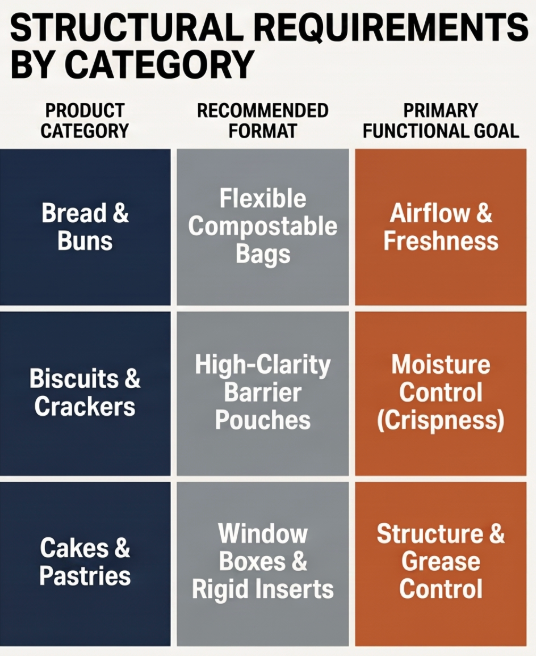
Bread, Buns, and Dry Cakes
Compostable bakery bags are useful for bread, buns, pav, rolls, dry cakes, and takeaway counters.
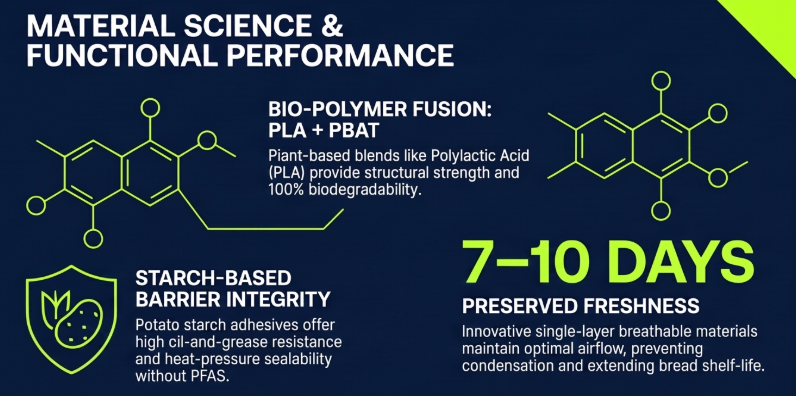
These bags may use PLA, PBAT blends, starch-based materials, or other certified compostable films depending on the performance needed.
Ukhi’s Compostable Blown Film Extrusion Biopolymer can be useful for flexible bag and pouch in bakery packaging on standard blown film lines.
For bread, the pack should reduce handling exposure and drying, but it should not create heavy condensation inside the bag.
Cookies, Biscuits and Snack Cakes
Bakery packaging bags for cookies, biscuits, rusks, crackers, and snack cakes need a stronger moisture barrier.
Crispness is part of the product promise. If the pack allows moisture pickup, the product can feel stale even if it is still safe to eat. For these products, high-clarity bioplastic pouches or coated paper pouches can work well after barrier and seal testing.
Ukhi’s Cast Film Extrusion Resin or Extrusion Coating Resin can deliver the moisture barrier and clarity these products need.
Cakes, Pastries and Indian Sweets
Cakes, cupcakes, brownies, pastries, donuts, and Indian sweets need more structure. These products can be soft, decorated, oily, syrupy, or easily damaged. For them, coated paper boxes, rigid board boxes, inserts, butter sheets, and grease-resistant liners are often better than a simple flexible pouch.
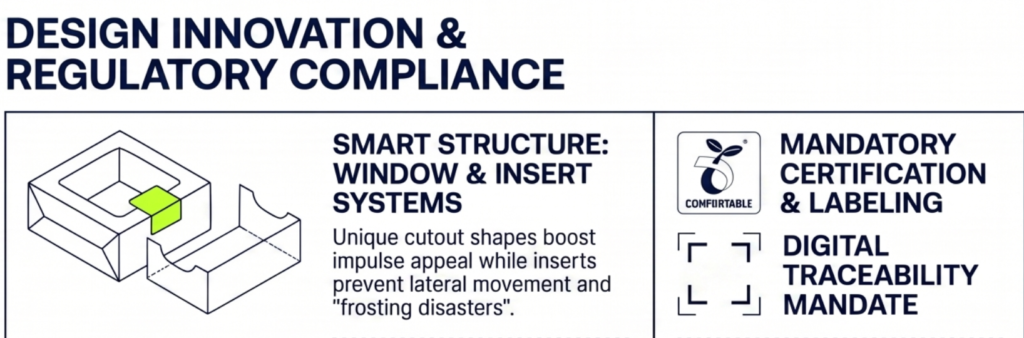
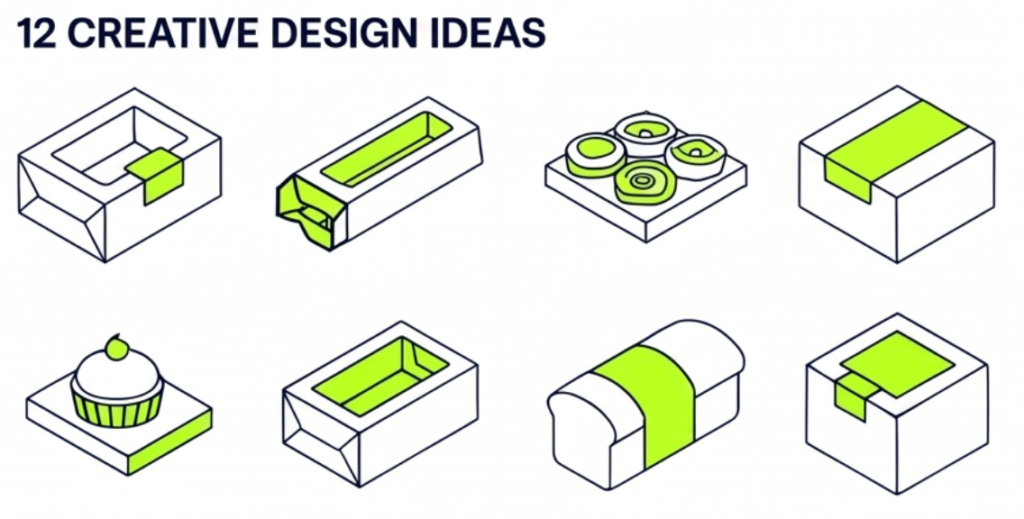
This is also where custom bakery packaging becomes useful. Window boxes, printed pouches, shaped cut-outs, branded sleeves, inserts, and premium sweet boxes help a bakery protect the product and present it well.
Ukhi’s Thermoforming Biopolymer provides the rigidity and food-contact performance these products require, in a certified compostable material.
Overall, good bioplastic bakery packaging should not behave like a weak substitute for plastic. It should be selected for a specific role.
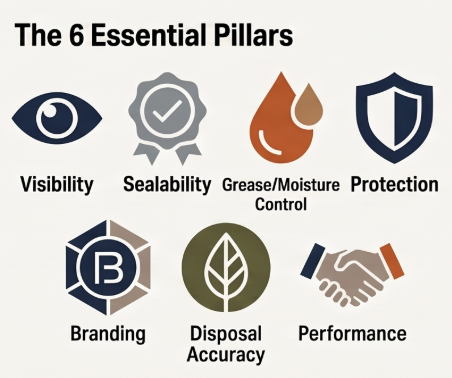
Decision matrix: Match compostable bakery packaging to the product
Before approving compostable bakery packaging, match the format to the product risk.
| Bakery product | Better packaging format | Why it fits | Buyer watch-out |
| Fresh bread and loaves | Compostable bakery bags or bread covers | Helps protect the loaf while allowing visibility and controlled airflow | Check condensation, fogging, sealing, and 7 to 10 day freshness targets |
| Cookies and biscuits | High-clarity compostable pouches or coated paper pouches | Protects crisp texture and supports retail display | Test moisture barrier, seal strength, and pack stiffness |
| Croissants and pastries | Compostable liners or starch-coated paper sheets | Controls butter and grease transfer | Avoid oil staining and soggy presentation |
| Brownies and tea cakes | Coated paper boxes, liners, or pouches | Handles soft texture, oil, and portion packing | Check grease marks, pack deformation, and stacking |
| Decorated cakes | Rigid cake boxes with inserts | Protects frosting, shape, and movement during travel | Check lid height, base strength, and delivery stability |
| Donuts and iced buns | Window boxes with compostable coating | Gives display value while managing glaze and grease | Test ventilation and contact with icing |
| Indian sweets | Coated board boxes with dividers | Works for gifting, counter sales, and oily sweets | Test oil, syrup contact, and stacking strength |
| Cloud-kitchen bakery orders | Bags, liners, boxes, and tamper labels | Supports mixed-SKU delivery | Check heat, condensation, and rider handling |
This matrix is the fastest way to narrow the choice. Once the format is clear, the material grade, micron, coating, print, and MOQ can be finalised.
Compliance fit for compostable bakery packaging
For compostable bakery packaging India, USA, UK, compliance should be checked in two layers.
The first layer is food-contact safety. Bakery packaging can touch butter, oil, chocolate, cream, sugar, fruit filling, syrup, or hot food. That means the material, coating, ink, adhesive, and inner surface must be suitable for the intended food use.
In India, FSSAI packaging rules require food packaging to be safe for use and to stay within prescribed migration limits.
The second layer is compostability. In India, compostable plastic carry bags and similar compostable plastic products must conform to IS/ISO 17088 and require CPCB certification before marketing or selling. Marking also matters. Compostable plastic formats should carry the required “compostable” declaration, manufacturer details, certificate information, and QR-code traceability where applicable.
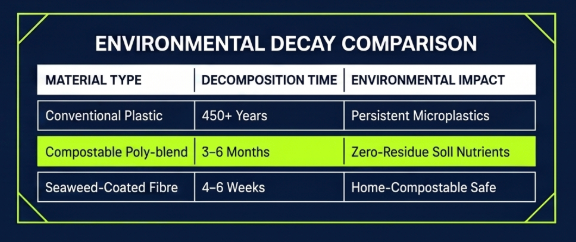
For the USA, bakery brands should check FDA food-contact suitability. The FDA treats food packaging and its components, including adhesives, colourants, coatings, and packaging surfaces, as food-contact substances when they may come into contact with food.
For the UK and EU, food-contact plastic materials are assessed using migration limits, specific restrictions, and supporting documentation. This is important for coated or bioplastic formats used with fatty, moist, or warm bakery products.
This makes the packaging part of quality control, not only a sustainability claim.
Common mistakes when choosing compostable bakery packaging
The first mistake is choosing the word “eco-friendly” alone. That word does not confirm compostability, food-contact safety, grease resistance, barrier performance, or certification.
Another mistake is using untreated paper for oily or moist bakery items. Plain paper may look natural, but croissants, brownies, donuts, and sweets can stain or weaken it quickly.
Buying compostable bakery packaging wholesale before testing can also lead to problems. A sample can look good in the office but fail during delivery, stacking, or shelf-life trials.
“Bakery packaging fails when one material is forced across every product. Bread, cookies, brownies, cakes, and pastries all behave differently. The right compostable format should be chosen based on moisture, grease, shelf life, sealing, and food-contact compliance first. Sustainability only works when the pack still protects the food.”
— Vishal Vivek, Founder, Ukhi
Get a sample kit or grade recommendation
Ukhi helps bakeries and food brands choose compostable bakery packaging by product type, not by generic catalogue category.
You can request a sample kit with compostable bakery bags, retail pouches, grease-resistant liners, coated paper formats, and rigid bakery boxes. Our team can also recommend grades for bread, cookies, brownies, cakes, pastries, sweets, and delivery packs.
FAQs
- What is bioplastic bakery packaging?
Bakeries can choose compostable bakery packaging made from bioplastics, paper, or both. Bioplastic packaging is made from bio-granules, which can be PLA, PBAT, starch resins or other compostable polymer blends.
- Is compostable bakery packaging safe for food?
Compostability and food-contact safety are separate checks. Compostable bakery packaging for food is safe only when it is also food-grade.
- Can compostable bioplastic bakery bags keep bread fresh?
Yes, compostable bakery bags can help keep bread fresh when the material allows the right balance of airflow and moisture control.
- What is the best compostable bioplastic bakery packaging for cakes?
Choose a rigid box with a compostable bioplastic coating and a stable base to protect a cake’s frosting and shape during delivery.