
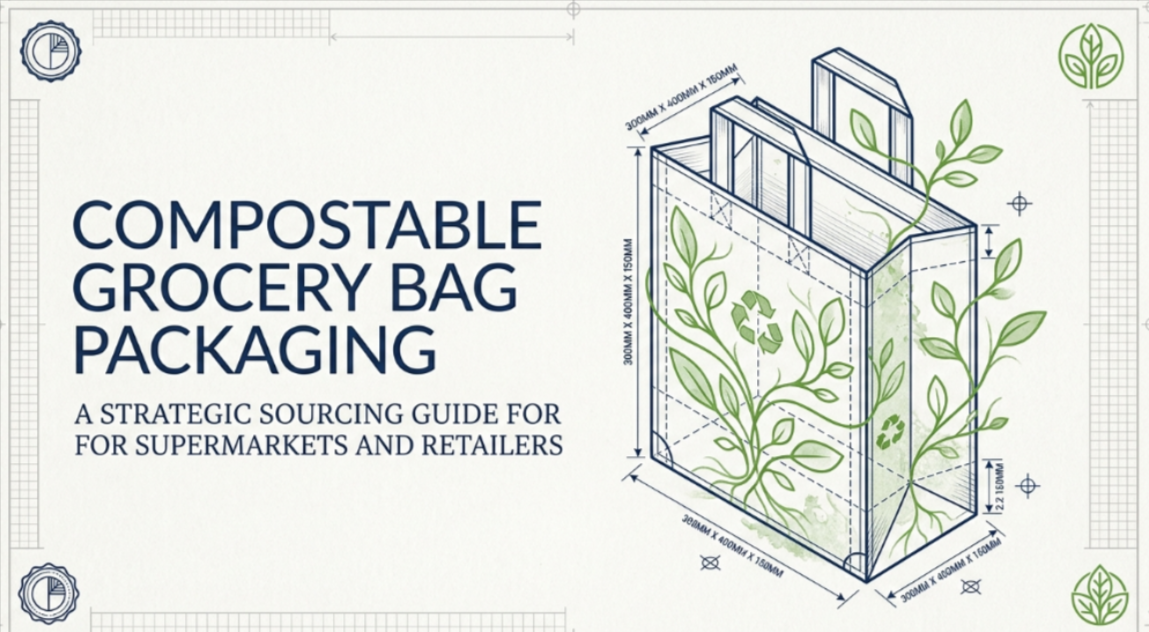
When sourcing compostable grocery bags for supermarkets, retail chains, or grocery delivery, a certified PBAT and starch-based compostable bag is a practical starting point. But here is the part most guides skip over.
Finding a compostable bag is not the hard part. The hard part is finding one that actually holds up in a real store and:
- Carries the required load
- Complies with Indian regulations, and
- Fits into how your store already runs
That is what this guide is about.
Why grocery bags have become a procurement decision
India generates over 3.5 million tons of plastic waste every year. A significant chunk comes from everyday items and grocery bags sit at the center of that conversation.
For retailers, that shift has changed what procurement actually means. Sustainability commitments are no longer just marketing language. Compliance requirements have teeth. And buyers are now expected to look past price and ask harder questions.
Miss one of those checks, and you are carrying risk you did not need to take on.
Vishal Vivek, Founder of UKHI, puts it plainly: “A bag that works reliably in day-to-day retail operations will always create more value than a technically impressive material that creates challenges at checkout counters.”
Choosing the right grocery bag format
Most buyers come to this decision thinking about materials. That is understandable, but it is usually the wrong place to start.
Format matters more than most people expect. A supermarket checkout counter has very different needs from a fresh produce aisle. A bag carrying packaged groceries behaves differently from one holding loose grains or bulk products. Get the format wrong and even the best material will let you down.
Here are the formats worth knowing:
| Format | Best For | Key Benefit | Typical Users |
| Flat carry bags | Everyday grocery purchases | Easy to use and familiar to customers | Supermarkets, retail stores, kirana shops |
| Gusseted bags | Heavy or bulky products | Better weight distribution and carrying strength | Grocery chains, wholesalers, bulk food retailers |
| Bag-on-roll formats | Fruits and vegetables | Quick dispensing and good product visibility | Supermarkets and fresh produce sections |
| Printed compostable bags | Branding and customer experience | Promotes the brand while serving as packaging | Retail chains, premium grocery stores, specialty retailers |
Pick your format based on what is being packed and how your customers shop, not just what the material can technically do.
What makes a grocery bag compostable?
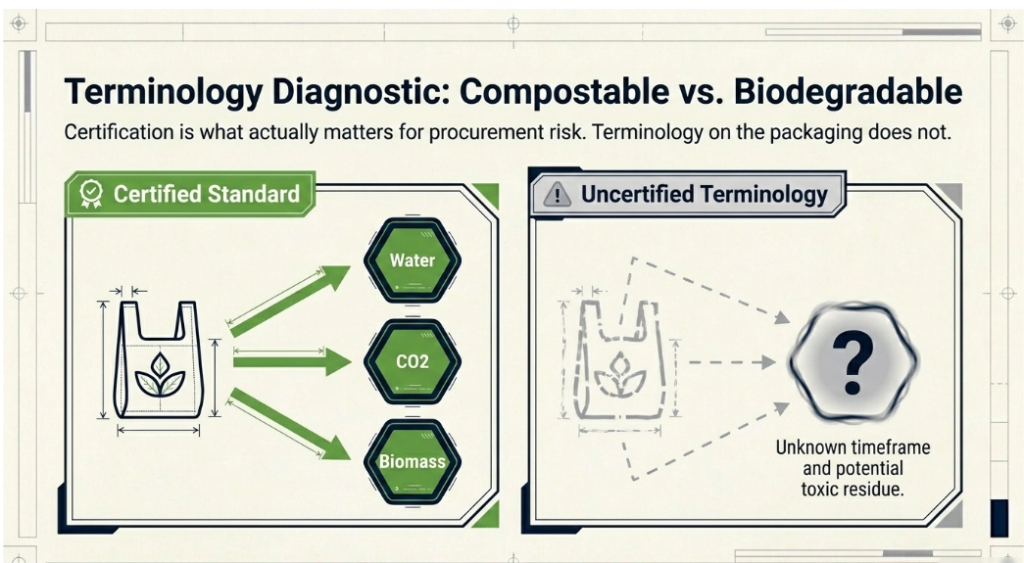
Terms like biodegradable grocery bags, eco-friendly carry bags, and compostable packaging get used interchangeably. But they mean very different things when it comes to compliance and procurement.
Most certified compostable grocery bags in India are made from PBAT blended with plant-based starch. That combination hits a practical balance of strength, flexibility, and cost.
PLA-based materials are also available, particularly where transparency matters. Though they typically cost more.
Here are common compostable grocery bag options to choose from:
| Packaging Need | Format | Material | Best For |
| Everyday grocery shopping | Flat carry bag | PBAT + starch | Supermarket and retail checkouts |
| Heavy grocery items | Gusseted bag | PBAT + starch | Rice, flour, pulses, and pet food |
| Fresh produce | Bag-on-roll | PLA or PBAT blend | Fruits and vegetables |
| Branded retail packaging | Printed carry bag | PBAT + starch | Customer-facing retail stores |
For most supermarket operators, a certified PBAT-starch bag is the most sensible place to begin. Once the material is settled, the next conversation is compliance.
Compliance matters more than most buyers realise
Packaging performance problems are usually obvious. A bag that tears or spills at checkout, you know about it immediately. Compliance problems are quieter. They stay hidden until someone asks for documentation. And by then, the cost of fixing it is much higher.
In India, any product marketed as compostable should comply with IS/ISO 17088 and carry approval from the Central Pollution Control Board (CPCB).
But do not stop at logos. Ask for the actual documents, check that approvals are current, and verify validity dates.
Also, double check that the certification is for the compostable carry bag, not just the raw materials. Buyers should make sure that the bag’s size, thickness, and make-up align with what’s in the certified product paperwork. This extra step helps prevent cases where a compliant ingredient is used to promote a non-compliant end product.
Understanding the cost of compostable grocery bags
Certified compostable bags cost more than conventional plastic. But the comparison gets more interesting when you zoom out.
Pure material cost is only one number. Alongside it, retailers are also weighing:
- Compliance with current and future regulations
- Alignment with sustainability and ESG commitments
- Brand perception among customers who are paying attention
- Reduced exposure from sourcing non-compliant packaging
- Documentation that holds up during audits
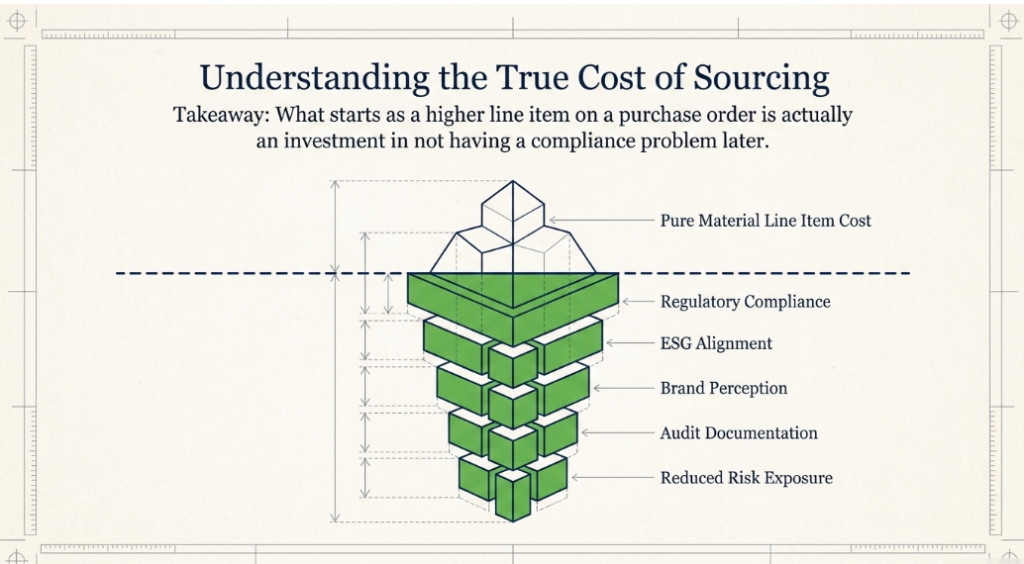
For many retailers, that wider view shifts the conversation. What starts as a higher line item on a purchase order starts to look more like an investment in not having a problem later.
Get started with a successful transition
Switching to compostable grocery bag packaging does not have to be complicated. But it does require a bit of discipline upfront. Start with clarity on your packaging requirements, then carefully review supplier certifications. Also, it makes sense to get testing samples before committing at scale.
That groundwork makes the difference between a smooth transition and one that creates new problems while trying to solve old ones.
At UKHI, we help retailers find the right fit, not just the right material. Reach out to request a recommendation or get a compostable sample kit sent to you.
FAQs
What is the difference between compostable and biodegradable grocery bags?
A compostable grocery bag breaks down into water, CO2, and biomass under composting conditions and meets recognised standards such as IS/ISO 17088. A biodegradable grocery bag may eventually degrade. But that says nothing about how, how fast, or what it leaves behind. For buyers, certification is what actually matters. Not the terminology on the packaging.
Are compostable grocery bags strong enough for supermarket use?
Yes. Strength comes from bag design, material formulation, and thickness, not from whether something is compostable or not. Properly specified compostable carry bags are used daily across supermarkets and retail stores without issue.
How long can compostable grocery bags be stored?
Under the right conditions, certified compostable bags have a shelf life of 12 to 18 months. Just keep them away from direct sunlight, excessive heat, and high humidity.
What documents should buyers request from suppliers?
Buyers should ask for:
- CPCB approval certificates
- IS/ISO 17088 certification details
- Product specification sheets
- Recent test reports
If food contact is involved, ask for additional compliance declarations on top of these.
Can compostable grocery bags be custom printed?
Yes. Custom printing for logos, sustainability messaging, store branding, and product information is all possible. Many supermarkets and retail chains use printed compostable bags specifically to reinforce their sustainability positioning at the point of sale.
Are compostable grocery bags more expensive than conventional plastic bags?
In most cases, yes. But most retailers now look at packaging cost alongside compliance exposure, sustainability commitments, and long-term risk, rather than treating it as a straight material-to-material comparison.
What is the minimum order quantity for compostable grocery bags?
It depends on bag specifications and whether printing is involved. Standard bags typically allow for lower MOQs. Custom-printed orders generally require larger production runs to be economical.