
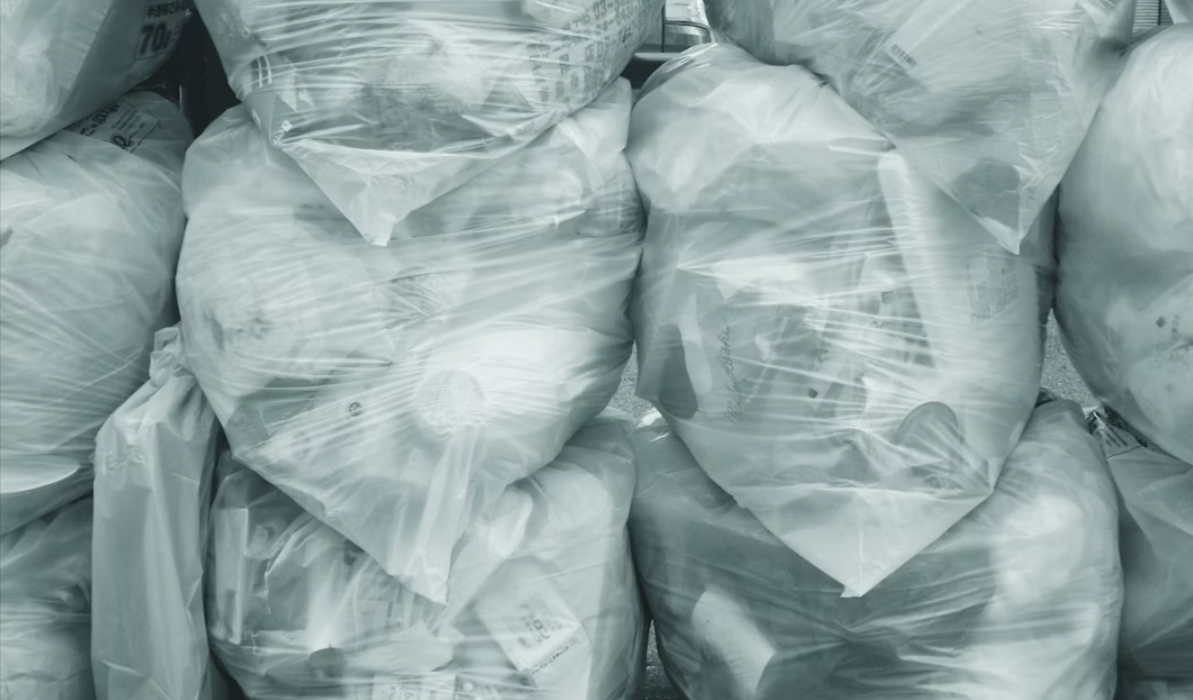
A fashion brand can change its swing tag, redesign its box, and print a sustainability claim on the outside. But if every garment still travels in a plastic polybag, the packaging story falls apart.
That is why compostable fashion packaging is now a serious sourcing question.
For most fashion brands, the right answer is not “replace everything with compostables.”
The right answer is to match the packaging format to the job, then choose the material that gives the best balance of protection, compliance, and end-of-life outcome.
What is the best compostable fashion packaging for clothing brands?
The best compostable packaging for fashion brands depends on where that packaging sits in the journey.
If the packaging is used as:
- an inner garment bag
- an e-commerce mailer
- a retail carry format
- a premium accessory pack
then the material needs change.
For most garment polybag and flexible mailer use cases, a bio-based PBAT-led film is currently one of the strongest options. The reason is simple. It behaves more like the plastic films the industry already uses.
That is why PBAT-based compostable films are preferred for fashion packaging that must fold, seal, stack, and move through high-volume operations.
PLA also appears often in compostable packaging discussions, but it is not usually the first answer for thin flexible apparel bags. It is more brittle, which can become a problem in thin-gauge film applications. Starch blends can help on cost, but moisture resistance can be weaker depending on the formulation.
Types of compostable packaging for fashion products
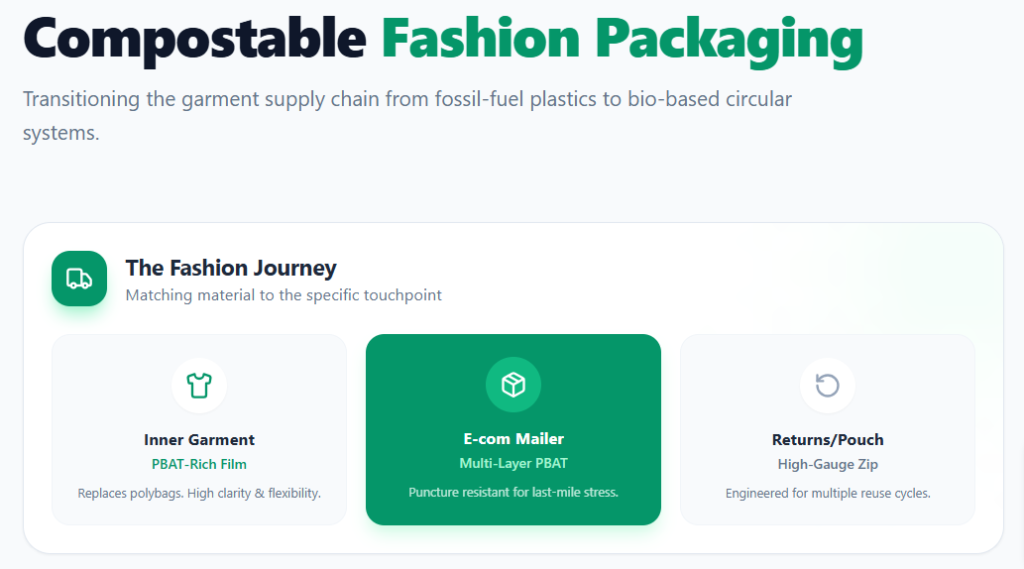
1. Compostable garment bags (inner packaging)
Used as a direct replacement for plastic polybags around garments.
- PBAT-based blown film structures
- 15–40 micron typical range
- Hanger hole, vent holes, adhesive flap
- Transparent or semi-transparent
Best for shirts, dresses, knitwear, and folded apparel.
2. Compostable courier mailers (e-commerce shipping)
Designed for outer shipping in D2C and marketplace orders.
- Multi-layer compostable film
- Tamper-evident seals
- Higher puncture and tear resistance
Used for last-mile delivery where handling stress is highest.
3. Compostable zipper bags and reusable pouches
Used for premium apparel, returns, or multi-use packaging.
- Zip-lock or slider closure
- Higher thickness for reuse cycles
- Suitable for lingerie, accessories, or sets
4. Paper-based packaging (supporting format)
Used where rigidity or structure matters more than flexibility.
- FSC-certified paper mailers and cartons
- Garment wraps, sleeves, and inserts
- Limitation: lower moisture resistance
5. Hybrid packaging (paper + compostable lining)
Combines structure with barrier protection.
- Paper exterior with compostable inner layer
- Used in premium or export-focused packaging
Decision matrix: choosing sustainable packaging for fashion brands
The strongest packaging decisions in fashion now follow a simple hierarchy.
- First, eliminate what is unnecessary.
- Second, reuse where the system supports it.
- Third, when packaging still needs to exist, choose the material route with the best practical outcome.
That means a good decision matrix should begin with operational questions.
| Decision factor | What to check | Why it matters |
| Use case | Inner protection, shipping, retail, export | Different jobs need different materials |
| Cost basis | Cost per piece, not just cost per kg | Fashion buyers approve by unit economics |
| MOQ | Trial quantity vs commercial run | Important for pilot launches and seasonal packs |
| Micron/gauge | Thin bag vs heavy-duty mailer | Drives strength and feel |
| Sealing range | Compatibility with packing line settings | Affects rejection rate and line speed |
| Moisture and dust protection | Shelf and transit exposure | Critical for garment condition |
| Disposal path | Recycling stream vs industrial composting | Determines whether compostable really fits |
| Export documentation | Test reports and certifications | Needed for buyer trust and customs confidence |
In practical terms, this is the usual fit:
| Packaging need | Best-fit material direction | Why it works |
| Garment polybags | PBAT-rich compostable film blend | Flexible, sealable, better handling strength |
| E-commerce mailers | Multi-layer compostable film | Better puncture and transit performance |
| Cartons and outer packs | FSC-certified paper or board | Stronger fit for rigid outer shipping |
| Premium inserts or tags | Paper or specialty starch materials | Better brand finish, easier disposal communication |
Compliance requirements for sustainable fashion packaging
A compostable claim only helps if it stands up under the rules.
- For EU-facing applications, EN 13432 is one of the key benchmarks. It is used to assess whether packaging can be considered compostable under industrial conditions.
- In the US, ASTM D6400 plays a similar role for compostable plastics.
- Buyers also look for certification marks and third-party verification such as:
- BPI
- TÜV OK Compost
- CPCB, where relevant in India

These marks matter because buyers do not want vague sustainability language. They want documentation.
- In the UK, the Plastic Packaging Tax applies to plastic packaging with less than 30 percent recycled plastic content, and for tax purposes that definition can still include biodegradable and compostable plastics. So a compostable pack is not automatically outside that regime.
- In California, AB 1201 adds another layer by tightening how “compostable” claims can be made. That makes labeling and claim discipline especially important.
How fashion brands are actually switching packaging
- Stella McCartney has worked with fully compostable flexible solutions in place of conventional cast-film packaging.
- Ralph Lauren has piloted multiple alternatives to polybags, including biobased options, while also exploring reduced-packaging choices.
- prAna reduced individual polybag dependence by using a master-bag system and simplified internal packing.
- Ganni and H&M have used paper-based formats in places where paper performs better.
- Zara’s single-hanger model shows something even more important. Sometimes the strongest sustainability move is not switching material. It is redesigning the logistics system so less packaging is needed in the first place.
FAQs: Compostable Packaging for Fashion Brands
What is the best sustainable packaging for clothing brands?
There is no single answer. The best sustainable fashion packaging depends on the use case. For garment polybags, PBAT-based compostable films are widely used because they balance flexibility, sealing, and compostability.
Can compostable packaging replace plastic polybags in fashion?
Yes, compostable fashion packaging can replace traditional plastic polybags in many cases, especially for inner garment bags and mailers. However, it should only be used where it performs reliably and offers a better end-of-life outcome.
What materials are used in compostable fashion packaging?
Most compostable packaging materials include PLA, PBAT, and starch blends. Some brands also explore paper, agro-waste-based materials, and niche innovations like seaweed or mycelium for specific applications.
Is compostable packaging suitable for international shipping?
Yes, high-quality compostable mailers are designed for shipping. For exports, brands should include certification documents such as EN 13432 or ASTM D6400 to avoid issues during customs checks.
Does compostable packaging protect garments from moisture and dust?
Modern clothing packaging material made from compostable films provides sufficient protection for most apparel use cases, especially for short-to-medium-term storage and transit conditions.