
Data shows that more than 70% of converters who switch to bio PBAT resin face immediate issues. Sometimes, it’s bubble instability, while other times, it’s blocking during their first runs.
That’s not a coincidence. On paper, bio PBAT resin looks simple. It’s a flexible, industrial-compostable material that can replace LDPE in everyday packaging.
But it’s not a drop-in replacement. If you process it like standard film resin, you’ll waste time, scrap, and sometimes even your chance at certification.
When developing compostable carry bag films at UKHI, I saw firsthand how production with bio PBAT resin can upend the best-laid plans.
Every setting, every bit of moisture, and every degree of temperature matters more than most guides admit.
That’s why I’ve created this bio PBAT processing guide for people who want to understand what’s really happening inside their extruder and why.
Why bio-PBAT needs a different processing mindset
Bio-PBAT resin is designed to compost under controlled conditions. But that very feature brings a new set of challenges to anyone used to traditional film extrusion.
If you approach bio PBAT processing like you would LDPE or standard polyolefins, here’s what you’re likely to encounter, because we did:
- Bubbles that collapse or flutter unpredictably.
- Films that come out sticky or block on the roll.
- Scrap rates that can jump overnight, especially in humid weather.
- Unpleasant surprises at the certification lab.
The core reason?
Bio-PBAT is highly sensitive to moisture. Even a trace of water in the resin or in the environment can cause hydrolysis inside the extruder. It breaks down the polymer chains before you ever get a finished film.
That means pinholes, gels, or brittle film. These problems affect product quality. And it can also ruin your shot at a compostable packaging film certification.
On top of that, bio PBAT resin has a lower melt strength than LDPE. This means the film can stretch, neck-in, or even break if you run it with the same settings and speed as your old line.
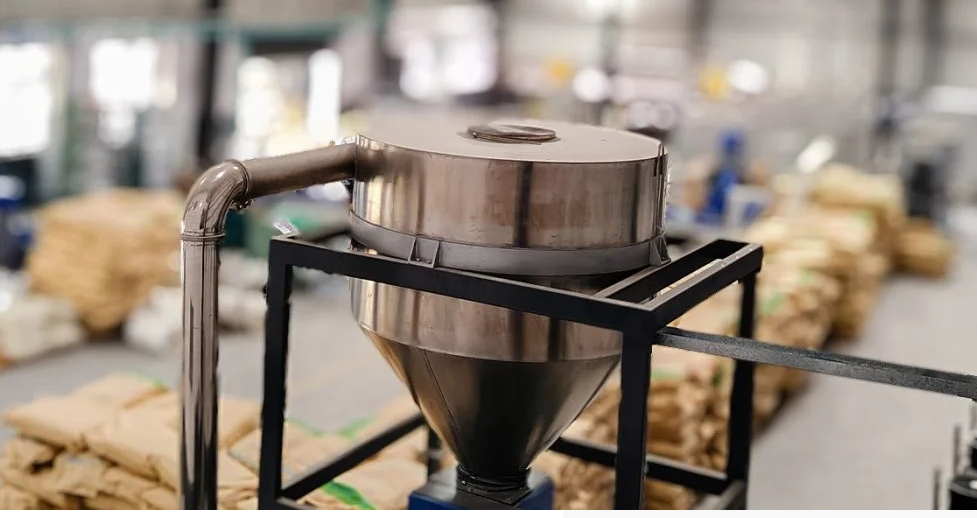
How bio‑PBAT behaves inside an extruder compared to LDPE
Compared to LDPE, bio‑PBAT has a very different melt behavior. It stretches easily, but it doesn’t “hold itself together” in the same way.
In technical terms, it has lower inherent melt strength. On a blown film line, that difference shows up immediately. Here’s what that means in practice:
- The melt can elongate smoothly, but it resists aggressive draw.
- The bubble is more sensitive to airflow and tension.
- Small changes in draw ratio or cooling have outsized effects.
Moisture adds another layer of complexity. Bio PBAT processing is unforgiving when it comes to water. Even small amounts of moisture can trigger hydrolysis once the resin melts.
Polymer chains shorten. Melt viscosity drops. What looks like a processing failure is often a chemistry issue that started long before the resin reached the extruder.
This also explains why PBAT often behaves better in injection molding than in blown film. Thick parts, faster cooling, and less stretch hide many of its weaknesses. Blown film does the opposite by exposing them.
Preparing bio-PBAT resin before you run the line
With bio PBAT resin, success or failure is often decided before the extruder is even switched on. How you handle the resin ultimately decides the results. So, the right preparation is absolutely necessary.
Here’s what that looks like in our daily routine at UKHI:
Storage:
We keep all bio PBAT resin sealed in moisture-proof bags and stored in a cool, dry place. Even a humid storage room can be a silent enemy. Every bag is labeled with grade, lot ID, and date opened. So, there’s never confusion later.
Drying:
Unless it’s proven that the pellets are below 0.05% moisture, we always dry the resin, typically at 70–80 °C for 2–4 hours.
Skipping this step has cost us dearly in the past. Once, a batch that seemed fine at first glance led to hours of pinholes and weak film. And all of it could be traced back to moisture picked up during storage.
Traceability:
Before any production run, we check and record all certificates. That includes analysis, lot numbers, and intended film thickness.
If you plan to sell the finished product as a compostable packaging film, make sure every ingredient and additive is certified. They must also be within the allowable scope for EN 13432 or ASTM D6400.
Blending:
We don’t consider blending optional. Adding PLA, starch, or minerals to bio PBAT resin is a design decision, not an experiment.
The blend ratios affect tear strength, clarity, sealability, and even how easily the film passes certification. Every blend is pre-weighed, documented, and logged in a batch record before anything hits the hopper.
If you make a mistake at any of these steps, it will haunt you all the way through the run. That’s why our team treats preparation with the same seriousness as actual extrusion.
Processing bio-PBAT on blown film lines: A step-by-step guide
Running bio PBAT resin on a blown film line demands more attention to detail than with conventional materials. At UKHI, our first rule is: start cool, start slow, and let the process stabilize before pushing for speed or output.
- Machine Setup:
For bio PBAT processing, we always begin with temperature settings at the low end of the recommended range. It’s usually between 140°C and 170°C, depending on the blend.
The die and zone settings also matter more than many realize. A cooler start helps minimize degradation and gives you more control as things ramp up.
- Screen Pack and Die Gap:
Fine screen packs (80–100 mesh) help filter out gels or contaminants. For most PBAT blown film applications, a moderate die gap and a steady, not aggressive, throughput keep the bubble stable.
If the mesh clogs too fast, we switch to a two-layer medium mesh arrangement to avoid sudden pressure spikes.
- Blow-Up Ratio and Air Ring:
We target a blow-up ratio of 2.0–2.5 at the beginning. That’s enough to form a stable bubble without over-stretching the film.
Air ring symmetry is critical; any imbalance will show up immediately as a wandering or collapsing bubble.
We always watch the frost line. If it rises or falls unpredictably, it’s a sign that something upstream, whether in die, screen, or resin, needs attention.
- Start-Up and Adjustments:
We ramp up screw speed slowly, typically no more than half of the max, while monitoring the melt pressure and film thickness. Only after seeing a steady bubble and consistent output do we start fine-tuning.
Temperature changes are made in small steps. It’s never more than 5°C at a time, and only after other variables are ruled out.
Every line is different. That’s why these aren’t hard rules. They are principles that let you adapt. If you change too many things at once, you lose the thread of what’s happening. But when you move stepwise, you can track every improvement and avoid mystery defects.
Start-up and stabilisation: getting to a saleable film
Once your bio PBAT blown film line is set up, the most critical period begins. What happens in the first 20 to 30 minutes of start-up and stabilisation can set the tone for your entire shift.
Purging:
We always begin by purging the line thoroughly. That means removing any leftover resin or contamination from previous runs.
This is especially important when switching from LDPE or another non-compostable material. Even a small amount of residue can affect film clarity, strength, and compostability.
Feeding and ramp-up:
With the machine clean and set to low, steady temperatures, we start feeding in the bio PBAT resin gradually.
The goal is not speed, but stability. We closely monitor the bubble, checking for diameter consistency, frost line height, and any early signs of instability.
If the bubble wanders or the gauge starts to drift, we pause and make small, careful adjustments. Never rush to full output before the process settles.
Defining success:
A saleable compostable packaging film isn’t just about appearance. For us at UKHI, it means:
- The film gauge is within ±2–3% of the target, with minimal variation.
- The bubble remains stable and symmetrical.
- Key properties like tear strength, COF, and sealability meet certification and customer standards.
If those benchmarks are met, only then do we scale up speed and output. But if issues crop up, it’s far easier and cheaper to reset early than to spend hours troubleshooting downstream.
Common bio-PBAT film problems and how we solved them
No matter how well you prepare, bio PBAT processing will challenge you with surprises. Over time at UKHI, we’ve faced nearly every possible issue in the book. What matters most is how you respond and what you learn.
Below, I’ve condensed our hard-won lessons at UKHI into one practical table. Use it as your reference on the shop floor.
| Common Issues | Likely Causes | How We Fix It |
| Bubble instability | Low melt strengthExcess air velocity or uneven coolingMoisture in resin | Reduce air ring speed/redirect flowDry resin thoroughlyAdd PLA or mineral filler for melt strength |
| Blocking (film sticks) | Hot layflat or high nip/winding tensionLow slip or antiblock additiveFilm not fully cooled | Lower layflat/winding tempReduce tensionIncrease compostable antiblock/slip additive dosage |
| Gels, fish-eyes | Moisture in resinContamination, char, poor mixing.Screen pack clogging | Re-dry resinTighten/clean screen packPurge the extruder thoroughly |
| Neck-in/gauge bands | Excess draw in the machine directionUneven/insufficient coolingMisaligned die/nip rolls | Raise the blow-up ratioFine-tune air ring/coolingAlign die/nip rolls |
| Low tear strength | Soft PBAT blendOver-orientation/stretchingIncomplete cooling/crystallization | Add PLA/starch/mineral fillerReduce drawEnsure proper cooling |
We didn’t crack these problems overnight. Consistent logging, careful adjustments, and a willingness to change one variable at a time made our bio PBAT blown film process stable.
Closing thoughts
If there’s one lesson bio PBAT processing has taught me, it’s that patience and discipline always pay off. But why do we stick with bio PBAT resin despite the learning curve?
Because the rewards are real. Demand for compostable packaging film is rising sharply. Brands want solutions that decompose as promised. The markets get biodegradable plastic alternatives that actually cost less.
Once your team has mastered these challenges, you can offer reliable, certifiable films and bags that stand out in the marketplace.