
Imagine getting 9.7% extra for the same product you are selling right now.
That’s how much customers are actually willing to pay for sustainable products. A 9.7% sustainability premium.
Now, imagine this sustainability premium showing up in your bottom line when you switch from traditional plastic packaging to sustainable packaging. That would be great, isn’t it? Unless your competitor beats you to it and you are left second guessing.
I understand that switching to sustainable packaging is easier said than done. Finding reliable, scalable, and affordable sustainable packaging can feel overwhelming.
The good news? The market for sustainable packaging in India has reached an inflection point.
India is fast emerging as one of the most important global hubs for sustainable materials. The market is being driven by manufacturing scale, agricultural resources, and strong policy support.
Therefore, utilizing India’s ecosystem can lead to more intelligent sustainable packaging sourcing choices.
In this guide, I will walk you through exactly how to do that.
First Things First, Why India?
Let’s examine why India has emerged as the top location for sourcing sustainable packaging:
A rapidly growing market
India’s sustainable packaging market is growing at over 6 percent annually. This growth is fueled by increasing demands from FMCG, D2C brands, food service, and exports. With that, several alternatives to plastic packaging have come up. Across formats and price points.
Cost and scale advantage
India combines low-cost manufacturing with high-volume production. Brands can obtain biodegradable packaging materials at much lower costs than in North America or Europe. And without sacrificing performance.
Strong regulatory push
Government-led plastic bans, EPR rules, and incentives for compostable and bio-based materials have accelerated innovation. This environment has directly encouraged an uptake in biodegradable packaging in India.
Together, these factors make sustainable packaging in India both practical and future-ready. So let’s dive in and see how to find the right solution.
Sustainable Packaging Material Options in India
You need to know what the material landscape looks like before you pick a provider. Today, India has a lot of alternatives to plastic packaging. But it’s not easy to pick one. Different situations call for different options. Here are some of the best choices and when to use them:
Paper and moulded fibre packaging
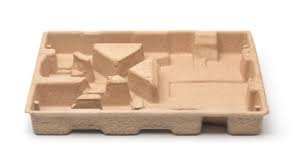
Paper is one of the most widely used options due to familiarity and recyclability. It works well for trays, inserts, and secondary packing. But making paper uses a lot of water. Plus, it doesn’t work well with liquids, so it can’t be used instead of plastic everywhere.
Compostable polymers
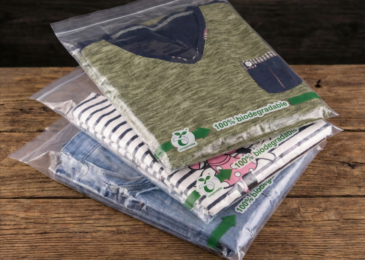
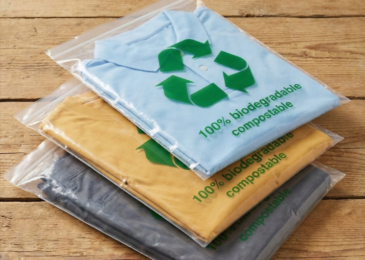
This category includes PLA, PBAT blends, and starch-based materials. Demand for compostable packaging in India has surged after single-use plastic restrictions. These materials are commonly used for carry bags, food packaging, and flexible films. However, they require proper end-of-life systems.
Bio-based and agri-waste materials
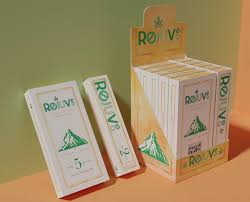
India generates hundreds of millions of tonnes of agricultural residue every year. Most of it is still burned, adding to air pollution and carbon emissions. Converting this waste into biodegradable packaging materials helps in:
- Reducing open burning
- Lowering dependence on fossil-based plastics
- Supporting circular value chains that benefit both farmers and manufacturers.
Common inputs include bagasse, rice husk, and wheat straw, which are increasingly used for rigid packaging, trays, and protective formats.
Hemp is emerging as one of the most promising materials in this space. It grows quickly and needs far less water than conventional crops. Plus, it requires minimal chemical inputs. Hemp fibres are naturally strong and lightweight too. This enables durable packaging with lower material usage and a reduced carbon footprint.
When processed at scale, hemp-based packaging combines performance with climate responsibility. That’s why it is an attractive sustainable packaging option for global brands.
Reusable formats
Glass and metal packaging still play a role, especially in closed-loop systems. While reuse reduces waste, transport emissions and breakage risks must be considered carefully.
Understanding these options is the foundation of effective sustainable packaging sourcing. Here’s a quick summary to help you decide which material best suits your needs:
| Type of Sustainable Material | Useful for Packaging What |
| Paper and Moulded Fibre | Boxes, cartons, trays, cup holders, protective inserts, secondary packaging for FMCG and D2C brands |
| Compostable Materials | Carry bags, food containers, takeaway packaging, cutlery, flexible films and liners |
| Agri-Waste Materials (hemp, bagasse, rice husk) | Rigid containers, trays, cushioning materials, premium and eco-conscious packaging formats |
| Reusable Glass and Aluminium | Beverage bottles, jars, cans, tins, refillable and long-shelf-life product packaging |
Finding the Right Sustainable Packaging Supplier in India
India has a lot of suppliers of eco-friendly packaging. But not all of them are suitable for scale, consistency, or long-term engagements
Here is a practical seven-step approach to find the right supplier for your needs:
1. Define your use case clearly
Packaging must protect your product in real-life conditions.
Questions to ask:
- What exactly am I packing — food, liquid, or dry goods?
- How long should it last on the shelf?
- Will it face heat, humidity, or long-distance transport?
Tip: If a supplier suggests a solution without asking these basics, be careful.
2. Shortlist suitable material categories
No single material works for every product.
Questions to ask:
- Does paper, compostable, bio-based, or reusable packaging suit my product?
- Am I choosing this material for performance or just because it is popular?
Tip: Avoid “one-size-fits-all” claims. Sustainable packaging is use-case specific.
3. Verify material transparency
Clear inputs mean predictable performance and compliance.
Questions to ask:
- What raw materials are used?
- Is the formulation stable at scale?
- Can you explain this in simple terms?
Tip: If answers sound vague or over-technical, that is a warning sign.
4. Check certifications and compliance
Compliance protects your brand and avoids future risk.
Questions to ask:
- Which certifications does this material have?
- Are these valid for India and export markets?
- What happens to the packaging after disposal?
Tip: Do not rely only on certificates. Ask how the material behaves in real waste systems.
5. Assess scalability and consistency
Packaging must work not just today, but as you grow.
Questions to ask:
- Can you supply higher volumes without quality changes?
- Have you handled similar scale before?
Tip: Scaling might not be possible if a provider has only completed a few smaller orders.
6. Test real-world performance
Weather and logistics are tough on packaging, so think about real-world performance
Questions to ask:
- Has this packaging been tested in Indian climate conditions?
- Can we run a pilot before finalising?
Tip: Never skip testing. Lab success does not guarantee market success.
7. Evaluate long-term partnership mindset
Sustainable packaging is an ongoing journey, not a one-time buy.
Questions to ask:
- Will you support us if our needs change?
- Can you help optimize packaging over time?
Tip: If the supplier only talks about price and not partnership, think twice.
When I began exploring this space, India had limited material options. The market was nascent, fragmented, and unexplored.
That gap is what led to the birth of Ukhi.
We saw how hemp and agricultural waste had the potential to redefine sustainable packaging in India. And today that potential is visible globally.
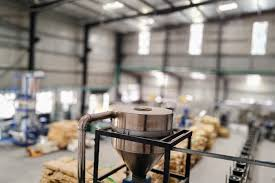
Ukhi was built to turn that vision into scalable reality.
Get, Set, and Find Sustainable Packaging in India
Now you know the what, the why, and the how. The next step is action.
Start evaluating materials. Start speaking to suppliers. Start testing. If you are exploring sustainable packaging sourcing, India offers one of the strongest ecosystems in the world.
If you would like to begin that journey with Ukhi, we are ready to support your transition. Customers already value sustainable packaging. The only question is whether they associate that value with your brand or your competitor’s.
FAQs
1. Is eco-friendly packaging more costly in India?
Eco-friendly packaging may cost more per unit than traditional plastic. But it becomes more cost-effective when volumes scale. Moreover, the upfront cost disparities between conventional and sustainable plastic alternatives are frequently outweighed by considerations like compliance, brand value, and long-term dependability.
2. How quickly can Indian vendors deliver eco-friendly packaging?
Material, volume, and delivery destination all affect timelines. For basic packaging products, reputable eco-friendly packaging providers in India offer delivery in weeks. On the other hand, custom solutions could take longer to ship.
3. Is it possible to customize eco-friendly packaging?
Of course. For all of our eco-friendly packaging packaging, Ukhi allows customization in terms of printing, thickness, and package size.