
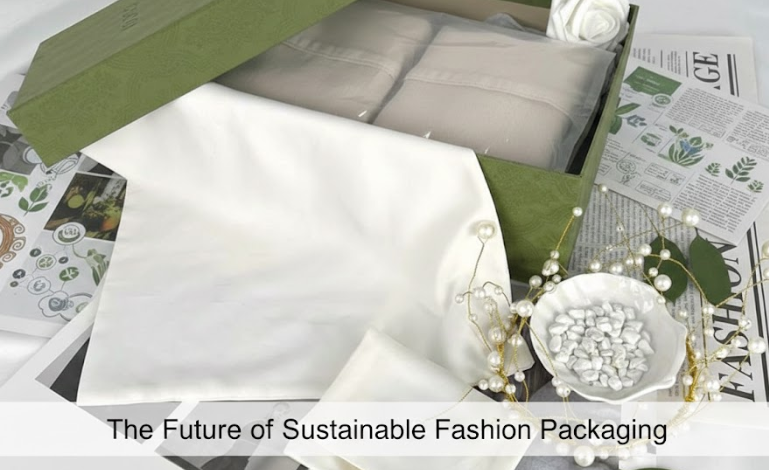
The fashion industry is at a turning point.
Till a couple of years ago, it was once driven primarily by speed, scale, and seasonal trends. But today, it is being reshaped by deeper forces…
Climate urgency. Material scarcity. Policy shifts. And a more informed global consumer.
Fashion packaging (which was treated as a secondary concern!) is now emerging as a strategic layer of the fashion value chain. Sustainable packaging design fashion is no longer just a creative exercise. It has become a discipline that blends engineering, environmental science, compliance, and storytelling.
Want to understand where fashion packaging is headed in the coming decade? It helps to look at the full arc of sustainable fashion past, present, and future.
Read on as I walk you through the evolution of packaging. Plus, I discuss 5 packaging innovations to watch out for.
The Past: How Fashion Packaging Reached This Moment
For most of modern fashion history, packaging prioritized speed and convenience. Plastic polybags, laminated cartons, bubble wraps, and mixed-material mailers became the default. Simply because they were cheap, durable, and easy to scale. Environmental impact was rarely a consideration. Supply chains were simpler, warehousing cycles shorter, and reverse logistics practically nonexistent.
This explains why many brands still struggle to break free from linear thinking. Traditional systems were designed for speed, not for recovering materials or closing loops. The current shift toward eco-friendly fashion packaging is more than swapping materials. It reflects a structural change in how value, waste, and responsibility are understood.
The Present: Pressure from Every Direction
Today, sustainable packaging design fashion must navigate overlapping pressures like:
- Climate instability that increases transit risks
- Global governments are tightening regulations
- Consumers are more conscious of not just products but packaging too
- Marketplaces are more cautious about compliance
- Logistics networks have grown increasingly complex
Today, packaging can no longer be designed in isolation. It must withstand shipping, comply with global laws, protect garments, and be sustainable.
In response, many brands are experimenting with new material classes like:
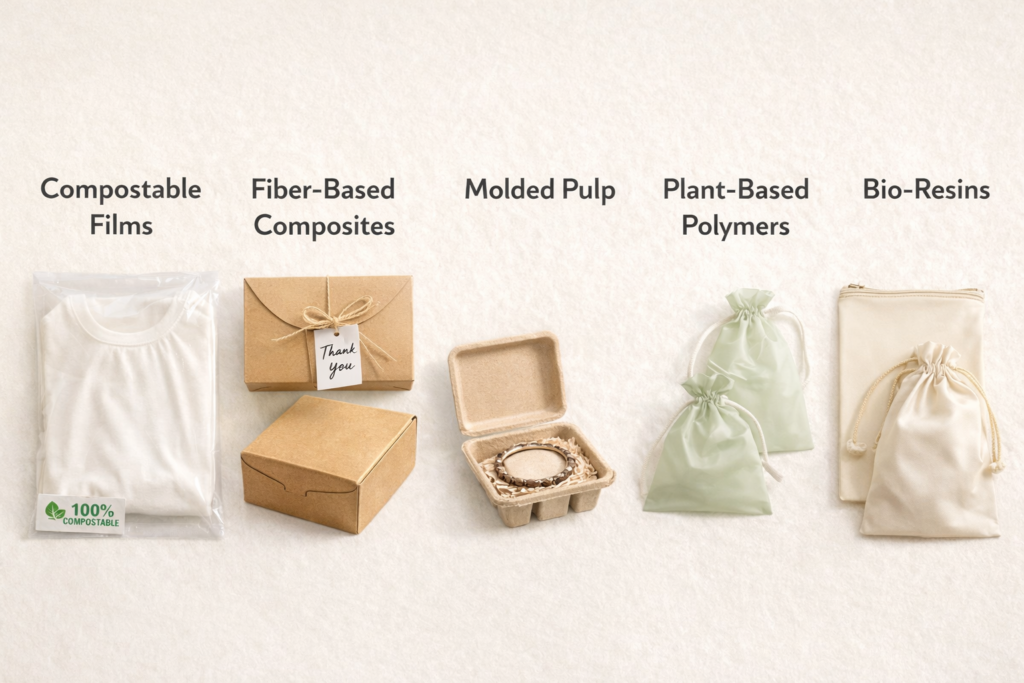
The Future: 5 Innovative Packaging Solutions for Fashion to Watch Out For
The future of sustainable packaging is evolving quickly, courtesy advancements in materials, technology, and business approaches. Let’s take a look at 5 important innovations that are changing the game.
1. Plant-Based and Bio-Derived Materials
Plant-based materials are rapidly moving from experimental labs to mainstream production. Fibers such as banana, sugarcane bagasse, and seaweed-based films are gaining attention. Unlike traditional fossil fuel-based plastics, these plant-based materials also sequester carbon during growth. This doubles their environmental benefit.
For instance,
- Sugarcane bagasse, a byproduct of sugar production, can be molded into internal packaging or mailers. These remain strong during shipping while also being fully compostable in industrial facilities.
- Seaweed-based films can replace single-use polybags without compromising moisture resistance.
- Hemp fiber add more strength to regular bioplastics and provide a natural, biodegradable and sturdy packaging for clothing
Important: Fashion brands must test these materials for real-world conditions before adoption. Proper selection ensures that biodegradable packaging for clothing performs reliably in transit. While also meeting global compliance standards, which makes the choice ethical and practical.
2. Modular and Reusable Packaging Systems
Circular business models are completely changing the way brands think about packaging. Modular and reusable systems reduce material use and waste. They create a tangible connection between sustainability and brand identity.
Examples include foldable, returnable boxes, and deposit-based mailers, which are returned after use.
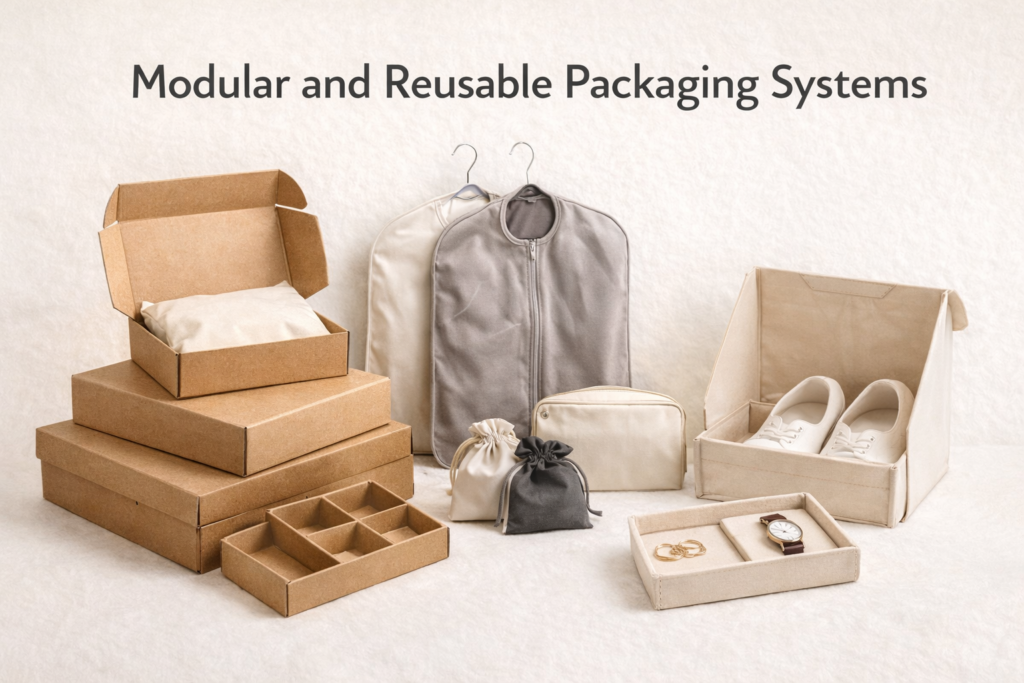
For one, these systems reduce demand for new materials. But they also enhance unboxing experiences, which is a crucial element in fashion marketing.
The key challenge here is logistics integration though. Brands must establish return pathways, cleaning systems, and incentives. That’s the first step to ensuring consistent consumer participation. Successfully implementing these systems can turn packaging into a recurring touchpoint for sustainability storytelling. It will also help build loyalty and trust while reducing environmental impact.
3. Smart Packaging in Fashion
Smart packaging is redefining transparency and engagement in the fashion supply chain. QR codes, embedded NFC tags, and blockchain-based tracking are now being integrated into packaging. This gives consumers and regulators verifiable data on origin, material composition, and end-of-life instructions.
For example, you can embed a QR code that shows the full lifecycle of a garment’s packaging. It can also include carbon footprint and recycling instructions. Consumers scanning the code can understand how the packaging contributes to sustainability goals. Regulators can use it to verify compliance remotely.
Beyond transparency, smart packaging in fashion also supports operational efficiency. Real-time tracking can:
- Prevent transit losses
- Improve returns management
- Optimize supply chain planning based on package performance data
This convergence of technology and sustainability ensures that packaging is not only eco-friendly but also smarter, more accountable, and value-adding for the entire ecosystem.
4. Advanced Biopolymers and Enzyme-Based Solutions
Biopolymers and enzyme-assisted packaging represent the cutting edge of eco-friendly fashion packaging. Advanced biopolymers are engineered to degrade under specific environmental triggers. This allows faster composting without compromising strength during transit. Enzyme-assisted solutions accelerate degradation in controlled facilities. This ensures that packaging breaks down efficiently and safely.
Brands across the globe are experimenting with bio-resins derived from hemp, corn, tapioca, or algae. These resins offer the strength of plastic while remaining compostable. Enzyme-based films can be “programmed” to degrade when exposed to industrial composting environments. It can be a major support in reducing landfill burden and contamination risks.
These materials are particularly valuable for export-oriented brands. With these, fashion companies can meet strict EU and North American disposal standards without compromising on packaging performance.
5. AI-Driven Material Selection and Supply Optimization
Artificial intelligence is emerging as a powerful tool in the future of sustainable packaging design fashion. AI algorithms can analyze climate, shipping patterns, storage conditions, and material behavior to recommend optimal packaging solutions. This reduces damage and minimizes waste. It also helps brands comply with diverse regulations across geographies.
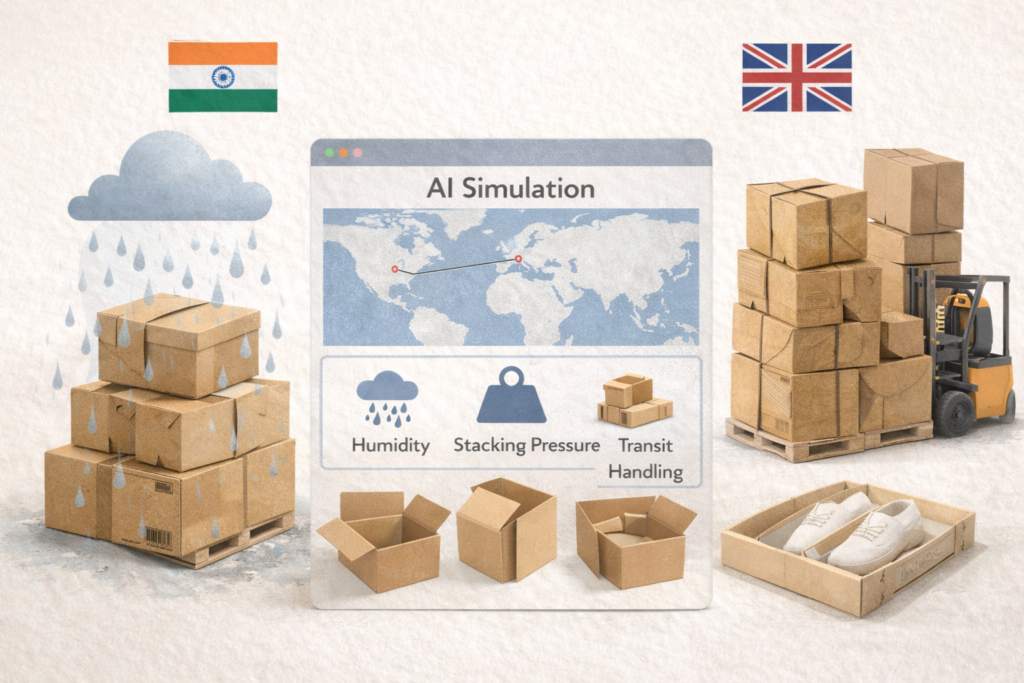
For instance, an AI-driven model can simulate a long-haul shipment from India to the UK. It can predict how different materials will react to humidity, stacking pressure, and transit handling. Brands can then select the best material, thickness, and reinforcement strategies.
Preparing for What Comes Next
The future of fashion will reward brands that keep sustainability at the forefront. Packaging is no longer a backdrop. Innovative packaging solutions for fashion are helping brands demonstrate their commitment to the planet and to their consumers.
At Ukhi, we sit at the forefront of this shift. Our sustainable packaging design fashion uses materials that perform flawlessly. We don’t just meet today’s expectations. We are also ready for the challenges of tomorrow.
For brands, the next steps are clear. Eco-friendly fashion packaging that travels across borders with confidence is no longer optional. Those who embrace this mindset now will be able to move with the market and set standards for the future of sustainable fashion.
FAQs
1. How long does it take Ukhi to deliver export-ready sustainable packaging?
Usually, we deliver custom sustainable packaging solutions in about 4 to 12 weeks. During this time, we make sure the materials are strong, durable, and can handle the journey from us to you without any hiccups
2. Can reusable or modular packaging work for international shipments?
Yes. Properly designed modular and reusable packaging can survive long-haul shipping. But brands should pilot the packaging first to assess durability, material recovery, and compatibility with customs and logistics networks in export markets.
3. How do smart packaging solutions benefit brands?
Smart packaging isn’t just trendy. Instead, it also builds trust. QR codes or NFC tags let customers check your sustainability claims, guide them on proper disposal, and even track shipping conditions. For international buyers today, this kind of tech is becoming a standard expectation today.
4. Are plant-based or bio-derived materials reliable?
When tested under real-world conditions, yes. Hemp, banana fiber, corn, sugarcane, and seaweed-based films provide both biodegradability and durability. Material selection must consider climate, shipping, and storage to meet international standards.
5. What should brands prioritize for future-proof packaging?
The focus should be on system design. Brands should choose the right materials that:
- Ensure modularity
- Deliver performance
- Comply with regulations
- Communicating clearly
This helps reduce waste, while also strengthening brand credibility.