
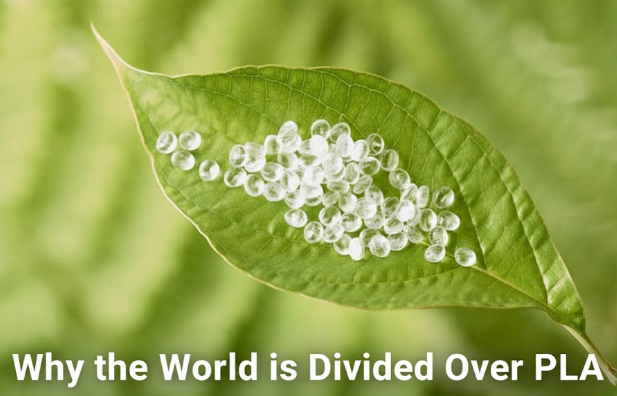
In the past few years, PLA (Polylactic Acid) has become the face of “eco-friendly plastics.”
It is everywhere now — in compostable cups, takeaway boxes, and even 3D printing materials.
It is marketed as biodegradable, plant-based, and a cleaner alternative to petroleum plastics.
But if you talk to scientists or sustainability experts, you will hear different opinions.
Some see PLA as a big step toward a sustainable future, while others consider it an example of greenwashing.
So why is the world so divided over PLA? Let’s unpack the debate.
What is PLA?
Polylactic Acid, or PLA, is a bioplastic made from renewable resources like corn starch, sugarcane, or hemp. Unlike conventional plastics, PLA is derived from plants. This makes it part of the global shift toward circular, low-carbon materials.
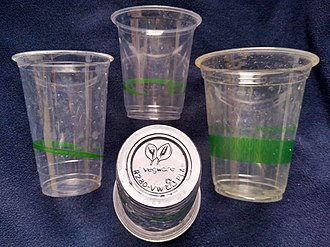
PLA is lightweight, transparent, and versatile. You can find it in food packaging, disposable cutlery, compostable bags, medical implants, and 3D printing filaments.
The promise of PLA: Why it became popular
Renewable Feedstock
PLA reduces dependence on fossil fuels. Every kilogram of PLA made from plants replaces roughly the same amount of petroleum-based plastic. That helps conserve non-renewable resources.
Lower Carbon Footprint
According to studies, PLA may emit 60–80% less carbon than traditional plastics, depending on how it is manufactured and handled. It is therefore a popular option for companies trying to reduce their environmental impact.
Industrial Compostability
PLA can decompose under industrial composting conditions, which maintain about 58°C and 90% humidity, where it can break down within a few months. This makes it popular for single-use packaging.
Safe and Non-toxic
PLA is food-safe, biocompatible, and free from harmful chemicals such as BPA and phthalates. That is why it is used not just in packaging but also in medical applications like sutures, stents, and tissue scaffolds.
In short, PLA represents an important move from extraction toward regeneration. It proves that useful materials can come from biology as well as chemistry.
At first glance, it might seem like the silver bullet solution. A plastic made from plants instead of oil. But when you look deeper, things aren’t as they are.
The criticism: Why PLA isn’t as “Green” as it sounds
The disadvantages are just as significant as the advantages. These are the primary issues brought up by environmentalists and scientists.
Compostable, But Only in the Right Conditions
PLA doesn’t break down in regular soil or household composts. Only industrial composting facilities can supply the high heat and humidity it requires. Unfortunately, these facilities are still limited in many countries.
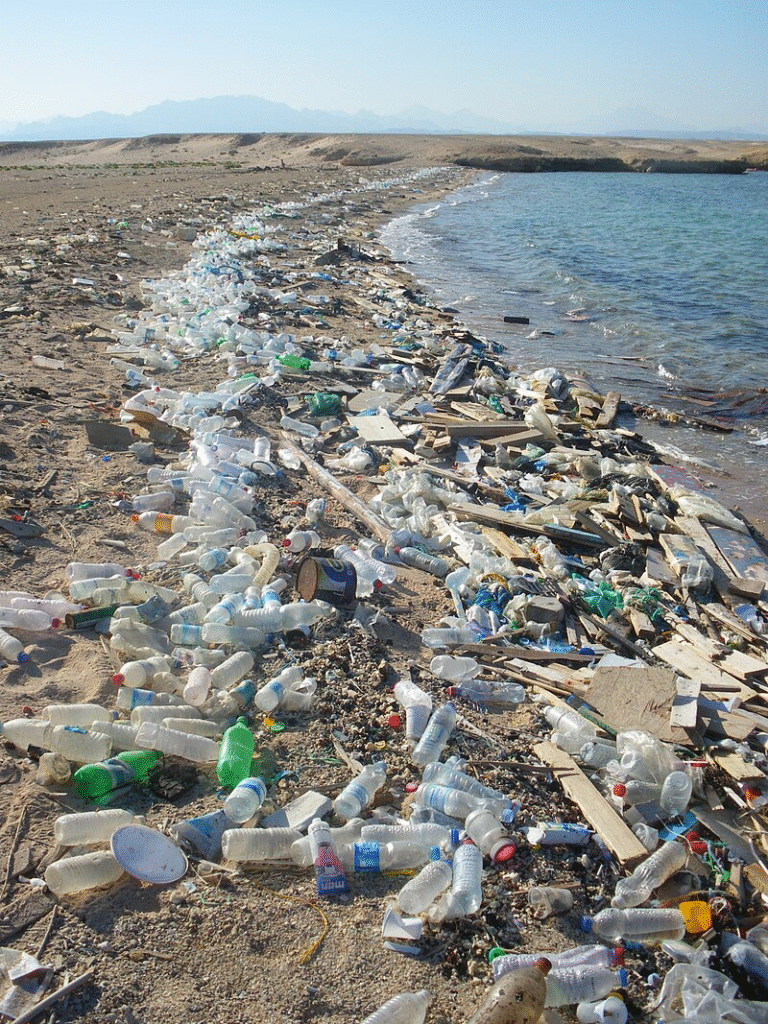
If PLA ends up in landfills or oceans, it behaves like conventional plastic and remains there for decades.
Food vs. Plastic Dilemma
Most PLA is made from food crops such as corn and sugarcane. As its demand grows, it can compete with food production for land, water, and fertilisers. This can worsen agricultural pressure in countries already facing food security challenges.
Limited Recycling
PLA cannot be recycled with PET or PE plastics because it contaminates those streams. While chemical recycling is possible, it is expensive and rare. As a result, much of today’s PLA is either incinerated or sent to landfills.
Carbon Savings Aren’t Always Guaranteed
The manufacturing process determines PLA’s carbon advantage. Overall carbon emissions may even rise if the crops are cultivated using chemical fertilizers or if coal-based electricity is used for production and processing.
Overall, the sustainability of PLA depends on the sustainability of the entire system surrounding it, including waste management and farming.
Why the world remains divided over PLA?
The divide over PLA is less about whether or not PLA is good, but more about how we see the plastic problem.
The optimists consider PLA to be a transformational material that helps reduce dependence on fossil fuels. They believe it is better to make progress with what we have than to wait for a perfect solution.
PLA’s critics contend that it diverts attention from more serious problems like over consumption and improper waste management. They fear that although plastic waste continues to increase, calling it “green” creates a false impression of progress.
Both sides have valid points. The truth lies somewhere in between. PLA is not a miracle or a mistake. It is a tool that can help only if supported by proper waste collection, composting systems, and public awareness.
How Ukhi is getting the best of PLA with hemp
At Ukhi, we believe that enhancing materials rather than merely replacing them is the key to true sustainability. Although PLA demonstrated the potential of plant-based plastics, issues such as brittleness, poor biodegradability, and dependence on food crops remain.
That is why we developed hemp-based bioplastics. Hemp grows quickly, requires little water, and naturally captures CO₂ from the air. When used to replace traditional plastics, it forms a stronger, more sustainable material that solves many of PLA’s problems.
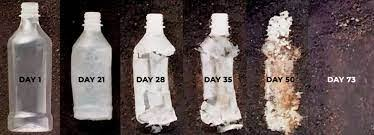
- Better biodegradation: Hemp’s natural fibres make the composite easier for microbes to break down, even outside industrial composting environments.
- No food crop dependence: Hemp is not a food crop, so it avoids competition with agricultural land and food resources.
- Lower carbon footprint: Hemp absorbs carbon dioxide during growth and needs less energy to process, which helps reduce overall emissions.
- Improved strength and texture: Hemp bioplastics offer a tougher, more durable material with a natural matte finish, perfect for practical and eco-friendly designs.
For us, hemp-PLA is not a replacement but an evolution. It builds on the promise of PLA and brings it closer to the reality of sustainable materials.
The way forward
The debate around PLA reveals a larger truth. Sustainability is not about finding one perfect material. It is about continuous learning and improvement.
At Ukhi, our focus is on refining what works and rethinking what does not. By using hemp for bioplastics, we are proving that innovation and responsibility can grow together.
The future of materials is not about taking sides. It is about designing smarter, regenerative alternatives to traditional plastic. Those that help the planet heal, a single product at a time.
FAQs
1. Is PLA completely biodegradable?
Not in regular conditions. PLA only breaks down in industrial composting conditions that maintain controlled heat and moisture. In landfills or oceans, it behaves like traditional plastic.
2. Can PLA be recycled?
Yes, but only when it is recycled in a separate stream. If mixed with PET or PE, however, it contaminates the process. And the worst part is that dedicated PLA recycling is still uncommon.
3. What’s the difference between PHA and PLA?
PLA and PHA are both bioplastics. However, they differ in terms of how they break down. PHA is made by bacteria and can naturally biodegrade in soil or water. PLA, however, needs industrial composting to break down properly.
4. Does PLA reduce microplastic pollution?
To some degree, yes. PLA can still form microplastics if it is not composted properly. In industrial composting, however, it breaks down into natural components without leaving residues.
5. What’s the best alternative to PLA?
There’s really no one-size-fits-all solution. Hemp-based bioplastics, PHA, bagasse, and starch blends all have their perks. The right pick totally depends on what you’re making and how your local waste systems handle it.