
Walk into any modern retail store in India and pick up five different products.
A food tray. A garment bag. A courier mailer. A compostable carry bag. A thermoformed lid.
There is a high chance that at least one of them is not conventional plastic anymore. It is one of three materials: PLA, PHA, or bio-PBAT.
This is where the real debate begins.
For policy makers, the question is not simply about sustainability. It is about regulatory clarity and standards alignment.
For investors, it is about scalability and margins.
For educators, it is about teaching the next generation the difference between marketing claims and material science.
The discussion is no longer just about bioplastics vs plastic.
It is about which biopolymer performs best under Indian conditions, Indian regulations, and Indian infrastructure.
In this article, I will compare PLA, PHA, and bio-PBAT across:
Mechanical performance
Compostability and environmental behavior
Cost and scalability in India
Application suitability
And by the end, we will have clarity on which material performs best and where.
Let us move directly into performance.
How Do PLA, PHA, and Bio-PBAT Compare in Performance?
Before we evaluate policy or cost, we must evaluate physics.
Why?
Because a material must first work.
PLA is known for rigidity and clarity. It performs well in thermoforming and rigid packaging.
PHA is versatile and naturally biodegradable across more environments.
Bio-PBAT is flexible and often used in films and carry bags.
A Simplified Table For Comparing PLA, PHA, and Bio-PBAT In Indian Applications:
| Property | PLA | PHA | Bio-PBAT |
| Rigidity | High | Moderate | Low |
| Flexibility | Low | Moderate | High |
| Heat Resistance | Moderate | High | Low–Moderate |
| Compostability | Industrial | Soil, marine, and compost | Industrial |
| Film Processing | Moderate | Moderate | Excellent |
| Clarity | High | Moderate | Low |
Now let’s see what this means in practice.
Where PLA Performs Well:
PLA is strong and stiff. That makes it suitable for:
- Rigid food trays
- Disposable cutlery
- Clear packaging windows
- Thermoformed containers
However, PLA can become brittle under stress and high heat. In India’s climate, especially in northern summers, heat distortion becomes relevant.
But, this does not make PLA inferior. It means it must be used in the right application.
Where PHA Excels:
PHA is structurally different. It is produced through microbial fermentation and has the rare advantage of biodegrading in soil and marine environments.
From a policy perspective, PHA addresses long-term environmental leakage risks better than most materials.
Mechanically, PHA offers:
- Higher heat resistance than PLA
- Better environmental degradation profile
- Moderate flexibility
The challenge is cost and supply scale.
Why Bio-PBAT Is Used So Widely:
When we discuss compostable carry bags or courier films in India, bio-PBAT almost always enters the conversation.
That is because bio-PBAT is flexible and behaves more like conventional polyethylene.
If we are comparing bioplastics vs. plastic, this is the material that feels closest to plastic in flexibility and film performance.
Most commercial compostable films in India are blends of PLA and bio-PBAT.
Why?
Because:
- PLA adds strength and stiffness
- Bio-PBAT adds flexibility and toughness
This blending approach is critical when discussing performance realistically.
So in pure mechanical terms:
- PLA wins in rigidity and clarity
- PHA wins in environmental degradation and heat stability
- Bio-PBAT wins in flexibility and film behavior
But mechanical performance is not the final word.
Environmental implications are critical when considering sustainable packaging materials.
Let us examine that next.
Environmental Impact: Which Bioplastic Is Most Sustainable?
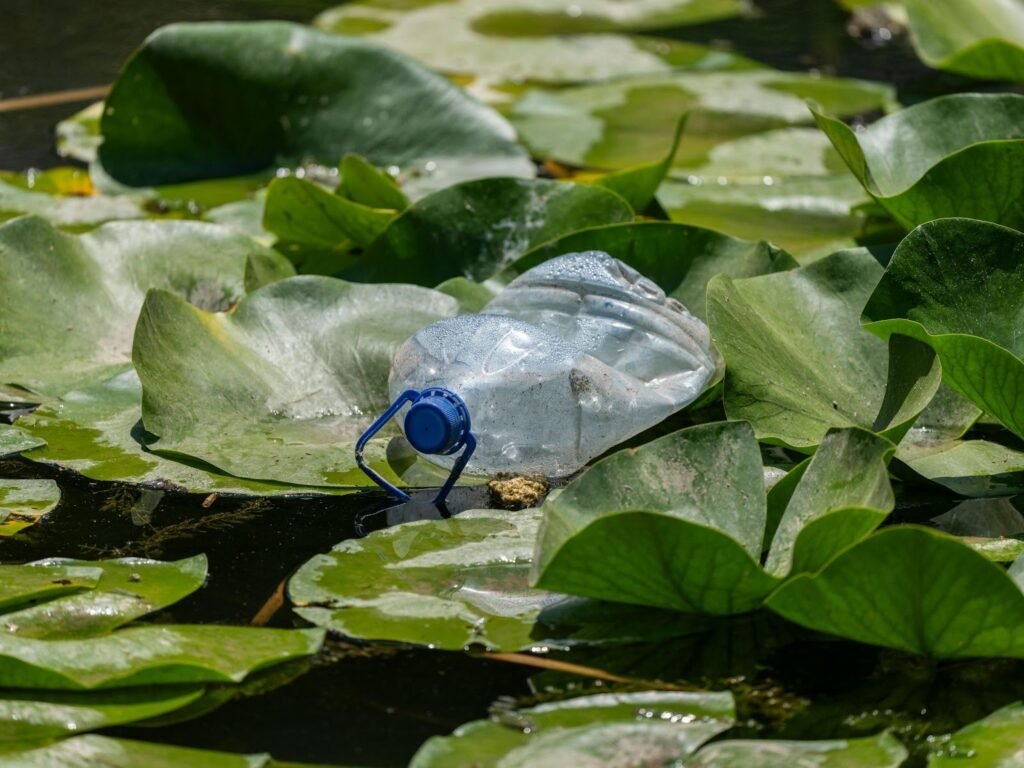
Let’s try to assess the environmental performance of PLA, PHA, and bio-PBAT through Indian waste realities.
India operates under:
- Plastic Waste Management Rules
- Extended Producer Responsibility (EPR) framework
- Compostability standards such as IS/ISO 17088
The debate around bioplastics vs. plastic often oversimplifies compostability.
Let us clarify.
PLA and Environmental Conditions
PLA is industrially compostable.
This means that it requires:
- Controlled temperature (around 58°C)
- Managed composting facilities
India’s composting infrastructure is improving but still uneven.
If disposed improperly, PLA does not degrade as quickly as marketing suggests.
This doesn’t invalidate PLA. It simply means policy must align with infrastructure.
PHA and Broader Biodegradation
PHA stands out because it biodegrades in:
- Soil
- Marine environments
- Compost
For coastal states and agricultural applications, this becomes strategically important.
From an educator’s standpoint, PHA demonstrates what advanced biodegradable plastics in India can achieve.
From an investor’s standpoint, however, scaling PHA economically remains challenging.
Bio-PBAT and Compostable Blends
Bio-PBAT is typically compostable but not fully bio-based.
This is where the discussion of bioplastics vs. plastics becomes nuanced.
Not all bioplastics are 100% plant-derived.
Some, like bio-PBAT, are partially bio-based and partially fossil-based but compostable.
The environmental benefit here lies in the following:
- Compostability
- Reduced microplastic persistence
- Compatibility with industrial compost systems
Here’s a summary table of what we discussed above on the environmental performance of PLA, PHA, and bio-PBAT:
| Factor | PLA | PHA | Bio-PBAT |
| Compostability | Industrial composting required | Compost, soil, marine | Industrial composting |
| Bio-based Content | Mostly plant-based | Fully bio-based | Partially bio-based |
| Fit for Indian Infrastructure | Good where composting exists | Emerging, limited scale | Strong via blended films |
In India, where compostable carry bags are widely used, bio-PBAT blends with PLA dominate.
This hybrid approach balances performance and environmental compliance.
Next we will see how practical adoption is when costs and scale are considered.
Cost and Scalability in the Indian Context
When we compare PLA, PHA, and bio-PBAT in India, cost curves and supply maturity vary significantly.
- PLA is currently the most globally produced bioplastic. It is manufactured in multiple regions and imported into India for compounding and conversion. That scale advantage makes PLA relatively predictable in pricing compared to other advanced bioplastics.
- PHA, in contrast, is still scaling. Production capacity globally remains limited. That affects pricing stability and long-term contracts. For investors evaluating bioplastics vs. plastic, this is a critical point. Without manufacturing depth, market penetration remains constrained.
- Bio-PBAT occupies an interesting middle ground. While not fully bio-based, it integrates well into compostable film formulations. Because bio-PBAT blends efficiently with PLA, converters can adapt existing film lines with minimal disruption. This compatibility has made bio-PBAT central to India’s compostable carry bag ecosystem.
In practical terms:
- PLA offers scale advantages.
- PHA offers innovation advantages.
- Bio-PBAT offers processing advantages.
At UKHI, we continuously assess how agricultural residue-based polymers can reduce reliance on imported feedstocks while maintaining processing compatibility with Indian converters.
If you are evaluating transition strategies, order a sample kit from Ukhi today.
Because scalability is not just about raw material supply.
It is about converter readiness, certification pathways, and price stability over time.
And this brings us to application-level decisions.
Which Bioplastic Performs Best for Different Applications?
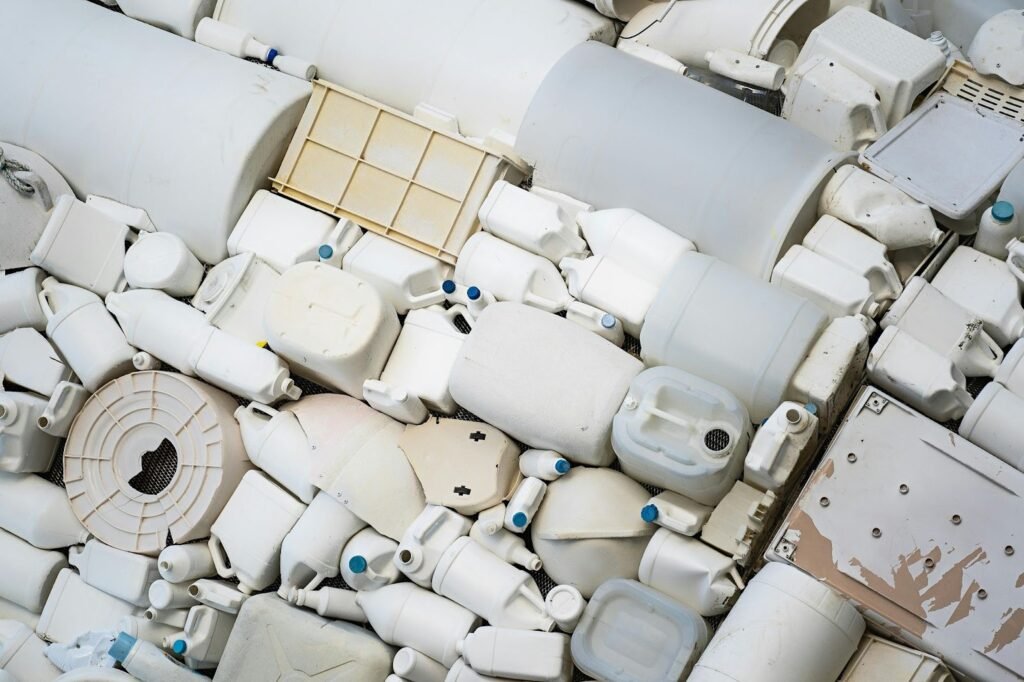
A material does not perform in isolation.
It performs inside a product, under stress, under regulation, and within infrastructure.
Let us examine where PLA, PHA, and bio-PBAT fit best in India.
In this table we have evaluated based on the widely used plastic categories:
| Application | Best Material | Why It Performs Best |
| Rigid Food Packaging | PLA | High stiffness, clarity, and industrial compostability. |
| Flexible Films & Carry Bags | Bio-PBAT (with PLA) | Excellent flexibility, tear resistance, and processability. |
| Agricultural Mulch Films | PHA | Effective soil biodegradation and environmental compatibility. |
| Medical & Specialty Uses | PHA | Biocompatibility and advanced biodegradation properties. |
| Compostable Urban Packaging | PLA + Bio-PBAT | Balanced strength, flexibility, and scalability for India. |
In practical decision-making:
- PLA leads in rigid formats
- Bio-PBAT leads in flexible formats
- PHA leads in advanced biodegradation use cases
There is no universal winner. There are application-specific leaders.
Which leads us to the broader question while doing a bioplastic comparison in India.
Is there really a best one?
Final Comparison: Which Bioplastic Performs Best Overall?
When comparing PLA, PHA, and bio-PBAT, we must avoid oversimplification.
So, a single winner isn’t likely.
Let us summarize clearly what we understand so far:
- PLA: Strong in rigid packaging and industrial compost systems
- PHA: Strong in environmental degradation performance
- Bio-PBAT: Strong in film flexibility and processing compatibility
From a policy standpoint, India must encourage diversified material ecosystems rather than single-polymer dependency.
From an investment standpoint, the opportunity lies in scaling domestic production capacity and feedstock innovation.
From an education standpoint, clarity matters.
Not all bioplastics behave the same.
Not all compostable polymers degrade under the same conditions.
And not every solution while comparing bioplastics like PLA, PHA, and bio-PBAT with conventional plastics is interchangeable.
Final Thoughts
PLA, PHA, and bio-PBAT each serve a distinct role in the evolving ecosystem of bioplastics.
The real shift is not simply from plastic to alternative polymers.
It is toward smarter material selection within the broader bioplastics vs. plastic framework.
The question is not which single polymer wins.
It is how India approaches sustainable packaging materials to build a diversified, performance-driven, and infrastructure-aligned biopolymer strategy.
And how this strategy translates into measurable impact.
FAQs
- What Is The Key Difference Between PLA, PHA, And Bio-PBAT?
PLA is rigid and industrially compostable. PHA biodegrades in soil and marine environments, and bio-PBAT offers flexibility.
- Which Bioplastic Is Best Suited For Sustainable Packaging Materials In India?
For rigid formats, PLA performs well. Flexible packaging typically uses bio-PBAT blends, while PHA supports advanced applications. They are the new-age sustainable packaging materials in India.
- Are PLA, PHA, and bio-PBAT Considered Biodegradable Plastics In India?
Yes, all three qualify as biodegradable plastics in India when certified under IS/ISO 17088. However, PLA and bio-PBAT require industrial composting, while PHA biodegrades across broader natural environments.