
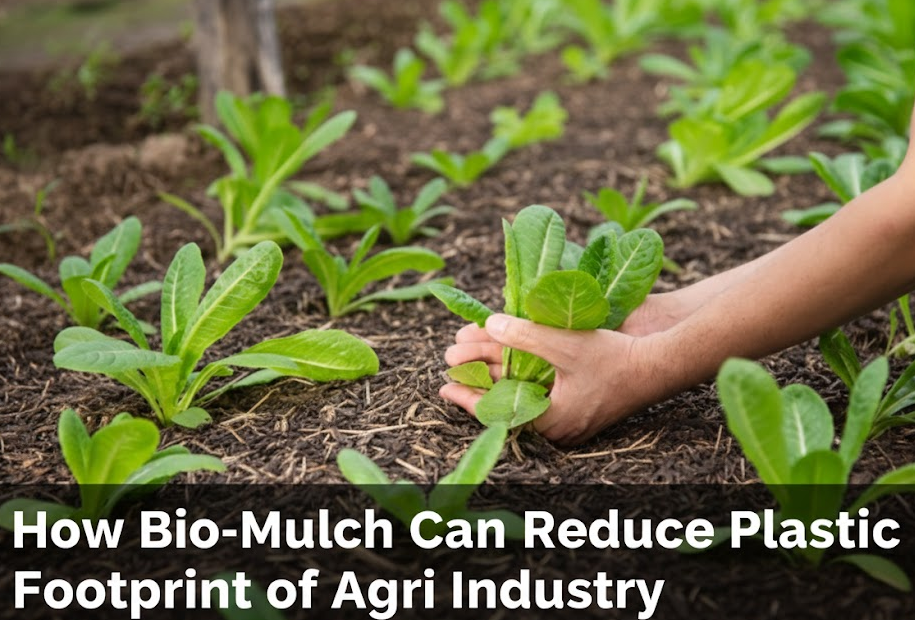
Every growing season, farmers lay down roughly 2 million tonnes of plastic mulch. This is enough to blanket 30 million hectares, an area the size of Italy.
But once the crop is harvested, most of that film is burned, buried, or forgotten. Some studies have measured up to 545 kilograms of plastic residue per hectare of cropland.
Globally, that adds up to 12.5 million tonnes of plastic used on farms each year, with less than 5 percent ever recycled.
If we swapped even a portion of that for biodegradable mulch films:
- There would be less plastic left behind to break down into microplastics.
- Farmers wouldn’t need to burn, bury, or haul away used mulch.
- Over time, the cumulative plastic pollution from agriculture could drop dramatically.
At UKHI, farmers tell us they see the same weed suppression, moisture retention, and temperature control they expect from plastic. The only difference? At the end of the season, there’s nothing to pull up. They’ve left with a healthier field ready for the next crop.
Let’s see how bio-mulch as a plastic mulch alternative can reduce agriculture’s plastic footprint.
How much plastic waste could bio-mulch save each year?
Mulch and greenhouse films account for nearly 40% of all agricultural plastic films. That is over 6 million tonnes per year, globally.
The main material for traditional mulching films is polyethylene (PE) plastic and a single acre of vegetable crop can require up to 2.4 kilometers of polyethylene mulch. Multiply that across millions of hectares and you get a mountain of plastic that is nearly impossible to collect or recycle.
But this is not the end of mulch’s agricultural plastic footprint.
PE films fragment over time due to UV, tillage and mechanical damage. This leaves behind plastic particles that remain in the soil for decades.
This, in turn, poses a risk to crop growth, food chain and long‑term productivity.
Not only does it cause long‑term soil contamination. These tiny, invisible fragments also disrupt soil porosity and microbial life. Over time, these fragments:
- Alter how water moves through the ground.
- Interfere with the bacteria and enzymes that drive healthy crop growth.
- Make their way into plant tissues and, eventually, our own bodies.
The picture below illustrates how macro (MaP), micro (MP) and nano (NP) plastic make their way up from soil and plants via microbes and insects.
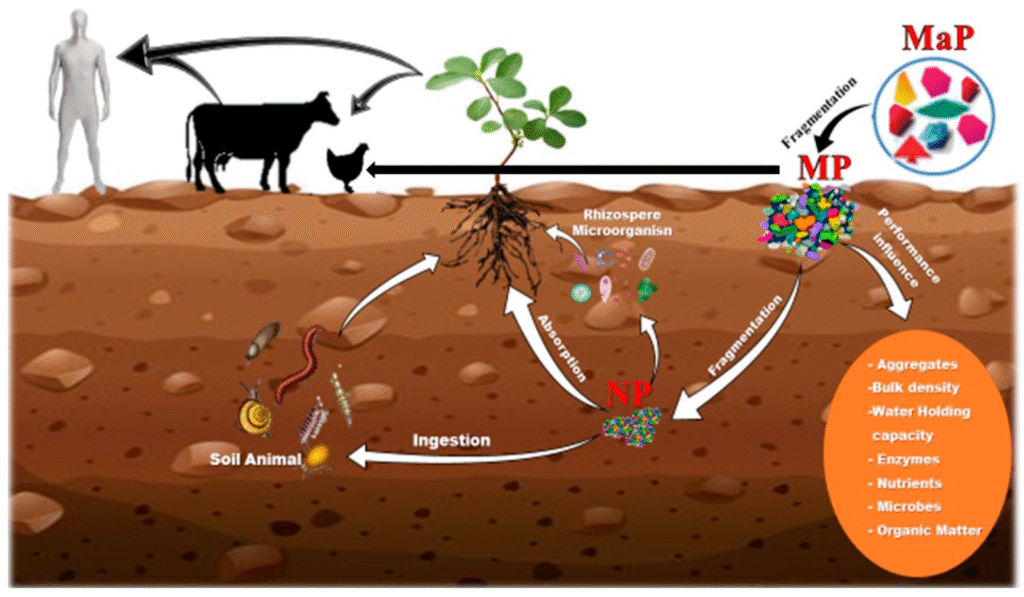
In short, using plastic mulch creates an ongoing legacy of pollution that undermines the soil we rely on for our food.
How biodegradable mulch films offer a way out
Bio-mulch is a soil‑biodegradable film that is not made from fossil fuels.
These bio‑based agricultural films perform like traditional plastics to:
- suppress weeds, and
- control moisture/temperature control.
But then they biodegrade into natural compounds rather than leaving persistent residues.
Bio-much use in agriculture also removes the collection/disposal burden after harvest.
Instead of pulling up plastic mulch, cleaning it, and transporting it, they can be tilled in and allowed to degrade, thereby eliminating a major source of plastic waste.
In other words, biodegradable mulch films do the same job as plastic but disappear into the soil when their work is done.
But bio-mulch films are not all made from a single material. They can be derived from renewable sources like plant starches (like PLA) and agricultural residues. Synthetic biodegradable polymers, such as PBAT, are also extruded or cast into thin films.
After the crop is harvested, these films are either tilled into the soil or left in place. Microbes and natural processes convert them into harmless byproducts:
- water,
- carbon dioxide, and
- organic matter in less than six months.
A true bio-mulch film meets strict standards like EN 17033 or ISO 17088. This means 90% or more must biodegrade within 24 months.
In other words, bio-mulch use in agriculture lets us close the loop. We get the weed control and moisture benefits of traditional plastic but when the season ends, nature takes care of the cleanup.
But do these plastic mulch alternatives really perform as well as their plastic counterparts? Let’s look at what the research and real-world trials say.
Does bio-mulch perform as well as plastic mulch on farms?
A natural question to ask here is, if we ask farmers to switch to a plastic mulch alternative, will their crops suffer?
Multiple rigorous studies from around the world show that bio‑based agricultural films deliver nearly the same agronomic performance as conventional PE plastic mulch. In some cases, they even match or outperform plastic.
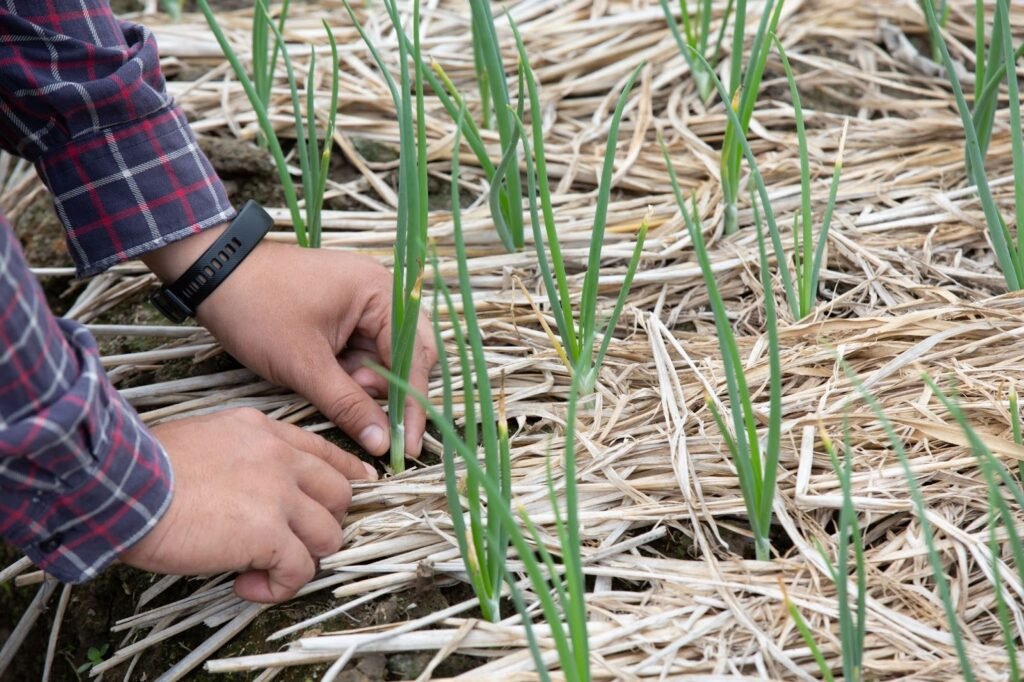
For example, a 2025 study in Korea found that biodegradable mulching film and conventional polyethylene film showed similar impacts on:
- onion growth,
- bulb size,
- yield, and
- weed suppression.
In Japan, paper-based films have been shown to match the weed and moisture management benefits of plastic. They are biodegradable and can even help with pest control.
In another Italian tomato trial, yields under soil-biodegradable mulch were 46% higher than bare soil and virtually identical to those under polyethylene.
Multi-year studies in the US and China also found no meaningful drop in yield or crop quality when using certified bio-mulch versus plastic. In fact, fields that used these films often showed similar or even better levels of microbial activity and soil health over time.
In practical terms, farmers around the world using these plastic mulch alternatives are reporting:
- Comparable or better yields.
- Less effort and cost in removing waste after harvest.
- Healthier soil year after year.
Overall, the problem of plastic mulch is easy to see once you understand the invisible pollution:
- microplastics creeping into groundwater and food chains, and
- degrading our health and that of our planet.
UKHI offers a practical way out. We have the building blocks to make bio‑mulch films with raw materials that can feed into bio‑mulch manufacturing and cut agriculture’s plastic footprint.
I want to leave you with this. Sustainable farming doesn’t have to mean giving up efficiency, it means redefining what efficiency really costs.
FAQs
1. Why does conventional plastic mulch raise concerns for soil health?
Plastic mulch fragments into micro‑ and nano‑plastics that increases agriculture’s plastic footprint. These reduce soil water retention, harm microbes and disrupt nutrient cycles. The plastic fragments also make their way up through the environment into our bodies and cause negative health effects.
2. Can bio‑mulch agriculture match crop yield performance of plastic mulch?
Multiple field trials have shown no loss in yield or quality in use of biodegradable mulch compared to polyethylene mulch.
3. How does switching to bio‑mulch help reduce plastic waste on farms?
Bio‑mulch removes the need to collect, clean, burn or dump used plastic films. This cuts a major source of persistent plastic waste from agriculture, where recycling is impractical.
4. Are biodegradable mulch films a reliable alternative to plastic mulch films?
Certified bio‑based agricultural mulch films have been used commercially for decades and avoid microplastic accumulation. When used correctly, they avoid long-term accumulation of plastic residues, unlike PE mulch.