
Compostable packaging is a smart investment for the environment, yes, but equally for your brand and your ability to adapt to policy shifts.
Over 30% of consumers globally say they are willing to pay more for sustainable products.
They care what’s inside and are aware of what the pack says about your values.
That means your packaging is part of your reputation.
Now consider regulations.
In the UK, the Plastic Packaging Tax charges £210.82 per tonne on packaging with less than 30% recycled content. Spain set a tax on non-reusable plastic packaging in 2023. Multiple other European countries are considering to expand their already existing fees on plastic packaging.
India also introduced EPR mandates to promote recyclable, compostable, or reusable packaging.
There is also a common misconception that compostables are inherently expensive.
That is not true. Costs are high today because of how compostable materials are produced and scaled or rather, not scaled.
Overall, compostable packaging can cost more upfront. But it brings:
- stronger brand value
- long-term policy alignment
- a growing base of environmentally conscious customers
But what if you could source cost‑competitive compostable packaging and future proof your business against regulatory and waste-management pressures?
Three hurdles to cost‑competitive compostable packaging and how to overcome them
Let’s be honest, if compostable packaging were easy to scale, we wouldn’t be writing this guide.
But most challenges have solutions.
Here are the three biggest hurdles I’ve seen and how to work around them.
High Cost At Small Scale
Most biodegradable materials still cost more than conventional plastic. In some cases, 2 to 4 times more per kg. This is because:
- global supply chains are still forming
- most buyers haven’t hit volume yet
The workaround is to opt for regional supply chains, local biopolymers, to avoid import duties and cut freight. Consider bulk buying across units or consolidating orders across product lines.
Limited Supply
Because many compostable resins are imported or sourced in small quantities, supply disruptions or price hikes are common.
The solution is to partner with suppliers who produce locally and at scale.
Performance and Compatibility
Companies also worry that compostable materials might not match the strength, clarity, or durability of conventional plastic. Or that they will require new equipment.
To avoid the extended cost of replacing machinery or packing lines, choose compostable biopolymers that run on existing extrusion and packaging lines without retooling.
Some certifications and compliance to look for in compostable packaging include:
- EN 13432 (Europe)
- ASTM D6400 (USA)
- ISO 17088 / IS 17088 (India)
- TÜV OK Compost / Home Compost
You can also explore blended materials to reduce costs while staying compostable.
What are the main types of compostable packaging available?
People hear ‘compostable’ and imagine paper bags or cornstarch wrappers.
Paper and cardboard are compostable but also heavier and bulkier, which increases their transportation and storage costs. Also, items that need airtight seals and long-term durability (liquids, electronics, or perishables) cannot rely on paper packaging alone.
Luckily, the bioplastic field has grown fast and you can now find multiple compostable packagings that mirror traditional plastic packaging. Here are some compostable packaging materials you can look into for different needs.
| Material | Made From | Features | Common Uses |
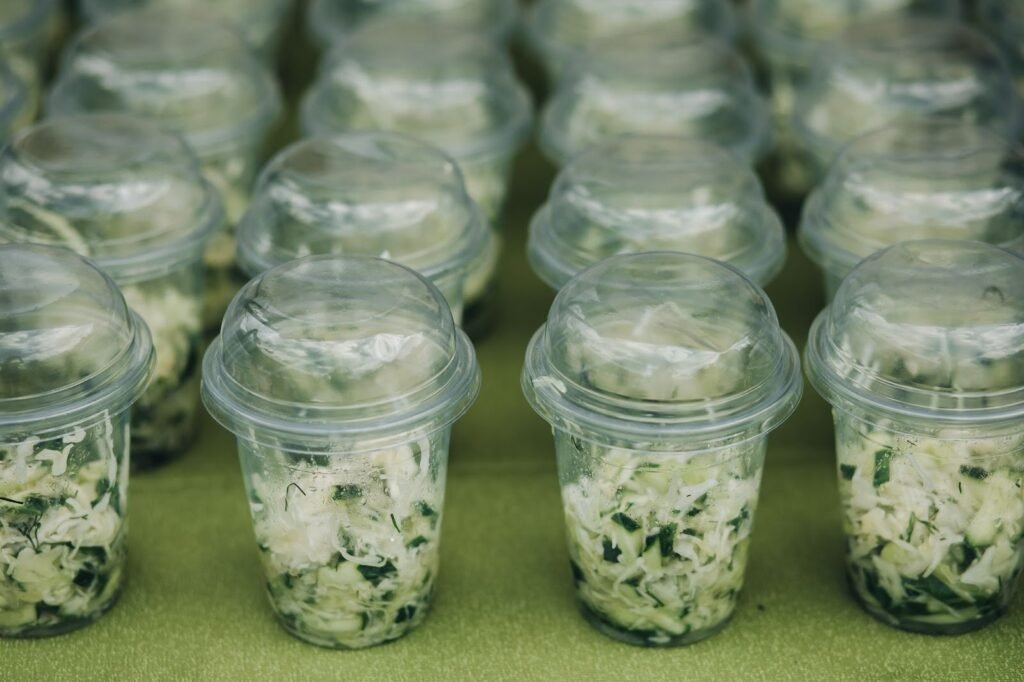
| PLA (Polylactic Acid) | Fermented corn starch or sugarcane | Transparent, food-grade, industrially compostable | Cups, salad boxes, deli trays |
| PBAT (Polybutylene Adipate Terephthalate) | Fossil-based but biodegradable polymer | Flexible, compostable, often blended with PLA | Compostable films and bags |
| PHA (Polyhydroxyalkanoates) | Produced via microbial fermentation | Marine-degradable, compostable even in soil | Seafood wraps, paper coatings |
| Starch-based Bioplastics | Corn, cassava, or potato starch | Affordable, suitable for low-barrier packaging | Grocery bags, void fill |
| Cellulose-based Films | Wood or plant fibers | Transparent, breathable, compostable | Bakery wraps, dry snack bags |
But the real question is not: Which one is the best? It is; which one fits your use case, cost target, and infrastructure the best?
Compostable vs plastic packaging cost
Let’s compare three common packing products in terms of unit and disposal cost.
| Packaging | Unit Cost | Disposal Impact |
| Plastic grocery bag | $0.01 | Taxed in UK, banned in parts of India |
| Paper bag | $0.04 | Compostable but heavier and costlier to transport |
| PLA-based bag | ~$0.05–$0.07 | Compostable, but industrial composting required |
While PLA bags cost more upfront, they may qualify you for EPR points and also avoid plastic penalties. Increased brand equity can also offset the premium of sticking with traditional plastic packaging.
Compostable packaging also has an end-of-life cost advantage.
Plastic might be cheaper upfront, but we all pay for its disposal in terms of harm to our environment. In monetary terms, the cost of damages from, say, ocean cleanup or taxes.
So the cost conversation needs to include not just the price to make but the price to throw away.
Altogether, sustainable packaging is a hedge against future risk and a signal of long-term thinking. The upside of using compostable packaging materials includes:
- Fewer disposal costs
- Reduced packaging tax exposure
- Increased loyalty from environmentally-conscious customers
But most global compostable packaging still relies on imported materials like PLA (made from corn starch) and PBAT (a synthetic biodegradable polymer).
These are expensive because:
- They depend on agricultural feedstock like corn, which is volatile in pricing
- They are often imported, adding currency and shipping costs
Why UKHI’s EcoGran is often more cost-effective than other compostable packaging alternatives
AT UKHI, we use agricultural residues that would otherwise be burned or discarded.
Our EcoGran biopolymer is made from hemp, flax and other crop waste. It reduces reliance on imports and allows larger volume production runs at lower costs.
EcoGran resins are also compatible with standard film-extrusion, coating and molding lines, which means no need to retool equipment.
Overall, UKHI’s compostable packaging material:
- Turns local waste into high-value input that can be up to 30% cheaper than imported bioplastics
- Reduces dependency on imported resins and lowers volatility in pricing
- Lowers emissions at both ends of the chain
So, compostable packaging can definitely be cost-competitive if you choose the right materials and partners.The environmental and brand benefits of sustainable packaging do not have to come at the expense of cost or performance.
FAQs
1. Are compostable bags always more expensive than plastic?
Compostable bags can cost 2 to 3 times more currently, but price gaps shrink quickly with higher volumes.
2. Why choose compostable packaging despite higher cost than traditional plastic materials?
Compostable packaging helps cut landfill waste, lowers carbon footprint, boosts brand trust, and avoids future plastic tax or disposal penalties.
3. Can compostable packaging break down like regular waste?
Most compostable packaging breaks down in industrial composting facilities. So, there is still a risk that it may cause the same issues as traditional plastic in a landfill.
4. When does compostable packaging become cost‑competitive with conventional plastic?
With an increase in demand and waste fees or environmental tax on plastic packaging, compostable packaging can match or beat plastic over total lifecycle cost.
5. How to source cost-effective compostable packaging in India?
Look for local compostable materials that are cheap to transport and store. Also, try to order in bulk and across multiple product lines or business units to get more favorable bulk prices that narrow the gap with traditional plastic packaging.