
Across the world, the packaging that surrounds fashion products is under scrutiny. Every time a new shirt or a pair of shoes ships, it comes wrapped in layers of plastic. In 2026, this throwaway culture is no longer acceptable.
Sustainable fashion packaging isn’t just a buzzword anymore. It’s now a business necessity.
In the United States, the sustainable packaging sector is set to reach nearly $74 billion by 2034. In India, the eco-friendly packaging industry is growing at over 10 percent every year. In the UK, new laws are forcing every fashion retailer to rethink the very materials and designs they use.
Driving this shift is a set of new policies and rising consumer expectations. Fashion brands are discovering that sustainable fashion packaging can strengthen brand value.
Let’s understand what this actually means beyond just swapping plastic for paper.
What Is Sustainable Fashion Packaging?
When most people think of sustainable fashion packaging, they imagine a brown paper bag with three chasing arrows. But there is much more to it than that.
Sustainable fashion packaging means every part of the packaging process has minimal environmental impact. It’s about choosing materials that are:
- Renewables such as hemp or bamboo
- Recycled like post-consumer paper or rPET
- Compostable, such as bio-based films
The raw materials are just the start. It also includes:
- Designing packaging that’s easy to recycle
- Avoiding redundant layers to reduce cost
- Clearly measuring the environmental impact
Take, for example, H&M. The retail giant is targeting 100% of its materials to be recyclable by 2030. In India, Myntra has implemented 100% plastic-free packaging in its supply chain.
There is a wide adoption of eco-friendly fashion packaging that’s affordable, practical, and part of the circular economy.
What Are the Main Drivers Behind the Shift to Sustainable Packaging?
But what is causing this shift towards sustainable fashion packaging?
The biggest driver is regulation.
In the UK, for example, new EPR rules mean brands pay directly for the waste their packaging creates.
In India, there is a ban on the use of thin plastic and the need for certifications from CPCB.
Many states in the USA are rolling out their own EPR mandates aimed at curbing plastic pollution.
Consumer sentiment too plays a pivotal role.
Surveys across the US and UK show that half of all shoppers are willing to pay a little more if it means saving the planet. Almost two-thirds of shoppers prefer a brand that is more sustainable.
In India, young urban consumers, too, are demanding change. Many would buy products with sustainable packaging if the price were right.
And finally, it makes economic sense.
Renewable materials can cut transport costs up to 20% with lighter packaging. Right-sized boxes and flexible materials reduce both costs and waste. This makes it easier to justify it as a business decision.
But all these factors matter only if eco-friendly fashion packaging is available. So, let’s look at the materials that are making the biggest impact.
Which Materials Lead the Way in Sustainable Fashion Packaging?
There is a wide array of sustainable packaging materials. These range from proven classics to cutting-edge innovations.
Recycled paper and cardboard are the backbone of eco-friendly fashion packaging.
It is cost-effective, easy to source, and highly recyclable in most markets around the globe. Among top brands, Adidas uses recycled materials for its shoe boxes and shipping boxes. H&M has shifted to using FSC-certified paper packaging for online orders.
But packaging is more than just paper and cardboard. That is where recycled PET steps in. It is a bridge between legacy plastic and sustainable fashion packaging.
Brands like Everlane and C&A are transitioning from virgin plastic to rPET (recycled polyethylene terephthalate) bags.
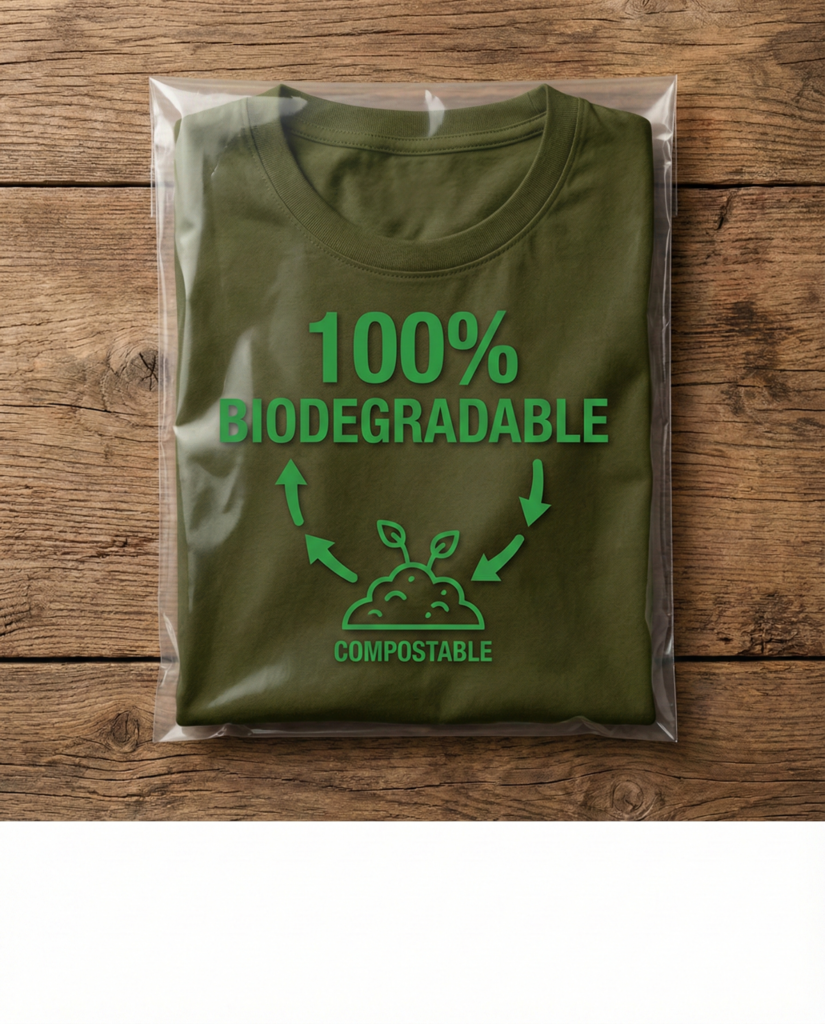
And there are more exciting innovations to come:
- Sway’s seaweed-based, home-compostable packaging is a plastic-free alternative. It has already been adopted by brands like Alex Crane, prAna, and Faherty.
- Plant-based plastics can decompose in a matter of months. Many Indian exporters and US brands are piloting them for their mainline packaging.
- Mushroom packaging made from mycelium can replace polystyrene bags. It also breaks down safely in your backyard compost.
While these novel materials can be 10%-40% more expensive than plastic, they save through lower shipping costs and reduced EPR fees.
What Strategies Work Best for Brands Making the Switch?
Switching to sustainable fashion packaging is much more than swapping out materials. Success comes from a clear, data-driven, and planned approach.
Audit and compliance
First, map your packaging footprint and make sure you’re ahead of the latest rules. These include EPR rules in the UK and EU, CPCB standards in India, or state-level requirements in the US.
Mono-material design
Focus on single-material packaging. It’s easier to recycle and far cheaper under EPR. Reduce layers, use only what’s essential, and right-size everything for cost savings.
Supply chain transparency
Track and verify every component of biodegradable fashion packaging. Select vendors who can certify material origins. This will soon be essential for compliance in the USA, UK, and increasingly in India.
Authentic communication
Don’t just say “eco-friendly.” Share numbers and how they matter. Publish sustainability reports that back up your claims. Myntra has made its green store a visible destination.
Pilot new materials
Start small and test innovations like seaweed or mushroom-based packaging. Scale up once you’ve validated performance and costs.
Premium positioning
Sustainable fashion practices can command higher prices with aspirational consumers. You cannot pass on the increased overheads immediately, but it is possible to price your products a little higher if they are made and packaged sustainably.
Local innovation
Tap domestic suppliers, like Ukhi in India and Sway in the USA, for cost and reliability. Ukhi EcoGran is made from agri-waste and is a raw material for high-performance compostable packaging solutions.
What’s Next? The Future of Sustainable Fashion Packaging
The pace of change in sustainable fashion packaging is accelerating. There are more pilot projects for reusable shipping and even packaging that returns to the brand for recycling.
Sustainable fashion packaging is no longer just about being eco-friendly. future-proofing your brand and gaining an early mover advantage. If you are in fashion, it’s time to integrate sustainable fashion production and create a world where fashion brings joy without leaving a trail of trash behind.
For Indian manufacturers, sustainable packaging is no longer just about export compliance—it’s about taking pride in solutions that work for Delhi, London, and New York. If your packaging can meet the strictest standard, you’re ready for every market.
Frequently Asked Questions
What is sustainable fashion packaging?
Sustainable fashion packaging uses bio-based and renewable materials and better design to reduce waste and cut costs across the fashion supply chain.
What are the examples of sustainable fashion packaging?
There are several instances of sustainable fashion packaging:
- Compostable mailers made from corn starch
- Recycled and reused paper boxes and shipping bags
- Glassine packaging is made from wood pulp
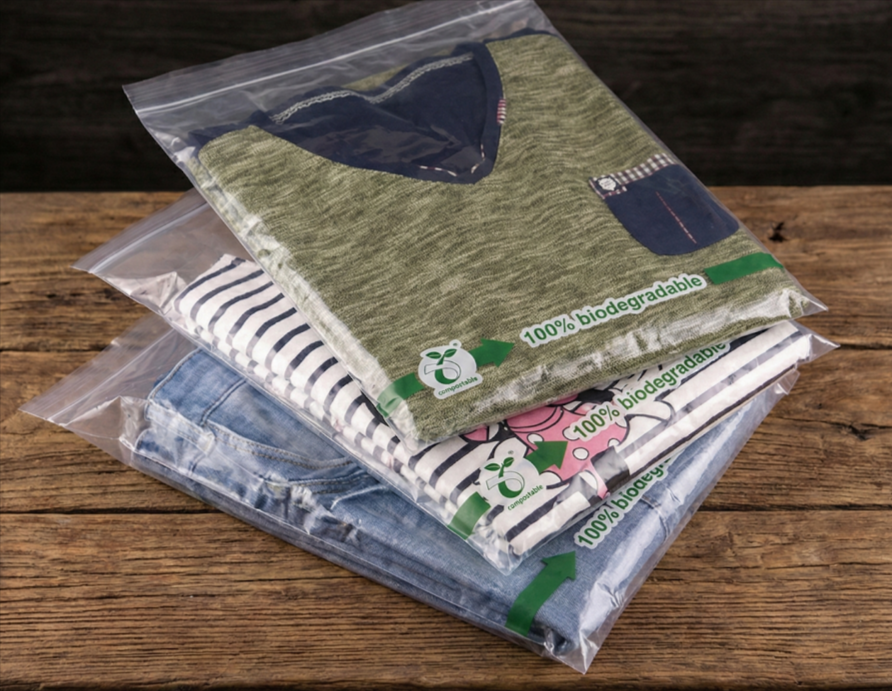
- Compostable garment bags made by Ukhi
Is biodegradable fashion packaging safe to use?
Biodegradable fashion packaging is generally considered safe and sustainable. They are an excellent alternative to plastic and break down into natural, non-toxic components in a compost.
What is the most sustainable packaging for clothing?
Currently, the top option is bio-PBAT garment packaging. It readily breaks down in composting environments.
How do I verify if packaging is truly eco-friendly?
As a manufacturer who wants to integrate sustainable fashion practices, you can ask for third-party certifications. These include the EU Ecolabel, or CPCB in India. Avoid vague terms like “green” or “natural” and check for specific information regarding materials.