
Sustainable fashion practices are not just a trend. It is an urgent necessity for every serious fashion brand. As someone who has worked across supply chains, I’ve seen firsthand how quickly the conversation has shifted from “Is sustainability possible?” to “How fast can we get there?”
What is driving this change? Currently, the fashion industry cannot be too proud of its track record:
- The fashion industry is responsible for 8 – 10% of global carbon emissions.
- Around 60% of clothing is made from synthetic materials like polyester, which is sourced from fossil fuels.
- Production requires 342 million barrels of oil annually.
- The industry consumes 215 trillion liters of water annually
- It accounts for 20% of industrial wastewater pollution.
The numbers are hard to ignore, and consumers are asking for a change. Brands that ignore sustainability risk falling behind.
Let’s learn more about sustainable fashion practices and what your brand can do about it.
What Are Sustainable Fashion Practices?
To begin with, what is sustainable fashion production, and how does one implement it?
Sustainable fashion is manufacturing clothing with minimal impact on the environment, ethical sourcing & materials, ensuring fair wages, and safe working conditions.
Sustainable fashion production broadly focuses on:
- Minimizing negative impacts on the environment
- Ethical treatment of labour
- Ensuring long-term economic viability
Thus, as a business owner, you need to:
- Source your raw material with minimum damage to the environment.
- Lower the carbon emissions of the production process.
- Eliminate (or at least reduce) the toxic substances generated.
- Ensure that workers are paid fairly and work in safe conditions.
Studies such as the 2023 Edelman Trust Barometer show that consumers are more likely to stay loyal to brands that take a stand on social and environmental issues.
Without doubt, this is a profound change and an organisation-wide effort. The biggest question that business owners and CEOs have is: How do you build a strong sustainability strategy for fashion brands?
Here’s what I’ve seen work best:
- Put sustainability at the very top. Make sustainable fashion production the core goal of your business.
- Use a data-driven approach to reduce the impact of the manufacturing process on the environment.
- Ensuring ethical labor practices, fair wages, and safe working conditions for every worker.
It cannot be done in one day. Or even a single year. However, implementing the basics over time will help your brand move away from causing any further harm to the planet.
How Can Brands Produce Fashion More Responsibly?
Sustainable fashion production is not the result of a single decision or department. It happens due to a series of operational choices. Each of these contributes to a framework that makes sustainability possible.
The following sustainable fashion practices are proven steps that your brand can implement regardless of size or geography.
Auditing and Improving the Supply Chain
Your product cannot be sustainable until you know how it made its way from the farm to the store.
At present, at least half of the fashion industry does not disclose the location of its first-tier factories. Even less can tell you how they source cotton, silk, and wool, the basic raw materials.
To fix this, you have to begin with a thorough audit of your supply chain. You must know if your vendor uses renewable energy and how they handle their wastewater.
Once you have this map, find the hotspots and set goals for improvement. You can aim to have all your vendors certified for safety within two years.
Choosing More Sustainable Materials
The use of conventional fabrics relies on harmful practices. Intensive water use, harmful chemicals, and energy-intensive manufacturing are unsustainable at their current levels. A single cotton t-shirt requires about 2,700 liters of water. That is enough to last a human 18 months.
Replacing polyester and wool with recycled linen reduces environmental impact dramatically. Cotton can be substituted with hemp, which is far more durable and consumes very few resources.
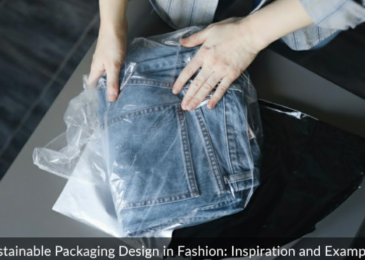
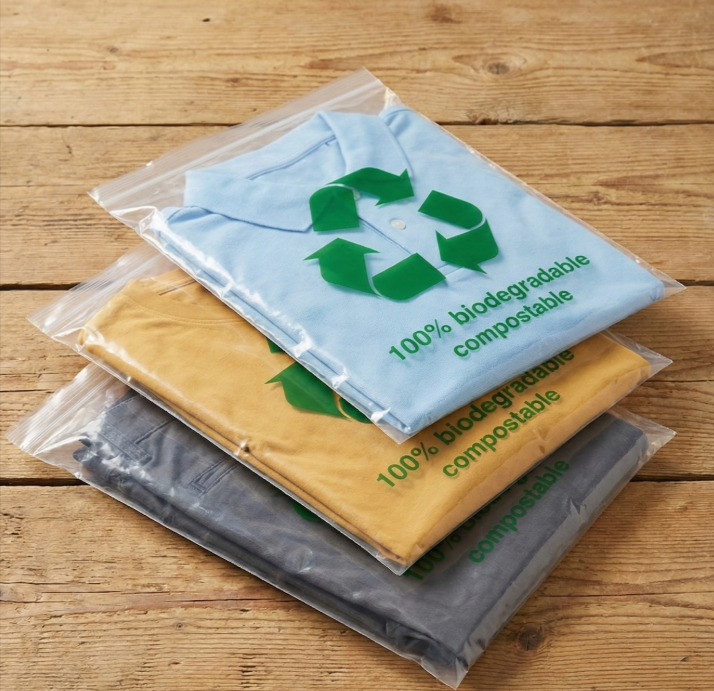
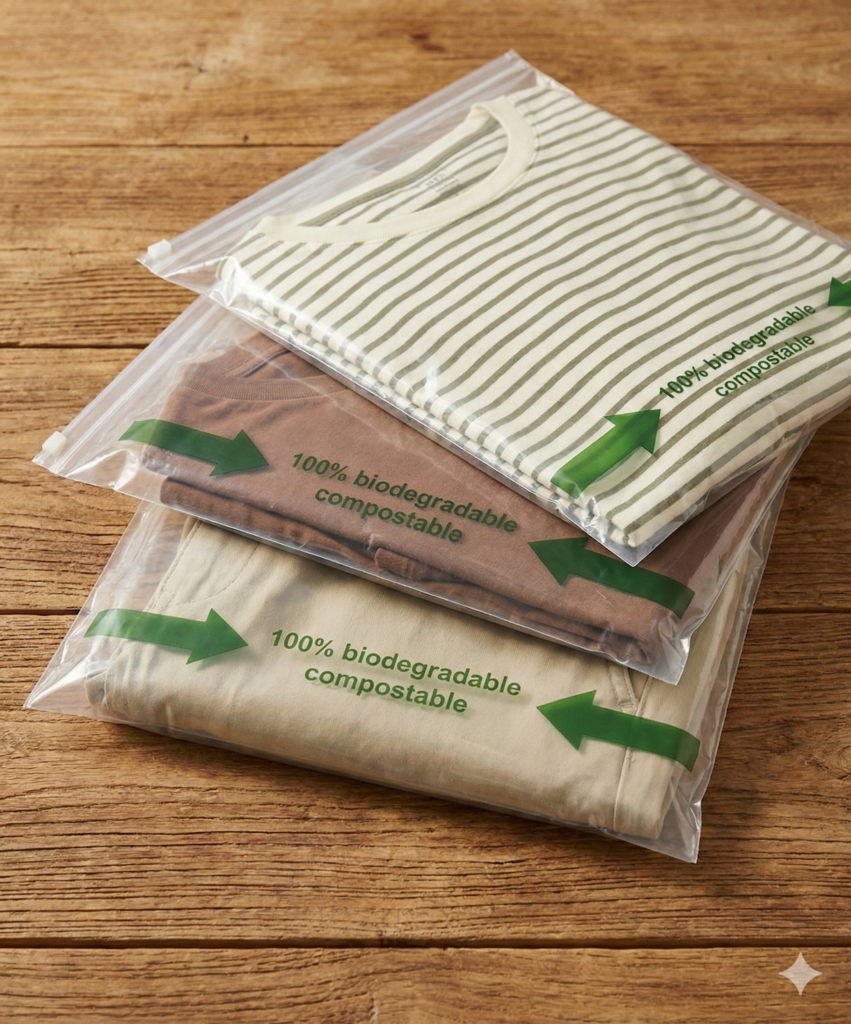
The same logic applies to packaging materials. The US, UK, and India are gradually moving away from single-use plastics. Compostable materials made with Ukhi EcoGran™, eco-friendly, biodegradable granules are ideal for eco-friendly garment bags.
Designing Products for Longevity and Quality
Fast fashion, which is marked by rapidly producing high volumes of inexpensive, trendy clothing, has taken over the industry. Brands such as Zara, H&M, and Shein bring new collections to market in as little as two weeks! Instead of four seasonal collections, brands often release 52 “micro-seasons” a year. No wonder the world is quite literally falling apart under the weight of the fashion industry.
A focus on “slow fashion” and making items that are built to last for many years is necessary. This also means making durable garments that last several months or even years. A study by WRAP found that extending the life of a garment by just nine months can reduce its carbon, water, and waste footprints by 20% to 30%.
Ensuring Ethical Labour Practices
This is a major factor in ensuring sustainable fashion production. Fashion can never be truly sustainable if the tailor is paid a wage they could not live on. Garment industry workers in developing nations live on meagre pay. The average garment worker in Bangladesh, where most brands have a manufacturing unit, is paid a measly $102 each month. In India, it is slightly better at $127.
Preventing exploitation of the poorest in the world is a critical step for sustainable fashion practices. Every supplier must sign a Code of Conduct that bans child labor, low wages, and unsafe working conditions.
Reducing Waste and Embracing Circular Fashion
The current fashion system is “linear.” We take resources, make clothes, and then throw them away.
Right now, only 1% of the material used to produce clothing is recycled. This is a massive loss of value and resources.
Circular fashion aims to close that loop so that nothing ever goes to waste.
- To reduce waste during the manufacturing phase by using “zero-waste” cutting patterns. This uses the entire roll.
- On the consumer side, your brand can start a take-back program. This is where customers return old clothes in exchange for a discount on a new item.
That is quite a to-do list. My advice is to make haste slowly with consistent, practical steps that make business sense.
What Are the First Practical Steps Your Brand Can Take?
Every change starts with a first step. The rest falls in place as the path progresses. Begin by:
- Mapping the fiber mix and suppliers. This is your starting point.
- Set your first target. Example – 10% shift to organic and recycled fibers in six months.
- Pilot digital sampling or demand planning to cut waste.
- Take time to educate customers and staff about your brand’s vision.
- Make sustainability your brand, not a part of your brand.
Even a small pilot project can give rich returns. The important thing is to start and keep moving.
Frequently Asked Questions
What are the top sustainable fashion practices brands should follow?
Sustainable fashion practices must include a focus on:
- Reducing environmental impact
- Payment of fair wage
- Promotion of the circular economy
How do recycled materials make fashion more sustainable?
Recycling helps to reduce waste. Using disposed of garments and textile waste prevents them from entering landfills and encourages a circular economy.
Why is supply chain transparency important in sustainable fashion?
It is essential for verifying ethical labor practices. Also, knowing the source of materials can reduce carbon emissions and water wastage.
How should fashion brands engage consumers and build trust?
Modern-day consumers can spot fakeness from a mile away. Therefore, under any condition, do not engage in “green washing” for your fashion brand. Whatever you accomplish can be shared through authentic messaging to build a stronger, more personal connection.
How can brands switch to sustainable packaging materials?
It is quite easy to swap conventional plastics for bioplastics and compostable materials such as PBAT and bio-PBAT. These sustainable packaging materials are compostable and entirely disappear within 3 – 6 months.