
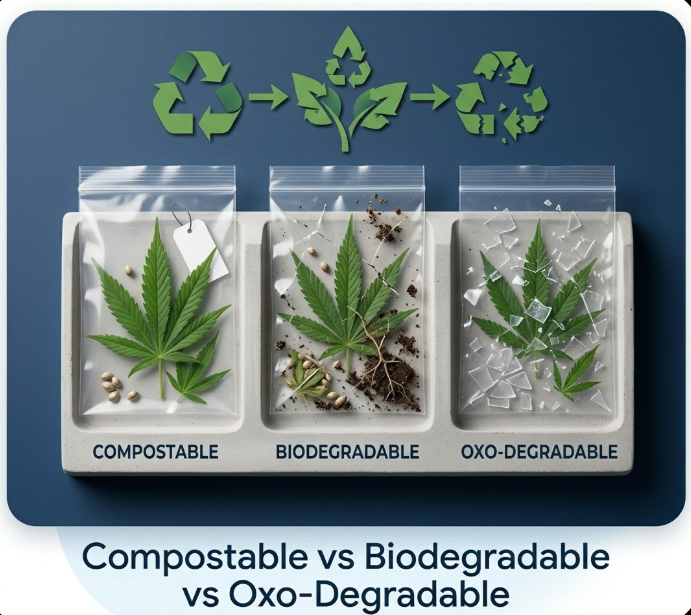
When you are exploring sustainable garment packaging options (especially for exports!) you’ll see “Eco-friendly” plastered on everything. Terms like biodegradable, compostable, and oxo-degradable are often used interchangeably. On the surface, they all sound environmentally responsible. But in reality, they are very different materials. Not just linguistically, but they also have very different environmental and legal implications.
So, if you are sourcing sustainable fashion packaging, just “assuming” a bag is green because it’s leaf-colored isn’t enough.
Plastic Waste Management Rules are strict. Using the wrong “green” plastic can lead to heavy fines or your shipment being rejected. Also, you owe it to your customers to know exactly what happens to your bag after they unbox their order.
So, in this blog, I will explain these terms in simple, practical language. My goal is to help you clearly understand what each one means, how they differ, and when you should use them.
1. Biodegradable: The Broad Umbrella
The term “biodegradable” is often used loosely, but it has a specific scientific meaning. Essentially, a biodegradable material is something that can be broken down by biological microorganisms like bacteria or fungi. Over time, these tiny organisms turn the material into water, carbon dioxide, and biomass.
However, the confusion starts when ‘bioplastic’ are added to the conversation. Many people think “bioplastic” and “biodegradable” are the same thing. But they aren’t. A bioplastic is simply a plastic derived from biological sources like corn starch or sugarcane instead of petroleum. Some bioplastics are biodegradable. Others, however, are engineered to be as “forever” as traditional plastic. Here’s a summary of how they differ:
| Feature | Bioplastic | Biodegradable Plastic |
| Definition | Plastic made from plant-based sources | Plastic that can break down naturally |
| Raw material | Renewable plants like corn or sugarcane | Can be plant-based or petroleum-based |
| Breakdown ability | May or may not biodegrade | Specifically designed to biodegrade |
| Environmental impact | Depends on material design | Designed to reduce long-term plastic persistence |
On the flip side, some petroleum-based plastics can be engineered to be biodegradable. The catch? Compostable vs biodegradable is a comparison of speed and residue. A “biodegradable” bag might take 20 years to break down in a landfill. If it isn’t certified, it might leave behind invisible toxins. For those looking at biodegradable clothing packaging, you must check the timeline. If it takes decades to disappear, it’s hardly solving our waste crisis.
So, ask your supplier for the specific environmental conditions required for degradation when using biodegradable garment packaging.
2. Compostable: The Gold Standard
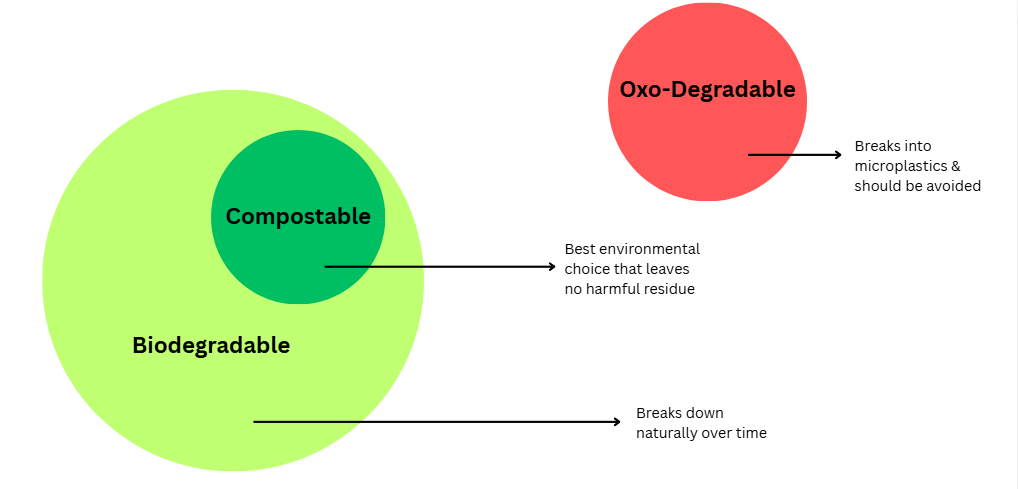
Compostable materials are a subset of biodegradable materials. However, they are much more strictly regulated. For a product to be called compostable, it must:
- Break down into nutrient-rich organic matter
- Within a specific timeframe, usually 90 to 180 days
- And most importantly, leave no toxic residue behind in the soil
But when choosing compostable fashion packaging, you need to understand the two main types of composting.
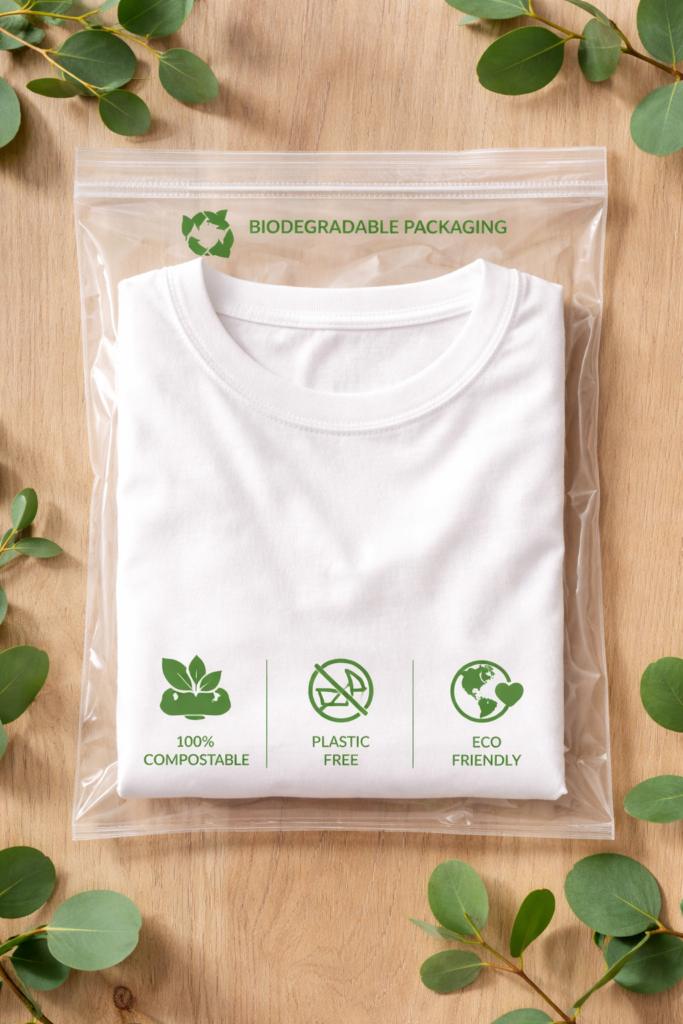
First is Industrial Composting
Such compostable clothes packaging solutions require high temperatures and specific humidity levels found only in municipal facilities. If a customer throws an “industrially compostable” bag into their backyard pit, it might stay there for years.
The second type is Home Compostable
These products are designed to break down in your garden’s compost pile at ambient temperatures. This is the ultimate win for compostable clothing packaging. It empowers the consumer to dispose of it responsibly at home. In India, CPCB (Central Pollution Control Board) certification is the only way to prove your bags are truly compostable. Without that certificate, you’re just taking a vendor’s word for it, which is a massive risk for your brand’s reputation.
3. Oxo-Degradable: The Great Deception
Oxo-degradable plastic was once marketed as a miracle solution. However, it turned out to be an environmental disaster. These are conventional plastics (made from fossil fuels) with chemical additives (metal salts) mixed in. These additives cause the plastic to fragment quickly when exposed to UV light or heat.
The problem is that it doesn’t actually “disappear.” It simply breaks down into millions of tiny microplastics that enter our soil and water table.
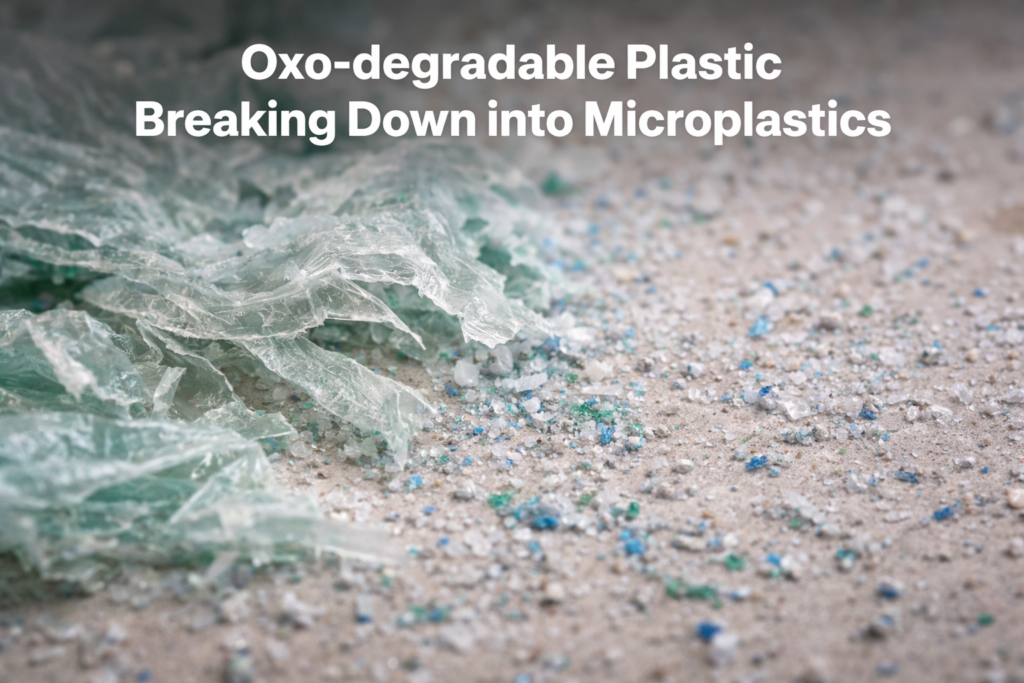
This is why we saw the oxo biodegradable ban India implemented by the government. Oxo-degradable plastic packaging is also banned in several European countries. These fragments are impossible to clean up and are eventually ingested by animals and humans.
The oxo biodegradable ban India was a necessary step to stop companies from greenwashing their products. If a supplier offers you “degradable” bags at a price that seems too good to be true? It’s likely oxo-degradable material. Using this in your sustainable clothing packaging is now illegal in many jurisdictions. It’s better to avoid this category entirely to stay compliant with Indian law and global standards.
Quick Summary: How They Stack Up
Navigating the debate of compostable vs biodegradable requires a clear comparison of how these materials behave in the real world.
| Feature | Biodegradable | Compostable | Oxo-Degradable |
| Environmental safety | Good | Best | Harmful |
| Breakdown ability | Natural breakdown | Complete breakdown | Breaks into microplastics |
| Certification | Optional | Required | Not accepted |
| Legal status in India | Allowed | Allowed and encouraged | Banned |
Which One Should You Choose?
Since the oxo biodegradable ban India has effectively removed one option, your choice comes down to the two remaining categories. Remember that “compostable” is always biodegradable, but “biodegradable” is not always compostable.
Here’s a quick biodegradable vs compostable summary to guide your decision:
| Feature | Biodegradable Plastic | Compostable Plastic |
| Breakdown ability | Breaks down naturally over time | Breaks down completely under composting conditions |
| Breakdown certainty | Depends on environment | Clearly defined and verified |
| Residue | May leave microscopic residue | Leaves no harmful residue |
| Certification | May or may not be certified | Requires strict certification |
Your choice should also depend on your supply chain and how your customers typically dispose of waste.
Choose biodegradable if:
- Your product might end up in a standard waste stream or landfill.
- You need a material that is slightly more durable for long-term storage.
- You are transitioning away from virgin plastics but have a tight budget.
Choose compostable if:
- Your brand identity is built on “zero waste” and circular economy principles.
- You want to provide specific biodegradable fashion packaging that leaves zero microplastics.
- You have a customer base that actively composts or lives in cities with organic waste collection.
Getting Started with Responsible Packaging
Understanding the nuances of compostable vs biodegradable is the first step toward building a truly green brand. If you are a garment exporter, this knowledge is non-negotiable. Global retailers now demand transparency in your sustainable fashion packaging choices to meet international ESG goals.
Ready to make the switch? You can start small by getting a sample of Ukhi’s CPCB-approved compostable garment bags made using Ukhi biogranules. These bags represent the future of sustainable clothing packaging in India. Order a sample kit from Ukhi today and see the difference yourself. Let’s build a plastic-free India, one shipment at a time.
FAQs
1. Does compostable packaging have a “best before” date?
Yes, it does. Unlike traditional plastic, which can sit in a warehouse for years, compostable bags have a functional shelf life—usually 6 to 12 months. Because they are made from organic “biogranules,” they are sensitive to high humidity and heat. If you store your sustainable clothing packaging in a damp, hot warehouse in Mumbai or Chennai, the bags might become brittle or start losing their strength prematurely. We always recommend “First-In, First-Out” (FIFO) inventory management to ensure your packaging remains in top condition for your customers.
2. How can I verify if a bag is genuinely CPCB-approved?
In India, “greenwashing” is a real issue. To ensure you aren’t being sold fake products, look for two things printed on the bag: the CPCB Logo and the Unique Registration Number issued to the manufacturer. You can cross-verify this number on the official Central Pollution Control Board website. Genuine compostable fashion packaging will also mention compliance with the IS/ISO 17088 standard. If a supplier refuses to share their CPCB certificate, it’s a major red flag for your compliance audit.
3. What happens if a compostable bag accidentally ends up in a landfill?
Landfills are “anaerobic” environments, meaning they lack the oxygen and light required for healthy decomposition. If compostable clothing packaging ends up buried deep in a landfill, it won’t turn into high-quality compost. Instead, it may break down much more slowly and, in some cases, release methane, a potent greenhouse gas. This is why we advocate for “Home Compostable” or “Industrial Compostable” certifications, as they give the bag a much higher chance of being disposed of where it can truly return to the earth.