
India’s packaging industry is growing fast.
E-commerce is expanding. Food delivery is expanding. Processed foods, retail, and pharma are all expanding. But the packaging that supports this growth is creating a bigger waste problem at the same time.
That is where the pressure begins.
Businesses are not looking at alternatives only because sustainability sounds good anymore. Plastic rules are tighter, and waste has become a public policy issue.
Bioplastic packaging in India has moved from a niche idea to a serious business consideration.
But there is still a lot of confusion around it. So the first thing we need to do is get clear on what bioplastic packaging actually is.
What Is Bioplastic Packaging?
At the simplest level, what is bioplastic packaging?
It is packaging made from plastics that are either:
- Bio-Based
- Biodegradable
- Or both
That sounds straightforward, but this is exactly where most confusion begins.
A plastic can be made partly or fully from renewable biomass and still behave like conventional plastic at the end of life. That makes it bio-based, but not necessarily biodegradable.
On the other hand, a plastic can be designed to break down under specific conditions. But that does not automatically mean it is plant-based.
This distinction matters. When people talk about types of bioplastics, they often mix up source and behavior in the same sentence.
A better way to think about it is this:
- Bio-based tells you where the carbon comes from
- Biodegradable tells you whether it can break down biologically
- Compostable tells you that it can break down under composting conditions and meet a specific standard
That last point is especially important in India.
Under India’s plastic waste rules, compostable plastics have to meet certification requirements.
The next question is: if bioplastic packaging is not one single material, what are the main material types actually used in packaging?
What Are The Main Types Of Bioplastics Used In Packaging?
When people hear the word bioplastic, they often imagine one alternative material trying to replace all plastic.
That is not how the market works.
In reality, the main types of bioplastics used in packaging fall into two broad groups.
1. Bio-based, non-biodegradable plastics
These are often called drop-in materials.
They are made partly or fully from renewable feedstocks, but they are chemically very similar to conventional plastics. So they can often be used in the same kinds of applications and, in many cases, on the same machinery.
Examples include:
- Bio-PE
- Bio-PET
- Other bio-based versions of familiar polymers
Their strength is compatibility.
They fit well into existing production systems.
2. Biodegradable or compostable plastics
This is the category most people in India have in mind when they talk about alternatives to banned or problematic single-use plastics.
Common examples include:
- PLA
- PHA
- Starch blends
- Blends that include compostable components for performance balance
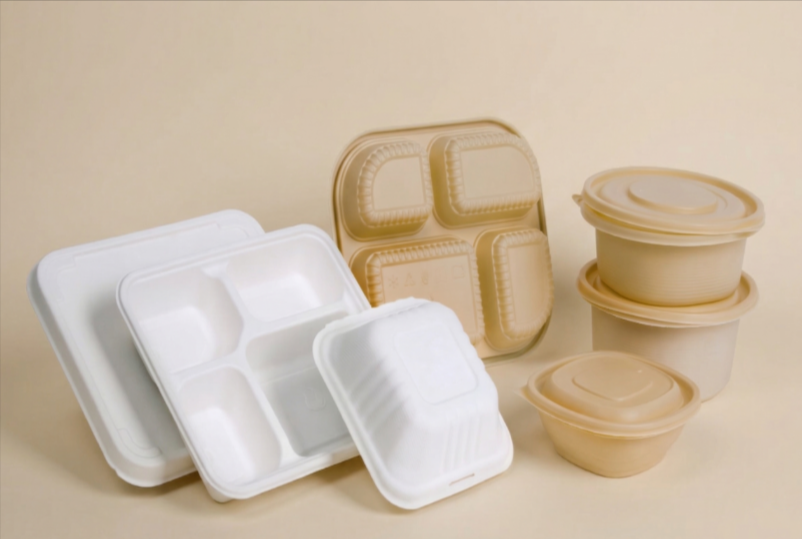
These materials are relevant in packaging because they can be used across multiple formats:
- Films for bags and pouches
- Rigid packaging, like trays and containers
- Specialty coatings and molded items
Globally, packaging remains the largest application area for bioplastics. That is one reason packaging innovation tends to lead the category.
In India, current commercial activity is especially visible in compostable bags, liners, films, and food-contact formats.
At the same time, there is growing interest in domestic feedstocks and domestic resin production, especially as India looks at bio-based materials more strategically.
At Ukhi, this is exactly the space we think about deeply. Our own EcoGran platform is built around agricultural residues such as hemp, nettle, and flax. We work across blown film, thermoforming, extrusion coating, cast film, and injection moulding applications. That matters because packaging demand is not one use-case. It is a system of use-cases.
Now that the material picture is clearer, it becomes much easier to understand where these materials actually show up in the real world.
What Are Some Real-World Examples From India?
A lot of writing on bioplastic packaging in India stays too abstract. The better question is: where is this already being used in credible, traceable ways?
India gives us a useful answer because the market is not just growing. It is being shaped by certification, procurement, and public visibility.
1. Compostable carry bags and related products
One of the clearest examples is the certified compostable carry bag ecosystem.
India’s plastic waste rules require compostable carry bags to meet the relevant standard and obtain certification before they can be marketed. There are also public lists of certified manufacturers and sellers, which is important because it means the ecosystem is visible and not purely claim-based.
That matters for policymakers and investors because it shows that compostable packaging in India is not a theoretical category. It has a compliance structure around it.
2. Institutional and public-use examples
A strong real-world signal is public procurement.
For example, technical specifications from the Municipal Corporation of Greater Mumbai for compostable garbage bags explicitly require bags to carry the “COMPOSTABLE” label, conform to IS or ISO 17088, and come from a manufacturer or seller approved by the regulator.
This is useful evidence because procurement standards show what institutions are willing to buy, not just what companies are willing to advertise.
3. High-visibility company examples
Among named Indian examples, Ecolastic has become one of the more visible players in compostable packaging.
The company markets compostable bags, liners, pouches, and films, and has publicly associated itself with standards and certification. It has also been linked to visible institutional use cases, including high-profile events and public collaborations.
Another example often cited is Truegreen, which focuses on compostable and biodegradable bag applications, especially in packaging and related sectors.
These examples are useful not because they prove the whole market has matured, but because they show the shape of current adoption:
- Carry bags
- Liners
- Pouches
- Event and institutional packaging
- Waste-linked applications
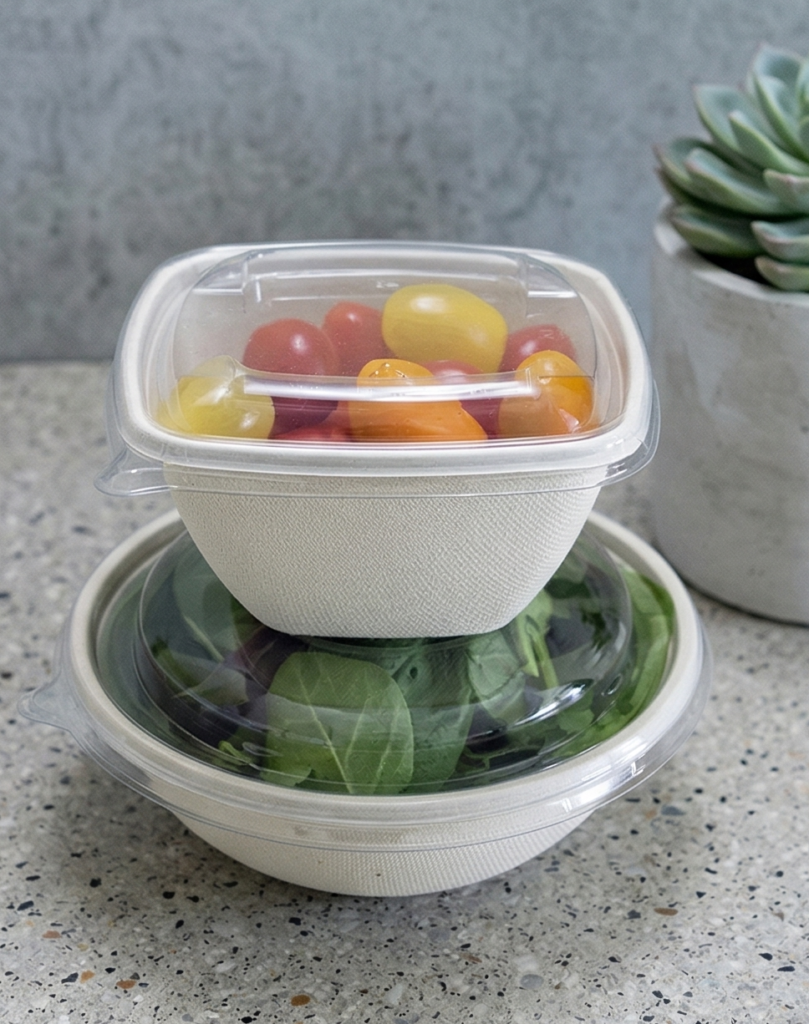
That is also why India-specific examples tend to cluster around packaging categories where regulation, waste management, and user behavior meet very directly.
And once you see those use-cases together, a larger pattern becomes visible.
This is not only about individual products anymore. It is about a market beginning to organize itself.
How Is The Bioplastics Market Evolving In India?
India’s bioplastics market is still small compared with conventional plastics.
But it is not small in momentum.
Different market estimates vary in size, but they point in the same direction: India’s bioplastics market is currently in the mid-hundreds of millions of dollars and is projected to cross well beyond the billion-dollar mark over the next decade, with growth rates often estimated above 20% annually.
Packaging is central to that growth.
Why?
Because it sits at the intersection of three forces:
- regulation
- brand pressure
- technical fit
India’s 2022 single-use plastic ban created a direct push away from certain conventional formats. EPR obligations added more pressure on producers and brand owners to think about the full packaging stream. And at the same time, brands facing ESG pressure began treating packaging as one of the most visible places to act.
On the supply side, India is also seeing a more serious push toward material innovation.
That includes:
- Compostable resin development
- Starch-based and PLA-linked growth
- Interest in agro-waste feedstocks
- Broader discussion around bio-based materials
That last point is important for Ukhi’s positioning. We are part of a newer Indian materials story that is trying to move beyond imported sustainability narratives and build packaging materials from agricultural waste streams with real processing relevance. EcoGran is built around that logic: use agro-residue inputs, design for real-world processing, and make biopolymers usable across packaging formats.
So the market is clearly moving.
The more useful question now is not whether bioplastic packaging exists in India.
It is where the strongest momentum is building, and what trends are shaping that next phase.
What Is The Future Of Bioplastic Packaging In India?
It is important to be realistic here. Bioplastics are not going to replace all plastic. And they are not supposed to.
The future will be more selective, and growth will likely concentrate in:
- Flexible packaging
- Regulated single-use categories
- Applications where compostability adds real value
The direction is already visible.
But scale will depend on three things coming together:
1. Domestic material production
- PLA
- Starch-based resins
- Agro-waste-derived polymers
2. Feedstock systems
- Organized collection of agricultural residues
- Stable supply chains
3. Waste infrastructure
- Segregation
- Composting
- Integration with municipal systems
If these align, bioplastic packaging will move from being a compliance solution to becoming a core part of India’s circular economy.
Conclusion
Bioplastic packaging in India is no longer an early-stage concept.
It is already in use. You see it in carry bags, in liners, in institutional packaging, and increasingly in ecommerce and food applications.
What is changing now is the context – policy is tightening. markets are responding, and materials are improving.
India is at a point where:
- Regulation and Policy
- Manufacturing Capability
- Demand and Sustainability Pressure
are starting to align.
For anyone looking at this space, the key is not just to understand the materials.
It is to understand where they make sense, where they are already working, and how the system around them is evolving.
Because that is what will determine how bioplastic packaging actually scales from here.
Frequently Asked Questions
What is bioplastic packaging in India?
Bioplastic packaging in India is an emerging trend to cut down on plastic pollution. The innovative new packaging material consists of different types of bioplastics, such as PLA and PHA derived from corn starch, sugarcane, and other agricultural waste.
Why is bioplastic packaging growing in India?
The bioplastic packaging market in India is growing at a rate of 15% annually. This is driven by a strict ban on single-use plastics in India and increased EPR mandates. Besides, consumers also want a change from conventional packaging.
What are common examples of bioplastic packaging?
There are many types of bioplastic packaging available in India. The most used is PLA (Polylactic Acid) for making food containers, cups, and bottles. Biodegradable films made from PHA (polyhydroxyalkanoates) are also popular.
Is bioplastic packaging expensive compared to plastic?
Yes, it is. At this moment, it is 2 – 5 times more expensive. With greater availability of feedstock, the prices are expected to drop significantly as economies of scale kick in.
What is the future of bioplastic packaging in India?
The bioplastic packaging market in India is poised to grow smartly over the next decade. Various experts estimate a growth of 15 – 20% CAGR, making it one of the largest in the world by 2030.