
Most materials stay invisible until the system around them starts pushing back.
That is where plastics stand in India today.
India generates over 3.5 million tonnes of plastic waste every year.
A significant chunk of it never makes it to a bin (let alone a recycling facility).
Now add a tightening regulatory environment: the single-use plastics ban is in force, Extended Producer Responsibility norms are being enforced with growing seriousness, and brand owners are scrambling for answers.
Into this pressure cooker walks the promise of bioplastics.
But here’s the problem.
Most of the conversation around bioplastics in India is breathlessly optimistic or deeply confused.
Is it compostable?
Biodegradable?
Better for the environment?
The terms get used interchangeably, and businesses end up making decisions based on marketing, not material science.
This article cuts through that noise.
Drawing on UKHI’s on-ground experience working with Indian manufacturers and brands navigating sustainable packaging, we’ll map out the real future of bioplastics.
Let’s look at the trends shaping 2026 and beyond, the genuine advantages, and the limitations that nobody wants to talk about.
What Are the Key Bioplastics Trends for 2026?
Understanding where the market is headed makes it easier to separate signals from noise.
In India, a few clear shifts are shaping the bioplastics trends 2026 conversation.
- Shift From Niche To Mainstream Adoption
A year ago, bioplastics were mostly a sustainability footnote for large FMCG brands.
That’s changing fast.
Ecommerce packaging, retail carry bags, and food service applications are seeing wider adoption as brands respond to both regulation and consumer pressure.
Bioplastics are no longer a pilot project; they’re entering procurement conversations in earnest.
- Policy-driven Demand
India’s single-use plastic ban and Extended Producer Responsibility (EPR) rules are no longer just policy announcements.
Enforcement is tightening.
For businesses, this means material choice is no longer optional.
It is tied directly to compliance and market access.
- Rise Of Agro-waste-based Biopolymers
India has a structural advantage here, and the future of biodegradable plastics in India may well be written by its agricultural surplus.
Agricultural residues like hemp, flax, and other crop waste are increasingly being used to create biopolymers.
This does two things:
- Reduces dependence on imported raw materials.
- Creates value from what was previously wasted.
Performance Parity Becoming Non-negotiable
Earlier, bioplastics were seen as a trade-off. Sustainable, but weaker.
That is changing.
Brand owners are now demanding bioplastic solutions that meet the same barrier, shelf-life, and print quality standards as conventional plastics.
If they cannot, they do not get adopted.
Cost Competitiveness Improving
Costs are coming down as production scales and local sourcing improves.
The premium gap between conventional and bio-based materials is narrowing, and for some formats, it’s already closed.
Among the most-watched bioplastics trends for 2026, affordability is the one that will determine speedy adoption.
The shift we are seeing is this:
Businesses are starting to evaluate cost per application, not just cost per kg.
That changes the equation significantly.
These trends sound promising. But they only tell one side of the story.
The future of bioplastics in India will not be decided by intent alone but by how well materials perform within real systems.
In this light let’s look at the advantages of bioplastics in the next section.
What Are the Advantages of Bioplastics?
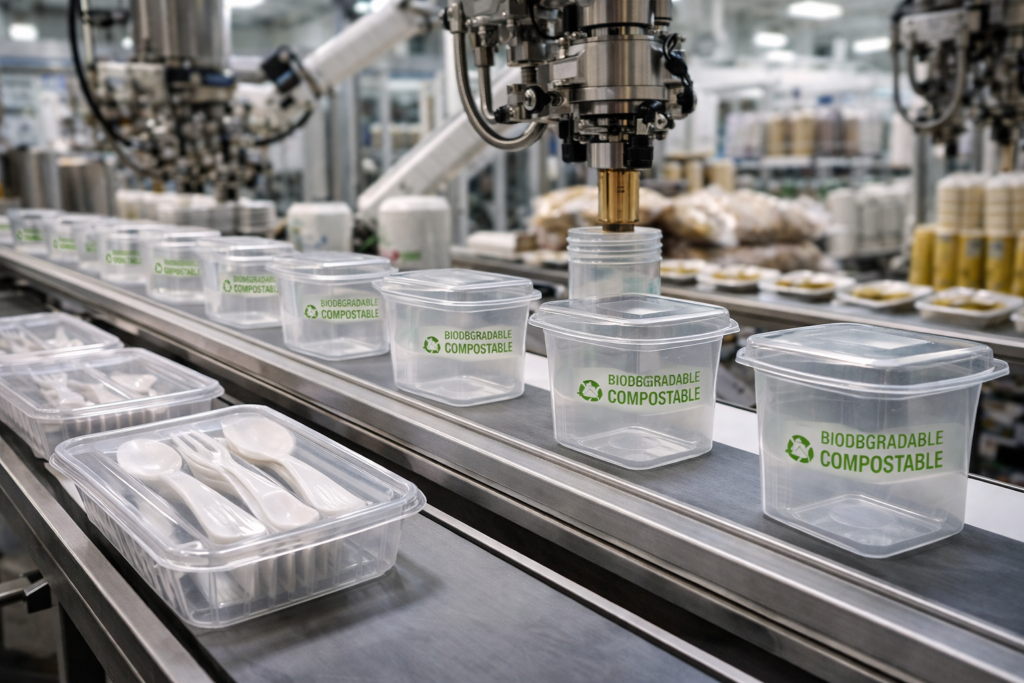
When evaluated honestly (not through a greenwashing lens), the advantages of bioplastics are real and relevant. Especially for the Indian market context.
- Reduced dependence on fossil fuels:
Bio-based materials draw from renewable feedstocks rather than petrochemical reserves.
For a country managing both energy security and import costs, that’s not just an environmental argument.
It’s an economic one.
- Lower lifecycle impact (when done right):
When sourced and processed correctly, bioplastics can reduce overall emissions compared to conventional plastics. The keyword here is “when done right,” because inputs and processing matter.
- Compatibility with existing systems:
One of the biggest advantages of bioplastics today is that many materials can run on existing manufacturing lines.
This reduces switching risk and avoids major capital investment.
- Link to rural and agricultural economies:
Using agricultural residues as feedstock creates additional income streams for farmers and reduces open waste burning.
- Alignment with regulation:
Bioplastics, especially certified compostable ones, help businesses stay compliant with India’s evolving plastic regulations. This includes bans and EPR requirements.
These advantages of bioplastics are real.
But they only translate into impact when materials are selected and used correctly.
This brings us to inspect the possible disadvantages of bioplastics next.
What Are the Limitations and Risks of Bioplastics?
The conversation around bioplastics often highlights potential.
But in practice, the friction shows up in execution.
- Mislabeling and terminology confusion:
“Biodegradable,” “compostable,” and “bio-based” are often used interchangeably.
They are not the same.
This leads to poor material selection and unrealistic expectations at the end-of-life stage.
- Infrastructure gaps in India:
Compostable plastics require specific conditions to break down effectively.
India’s industrial composting infrastructure is still limited.
Disposal outcomes are inconsistent across regions, raising questions about the future of bioplastic adoption.
- Cost perception vs. actual economics:
Bioplastics are often seen as expensive.
In reality, the comparison is frequently flawed.
Businesses compare per kg prices instead of per application or per bag, which can distort decision-making.
- Performance inconsistency across suppliers:
The future of bioplastics can only look better when material performance is consistent.
This is an issue across suppliers.
Weak mechanical strength, poor sealing or durability, and inconsistent batch quality create operational risk.
- Certification and compliance gaps:
Many products in the market lack clear, verifiable certifications.
Without standards like ISO 17088 or equivalent, claims around compostability and safety become difficult to validate.
Greenwashing becomes rampant.
The disadvantages of bioplastics don’t make them a bad choice.
They make them a complex one. Something buyers and policymakers need to reckon with.
So the final question is, what does the future of bioplastics look like?
What Will Drive the Future of Bioplastics in India?
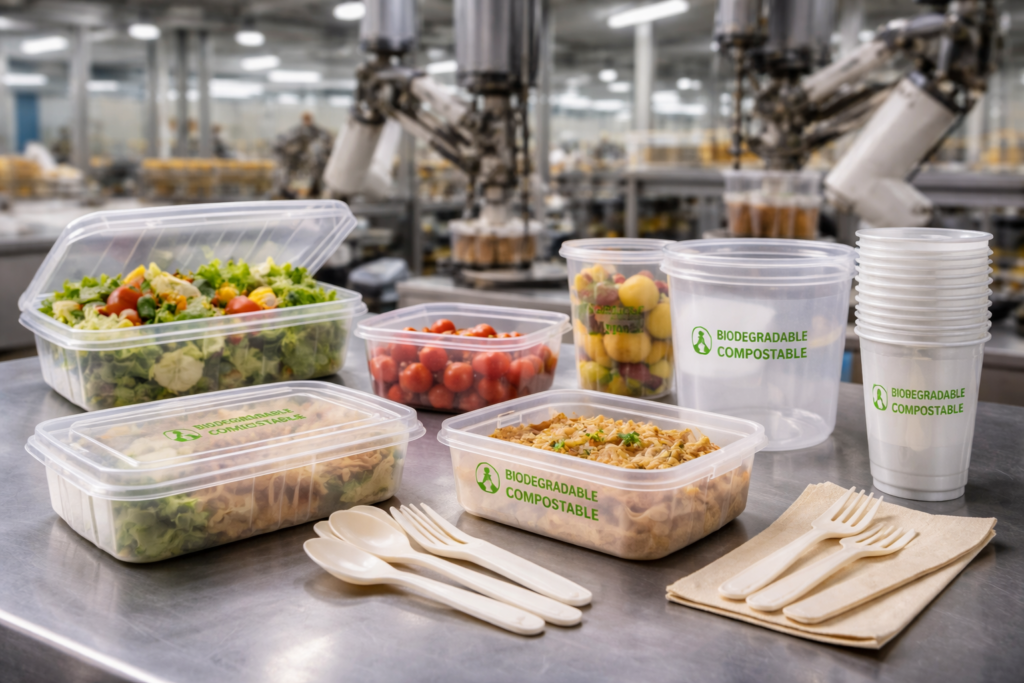
One insight worth stating plainly: India has the feedstock, the manufacturing base, and the scale.
The opportunity isn’t just to consume bioplastics; it’s to supply them globally.
At this point, the direction is clear.
What will determine the bioplastics market in India is not intent but execution across a few key levers:
Policy Enforcement, Not Just Policy Announcements
India already has regulations in place.
The real shift will come from consistent enforcement of SUP bans and EPR obligations across states.
Announcements create awareness while penalties create urgency.
Supply Chain Maturity
Reliable access to raw materials and consistent quality at scale will define adoption.
This is where India has an advantage, especially with agro-waste-based inputs.
Standardization And Certification Clarity
Clear, verifiable standards will reduce confusion and build trust.
Without this, both businesses and regulators hesitate.
Investor Confidence And Capital Flow
Scaling bioplastics requires investment in manufacturing, R&D, and infrastructure.
As the market stabilizes, capital will follow performance, not just sustainability narratives.
End-user Demand And Export Pressure
Global buyers, especially in the EU and US, are already pushing for sustainable packaging.
Indian manufacturers supplying these markets will have to adapt faster.
The demand is shaping the future of sustainable packaging in India.
For businesses and institutions, the next step is not a full transition but informed testing.
Because material decisions cannot be made on paper alone. They need to be validated for performance, compliance, and cost within real operations.
This is something I’ve kept in strong consideration while building Ukhi. You can see it for yourself and order a sample kit from Ukhi today.
It is a simple way to evaluate how agro-waste-based biopolymers behave in your specific use case without disrupting existing systems.
Conclusion
If there is one thing this makes clear, it is this.
Bioplastics are not a single solution you adopt. They are a category you need to understand.
The goal of this article wasn’t to sell the idea.
It was to give you a clear-eyed view of where the technology stands, where the market is heading, and where the real friction points live.
The future of bioplastics belongs to those who move past the hype and start asking sharper questions:
About certifications.
About supply chains.
About what actually works on the ground.
Informed adoption beats rushed adoption. Every time.
If you’re evaluating bioplastics for your business, start with clarity, not trends.
FAQs
- What Is The Future Of Bioplastics?
The future of bioplastics lies in scaling performance-driven materials that meet regulatory and cost requirements, rather than replacing all plastics outright.
- How Does The Future Of Sustainable Packaging In India Depend On Bioplastics?
The future of sustainable packaging in India depends on bioplastics that align with policy, reduce dependence on fossil inputs, and address the disadvantages of plastic without compromising performance or scalability.
- Can Bioplastics Fully Replace Conventional Plastics?
No. The future of bioplastics involves selective replacement, not total substitution. This is due to performance, cost, and infrastructure limitations.