
The sustainable fashion market in India is growing. At a CAGR of 21.96% between 2026 to 2033. That’s a good sign, right? Brands are going green. Customers are concerned. Authorities are ensuring stricter enforcement under the PWM 2024 packaging rules.
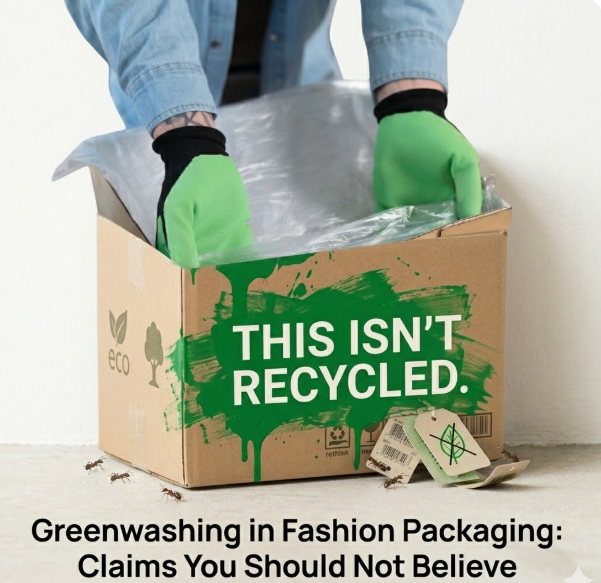
But ~60% of sustainability claims made by Indian fashion brands don’t hold up or lack backing.
This is what we refer to as greenwashing—making environmental claims without real proof or proper certification. Thankfully, regulators are stepping in and tackling this issue through guidelines like the ASCI greenwashing framework in India.
How does greenwashing usually happen in garment packaging?
Suppliers use terms like biodegradable, eco-friendly, and 100% green interchangeably. This doesn’t mean suppliers have malicious intent In many cases, they use terms based on industry trends or general understanding. But customers are becoming more aware. Regulators, especially in export markets, are actively verifying claims. So, your intention may be right, but unclear claims can still be seen as greenwashing.
That is why avoiding greenwashing fashion packaging is now part of responsible sourcing. Especially when selecting sustainable fashion packaging for your factory or brand.
In this blog, I will explain the packaging claims you should not accept at face value. Plus, how you can avoid greenwashing while moving toward genuinely sustainable packaging.
Let’s dive right into it.
5 Claims You Should Know Not to Believe Blindly
Before I explain each claim, let me be clear. These claims are not always false. But they are often incomplete, misunderstood, or used without technical verification. And that is where risk begins.
Understanding these claims protects you, your brand, and your export compliance.
Claim 1: “This Packaging Is Biodegradable”
This is one of the most common claims for greenwashing fashion packaging.
But biodegradable clothing packaging does not mean what most people assume.
Biodegradable simply means the material can break down eventually. It does not define how long it takes or under what conditions. Some plastics marketed as biodegradable may take years to break down.
This confusion is why understanding biodegradable vs compostable India standards is critical. Compostable materials break down within defined timelines and leave no toxic residue. Biodegradable materials may not meet those standards.
Choosing ‘biodegradable’ fashion packaging without certification can expose your brand to scrutiny. If you are using that packaging to export your products to the US or Europe, the risks are even higher.
Claim 2: “This Packaging Is Eco-Friendly”
Eco-friendly packaging claims sounds reassuring. It sounds safe. It sounds responsible.
But eco-friendly has no fixed legal definition in most markets. So, without certification, eco-friendly can refer to anything. It could mean slightly reduced plastic. It could mean recycled content. Or it could simply mean the supplier’s internal interpretation.
Regulators in India, including ASCI, have already issued guidance against vague sustainability claims. Buyers exporting products internationally face even stricter scrutiny under environmental marketing regulations.
This is why vague eco-friendly packaging claims must be supported by certifications.
True compostable fashion packaging will always have verifiable compliance, not just marketing language. Understanding this protects your business from unintended greenwashing fashion packaging risks.
Claim 3: “This Is 100% Green Packaging”
That claim definitely catches the eye, but honestly, it doesn’t hold much weight.
There isn’t any packaging out there that’s completely eco-friendly in every aspect. The environmental impact really hinges on things like how the materials are sourced, how they’re made, how they’re disposed of, and the whole lifecycle involved. Even packaging that’s labeled as 100% green might need industrial composting to break down properly. If the right disposal options aren’t available, those supposed benefits just won’t materialize. This is crucial to think about, especially when we’re looking at biodegradable fashion packaging meant for export markets.
Buyers should ask specific questions:
- Is it compostable or biodegradable?
- Is it certified?
- Under what conditions does it break down?
This clarity helps avoid unintended non-compliance or customer mistrust.
Claim 4: “This Meets Export Sustainability Standards”
Many packaging suppliers truly believe their products are up to standard. However, when it comes to export compliance, specific certifications are a must.
In India, for instance, compostable plastics need to adhere to the CPCB compostable certification requirements set out in the PWM 2024 packaging rules. Without that, compostable claims simply can’t be validated legally.
Likewise, both the UK and US markets have strict environmental marketing regulations in place. And regulators are actively keeping an eye on environmental claims.
Understanding the necessary certifications and standards is really important when choosing sustainable clothing packaging, as it safeguards your brand’s reputation and ensures compliance with regulations.
Claim 5: “This Packaging Is the Same as Compostable”
A lot of people get confused about this, but biodegradable and compostable aren’t the same thing. For something to be compostable, it needs to:
- Break down completely into safe, non-toxic parts
- Decompose within a specific timeframe when composted
On the other hand, biodegradable items might leave some leftover material or take longer to break down.
That’s why using compostable packaging in fashion is a better bet for the environment. Knowing the biodegradable vs compostable India distinction can help you steer clear of the whole greenwashing issue with packaging.
How You Can Evaluate Packaging Claims with Confidence
The good news is that avoiding greenwashing risks is not complicated. It simply requires asking the right questions and verifying the right details. Here are five practical checks every buyer should follow.
1. Verify CPCB Certification and Validity
If a supplier claims compostability, ask for their CPCB compostable certification. This certification confirms that the material has been tested (and approved!) under Indian regulatory standards. You should verify that the certificate applies to the exact product and supplier, not just a similar material. This is essential when evaluating compostable clothing packaging.
2. Ask What the Material Is Actually Made Of
Do not rely only on marketing terms. Ask the supplier to clearly explain the base polymer or raw material used in the packaging. PLA, PBAT, and conventional plastic blends affect how the packaging behaves at the end of its life. This clarity is especially important when reviewing biodegradable clothing packaging.
3. Understand Where and How the Packaging Breaks Down
Many materials only break down under industrial composting conditions, not in natural environments. Ask suppliers where the packaging is designed to decompose and within what timeframe. This helps you clearly distinguish between real compostability and general biodegradability.
4. Confirm Export Compliance for Your Target Market
If you export garments, your packaging must meet the expectations of international buyers and regulators. Ask whether the packaging meets standards recognized in your destination markets. Also, request supporting documentation. This step ensures your sustainable clothing packaging doesn’t result in compliance concerns.
5. Ask for Technical Documentation, Not Just Marketing Claims
Reliable suppliers should be able to provide
- Test reports
- Certification copies
- Technical specifications
These can help you make informed decisions based on facts, not assumptions. This protects your brand from unintended greenwashing fashion packaging risks.
When you evaluate packaging this way, you move beyond claims, towards verified performance. This ensures your sustainability efforts are genuine and compliant.
The Smart First Step Toward Truly Sustainable Packaging
Going green is one of the smartest decisions any fashion brand or factory can make today. It improves brand trust, ensures compliance, and opens doors to export markets. But greenwashing fashion packaging can reverse those benefits.
Serious about sustainability and avoiding greenwashing risk? The next step is simple:
Start auditing your current packaging, not just your future intentions
Begin by listing packaging components you use: garment bags, courier covers, mailers, labels.
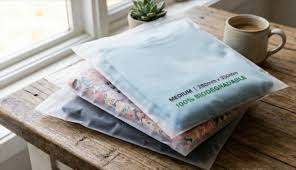
Then match each one with documented proof. No certification, no test report, or no clarity on material composition? That is where your review should begin.
You do not need to overhaul everything overnight. But you need to start by identifying gaps.
Then, consider pilot testing certified alternatives in one product line or season. This allows you to evaluate performance, cost impact, and operational adjustments. Without disrupting your entire supply chain.
CPCB-certified compostable garment bags made using Ukhi biogranules are a good option to start with. Order a sample kit from Ukhi today and see the difference yourself.