
A bag switch looks simple on paper. But in a running business, it touches cost, speed, and overall operations.
Take a mid-sized retailer as an example. If they use 1,000 bags a month and the per-bag price shifts by ₹1, that’s ₹12,000 a year. If the shift is ₹3, it’s ₹36,000.
Now look at the shop floor. A bag that feels fine in a sample can still fail in use. It can split at the seal. It can tear at the handle cut. It can slip when the bag is warm or when the load has sharp corners.
One small weakness can turn into repeated incidents, and those incidents can make business owners more eager to stick with what’s worked in the past to avoid this type of risk.
Add compliance to the mix, and the decision slows down further. In India, plastic packaging rules have become stricter and more specific over time.
Procurement teams know that material claims and markings matter. If a bag is sold as compostable, the wording on the bag and the supporting documentation have to match what regulators expect.
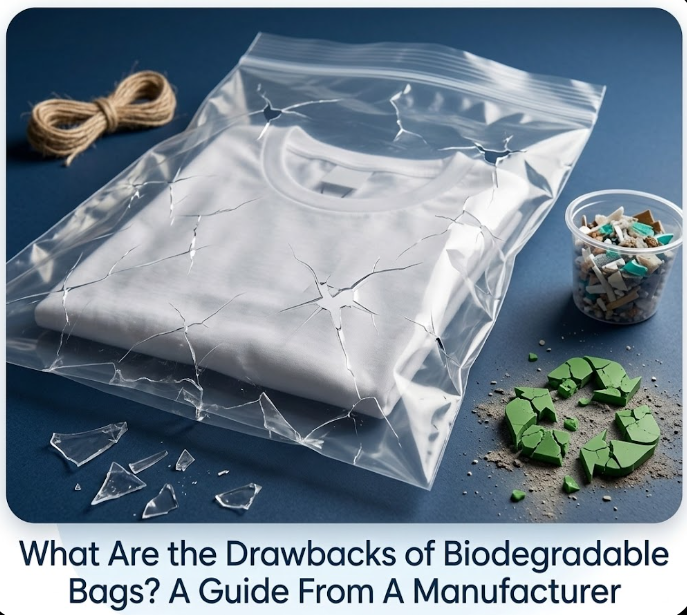
This is where the drawbacks of biodegradable bags are discussed the most. People assume the bags will tear more easily, cost more, store poorly, or create confusion regarding disposal.
Some of those concerns come from real early experiences. Some come from unclear claims in the market. So, what’s actually factual? That’s what we’ll find out here.
Note: In this article, the terms biodegradable bags and compostable bags are used interchangeably. Technically, we refer to compostable plastic bags that meet the Plastic Waste Management Rules of India.
Are biodegradable bags weaker than plastic bags?
Strength is one of the first things people mention when talking about the drawbacks of biodegradable bags. It’s also the first thing businesses test when planning to make the switch.
This reasoning makes sense because early biodegradable bags often had this problem. Some tore easily. Some felt brittle. Some had weak seals.
A few suppliers solved the cost by going thinner, and the bag failed under normal retail loads.
Over time, buyers started treating the weakness as an inherent drawback, instead of a quality and specification issue.
Today, the reality is more specific. Modern compostable bags are rarely made from one polymer. They’re typically engineered as blends so the film can balance:
- tensile strength
- elongation and flexibility
- tear resistance
- seal integrity
Manufacturing also matters. A well-made bag comes from tight gauge control, stable film extrusion, and sealing settings that match the material’s window. This is why two bags that look similar can behave very differently in actual use.
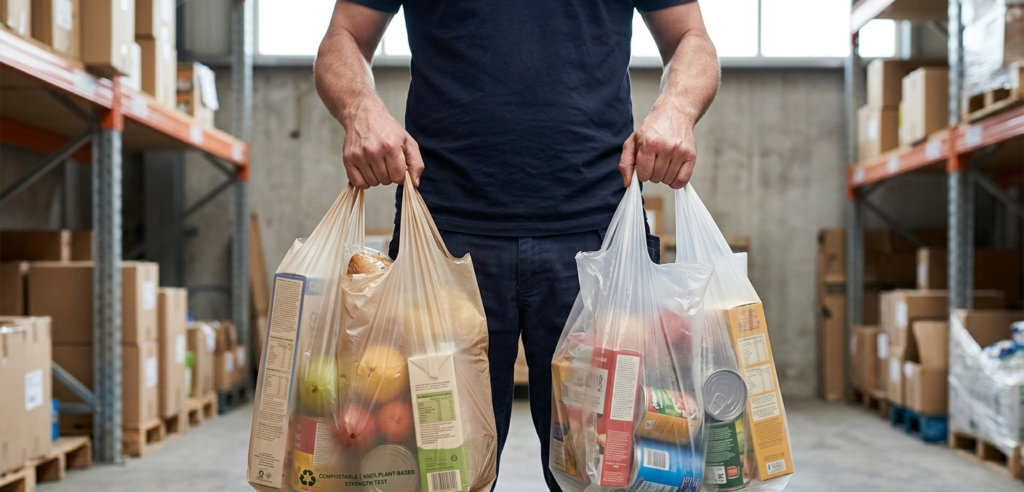
So, are compostable or biodegradable bags weaker? Low-grade ones can be. But high-quality compostable carry bags are designed to perform like conventional retail bags.
The important takeaway is simple. Weakness was largely a first-generation and poor-spec problem. It is not a permanent limitation.
Are biodegradable bags more expensive?
After strength, cost-related concerns show up the most when talking about the drawbacks of biodegradable bags.
The worry is simple. Bags are a repeat purchase. Even a small price difference gets multiplied across months, outlets, and shipments.
For a long time, compostable bags did carry a premium in many markets. But pricing has become more mixed than people assume. And you can see that only when you compare like-for-like.
At UKHI, we take agricultural waste from plants like hemp, nettle, and flax, and turn it into our EcoGran™ biopolymer. That biopolymer is then used to make bags that look and feel like conventional plastic.
They crinkle and handle the way people expect. They seal cleanly. They don’t need “extra thickness” just to survive normal retail use when the spec is set correctly.
This matters a great deal for cost. When the material is engineered to run consistently, the per-piece cost becomes predictable. And that’s the only comparison that really makes sense in procurement.
A practical way to do it is per-piece pricing for the same size and use case. Here are common formats where the numbers often surprise buyers.
| Bag type | EcoGran™ compostable (₹/piece) | Conventional plastic (₹/piece) |
| Carry bag (13″ × 16″) | ₹1.05–₹1.66 | ₹4.61 |
| Transparent garment bag (12″ × 15″ + 2″) | ₹1.48 | ₹2.90 |
| Industrial pouch (10″ × 12″, opaque) | ₹0.80 | ₹2.09 |
Do biodegradable bags only break down in special conditions?
This concern comes up for a good reason. You may have seen the term “compostable” being used as if it means you can simply bury the bags in your backyard and have them disappear in a few weeks. It doesn’t work like that.
These bags only break down as expected in industrial composting facilities. They require a composting environment where there is enough heat, moisture, oxygen, and microbial action for the process to move forward steadily.
If a compostable bag ends up in mixed waste, a dry landfill, or sits sealed inside a pile with no air movement, it may not break down the way people imagine.
It can stay intact for a long time, especially if it is buried or compressed. That is not a scam. It’s a mismatch between how the bags are intended to be discarded and how they often are.
This is why disposal instructions matter so much for biodegradable packaging. The material is only one piece of the story. The collection and processing system decides the rest.
So, the drawback is real, but it sits outside the bag. The limitation is usually the waste-management environment, not the film itself.
Do biodegradable bags have a short shelf life?
Shelf life is another common concern people raise when talking about the drawbacks of biodegradable bags. The word “biodegradable” often makes people picture a bag that starts breaking down the moment it’s made.
In reality, compostable bags are engineered to stay usable through normal storage and transport. Otherwise, they could never be shipped, stocked, or sold at scale.
What can shorten shelf life is exposure. Heat in a closed warehouse. Humidity during monsoon storage. Direct sunlight near a storefront window. Poor packaging that lets moisture in.
Good suppliers design around this. They stabilise the film for storage, pack it properly, and provide basic handling guidance. In day-to-day operations, that typically means:
- Keep bags sealed in outer packaging until use.
- Store in a cool and dry space.
- Avoid long exposure to heat and direct sunlight.
This also matters for biodegradable packaging materials more broadly. The material has to be stable enough to survive the supply chain before it ever reaches end-of-life.
Are biodegradable bags harder to dispose of correctly?
The issue here is that most people don’t know how to properly dispose of these compostable bags.
So, these bags get thrown into mixed waste, or they get pushed into plastic recycling, or they get stored and reused until you can’t do anything with them.
None of these routes match how compostable bags are meant to be handled.
The second issue is infrastructure. Even if a consumer understands the label, their city may not have separate organic waste collection or access to industrial composting. So, correct disposal becomes inconsistent by default.
This is why clear on-pack instructions matter for biodegradable packaging films. Not long explanations. Just one clean line that tells people what to do, every time.
So, yes, disposal can be harder. But it’s not because the bag is complicated. It’s because the system around the bag is inconsistent.
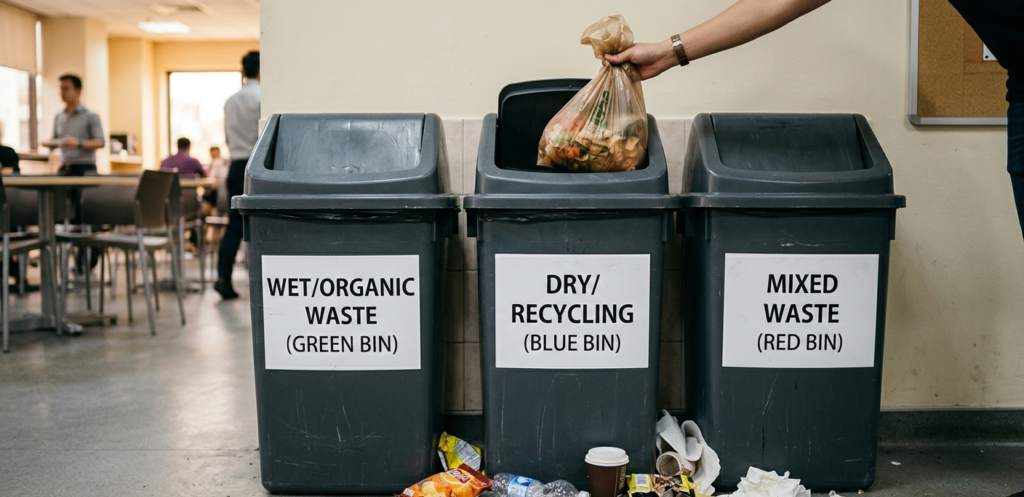
Do biodegradable bags disrupt recycling systems?
They can, if they end up in the wrong stream. Most compostable bags are not meant to be mixed into conventional plastic recycling.
Recycling systems are built around specific polymers and predictable melting behaviour. When a different material enters that stream in a meaningful quantity, it can create sorting problems and reduce the quality of recycled output.
But it’s also important to state the intended design clearly. Compostable bags are designed to break down naturally in industrial composting systems. They are not meant to be melted for reprocessing.
In other words, the disruption risk is real. But it’s a sorting and communication problem more than a material failure.
Conclusion
After looking at the drawbacks of biodegradable bags, it’s clear that the problems don’t come from the bags themselves. They come from mismatches: Wrong specs, comparisons, and disposal routes.
These drawbacks also have practical solutions. Start with spec discipline: match size, microns, and load expectations instead of comparing vague claims.
Do a short trial run and check seals, handles, and failure rates in real use. Store bags properly in a cool and dry place so that shelf life remains normal.
Make disposal simple. Add one clear line on the bag, plus basic staff guidance where bags are handed out. Finally, buy only what is certified.