
Most buyers start with the wrong question.
They ask, “Is this resin compostable?”
The better question is, “Will this resin actually work for my application?”
That difference matters because even within one company’s portfolio, compostable materials are not treated as one interchangeable category. At Ukhi, for example, the product stack already spans eight different biopolymer routes, including blown film, thermoforming, coating, additives, cast film, and customized solutions. That alone tells you something important: there is no one-size-fits-all compostable resin masterbatch for every pack, product, or process.
A carry bag needs flexibility.
A food tray needs formability.
A coated paper surface needs a barrier.
And if you choose the wrong grade, the cost does not show up only in resin price. It shows up in sealing problems, machine instability, rejections, and failed product performance.
That is where smart material selection begins.
This article is a practical guide to making that choice correctly, whatever your application and whatever your production setup.
What should you decide first before choosing a compostable resin masterbatch?
Before you even look at material options, you need to define the job the material has to do. This is where most mistakes happen. People jump to material names instead of first locking the application.
Start with four simple decisions:
- What exactly are you making?
A carry bag, a food tray, a coated paper cup, and a mulch film do not need the same resin. They all behave very differently. - What form does it take?
Flexible film, rigid structure, or a coated surface. - What stress will it face?
Weight, heat, grease, moisture, or just handling during transport. - Does it touch food?
If your product touches food directly, you will choose safety and compliance over performance.
A compostable resin masterbatch that works perfectly for a grocery bag can completely fail in a thermoformed tray. Similarly, a coating resin for paper will not behave like a film resin on a blown film line.
Think of it this way. You are not buying “a compostable material.” You are selecting a material for a very specific job. Once this clarity is in place, the selection becomes narrower, faster, and far more accurate.
The next step is to match this requirement to the right resin category.
Which resin type fits which application?
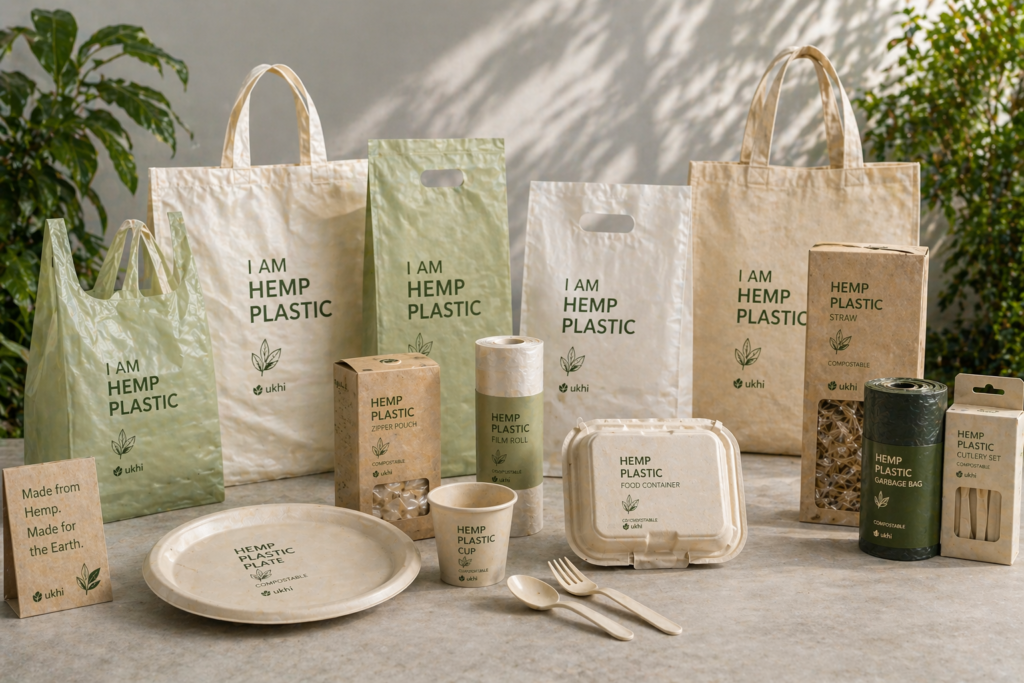
Once the application is clear, the next step is to match it to the right material family. This is where selection becomes practical.
Different products need different resin behaviors. Trying to use one compostable resin masterbatch across all formats usually leads to performance issues or higher costs.
Here is a simple way to think about it:
| Application | What the material needs to do | Best-fit resin type |
| Carry bags, liners, flexible packaging | Flexibility, seal strength, toughness | biodegradable film resin |
| Food trays, containers, rigid packs | Stiffness, shape retention, clean forming | compostable thermoforming resin |
| Paper cups, bowls, wraps | Barrier against moisture and grease | compostable coating resin |
| Direct food-contact packaging | Safety, low migration, compliance | food-safe compostable resin |
| Performance tuning (anti-static, UV, processing) | Property enhancement and stability | biodegradable resin additive |
This is not just a classification. It reflects how these materials behave during processing and in real use.
For example, a biodegradable film resin is designed to stretch and seal well on blown film lines.
A compostable thermoforming resin must heat, form, and hold shape without cracking.
A compostable coating resin must bond to paper and create a functional barrier, not just a visual layer.
At Ukhi, we approach this as an application-first problem. That is why the material stack itself spans films, thermoforming, coatings, additives, and customized solutions, instead of pushing a single generic grade.
Once you have matched the application to the right resin type, the next question becomes more practical: will it actually run well on your machine and perform consistently?
Will it run well on your machine and hold up in real use?
A compostable resin masterbatch can look perfect on paper and still create problems on the shop floor. If it does not run consistently on your machine, the cost shows up immediately in rejections, downtime, and unstable output.
Start with processing fit:
- Does it seal reliably? Poor sealing leads to weak bags, leaking packs, or failed joints.
- Is the melt behavior stable? Inconsistent flow affects film thickness, forming, and finish.
- Does it handle moisture well? Many compostable systems are more sensitive than conventional plastics.
- Does it run within a practical temperature window? Too narrow a range increases trial-and-error.
Now look at real-world performance:
- Strength and puncture resistance for handling and transport.
- Flexibility or stiffness depending on the product.
- Shape retention for trays and rigid formats.
- Barrier performance where moisture or grease is involved.
For example, a biodegradable film resin may give good clarity but fail to maintain bubble stability on a blown film line. Similarly, a compostable thermoforming resin must not just form well but also hold its structure after cooling and during use. A compostable coating resin must create a usable barrier, not just sit as a thin layer on paper.
The point is simple. If the material does not process smoothly and perform reliably, it is not the right choice, no matter how strong the compostable claim is. Once technical performance is clear, the next step is to make sure the material is safe and compliant for its intended use.
What compliance and food-contact checks matter in India?
Once the material works on your machine, the next question is whether you can safely and confidently use it in the market.
This is where many buyers take shortcuts, and that is risky. A compostable resin masterbatch is not just about performance. It is also about what you can legally and responsibly claim.
Here is what you should check, in practical terms:
- What standard supports the compostability claim?
Ask clearly: Is this tested against IS/ISO 17088 (India), ASTM D6400 (US), or EN 13432 (EU)?
These are the widely accepted benchmarks for compostable plastics. Without one of these, “compostable” is just a marketing word.
- Do you have the actual test reports?
Do not settle for a certificate mention. Ask for reports showing:
– biodegradation (typically ~90% within 180 days)
– disintegration (material breaks down in compost conditions)
– eco-toxicity (no harmful residue)
- Is it suitable for food contact, if required?
If your product touches food, you need a food-safe compostable resin backed by compliance such as FSSAI-related declarations (India) or globally accepted frameworks like FDA 21 CFR (US) or EU 10/2011.
This is not optional for food packaging.
- Is the supplier registered or traceable where required?
In India, check if the material aligns with CPCB (Central Pollution Control Board) requirements for compostable plastics and whether the supplier can provide traceability.
- Does the claim match your actual application?
A resin tested as a film may not automatically qualify in a coated or thermoformed format. The end-use must align with the tested structure.
- What are you allowed to communicate on your packaging?
Your labeling and claims should be backed by the above standards and documentation, not assumptions.
In India, this level of diligence is becoming essential. The risk is not just technical failure. It is mislabeling, non-compliance, and potential penalties.
Once these checks are in place, the final decision usually comes down to cost, consistency, and the kind of supplier support you can expect.
How do you compare cost and choose the right supplier?
At this stage, most buyers fall into a familiar trap. They compare materials only on price per kilo.
That almost always leads to the wrong decision.
A compostable resin masterbatch should be evaluated based on what it costs you to run and convert, not just what it costs to buy.
Think about the full picture:
- How consistently does it run on your line?
A slightly higher-cost resin that runs smoothly will outperform a cheaper one that causes frequent stoppages. - What is the rejection rate?
Poor sealing, uneven films, or forming issues quickly eat into any raw material savings. - Can you optimize thickness or weight?
A better-performing material may allow down-gauging, which directly reduces cost per unit. - Does it reduce complaints or product damage?
Weak packaging leads to returns, leaks, and brand damage. That cost is often invisible at the buying stage. - Will you need additives or repeated adjustments?
If the base material is unstable, you end up compensating later, which adds complexity and cost.
This is also where the supplier matters as much as the material.
You want someone who can:
- support trials on your actual machine
- help fine-tune performance
- offer the right combination of base resin and biodegradable resin additive if needed
- guide you when your application evolves
Sometimes, the right answer is not an off-the-shelf grade. It is a material tuned to your process, product, and performance requirement.
If you are working across formats like films, thermoforming, coatings, or need application-specific adjustments, it helps to look at suppliers who operate across these categories rather than in silos. Explore Ukhi bioplastics products.
The decision becomes simple when you look at it this way.
Choose the compostable resin masterbatch that works reliably, converts efficiently, and is backed by a supplier who can solve problems with you, not just sell material.
Closing Thoughts
Choosing the right compostable resin masterbatch is not about picking the most advanced material or the one with the strongest claim.
It is about fit.
Fit with your product.
Fit with your machine.
Fit with your performance needs.
And fit with the compliance reality in India.
When these pieces come together, the material works quietly in the background. Your line runs smoothly. Your packaging performs as expected. And your sustainability claim holds up under scrutiny.
That is the outcome you should aim for.
If a resin looks good on paper but struggles in production or creates ambiguity in compliance, it is not the right choice.
The right choice is the one that works consistently, scales reliably, and makes both technical and commercial sense for your application.
FAQs
- What Is A Compostable Resin Masterbatch?
A compostable resin masterbatch is a base material blend designed to be processed into packaging while breaking down under composting conditions, provided the right standards and end-use conditions are met.
- When Should I Use A Biodegradable Film Resin?
Use a biodegradable film resin for flexible formats like carry bags, liners, and wraps. It is built for stretch, sealing, and durability on blown or cast film lines.
- What Is A Food-Safe Compostable Resin?
A food-safe compostable resin is tested and compliant for direct food contact. It must meet migration and safety standards, not just compostability claims.
- Where Is Compostable Thermoforming Resin Used?
A compostable thermoforming resin is used for trays, containers, and rigid packs. It needs to heat, form cleanly, and retain shape during handling and storage.
- Why Would I Need A Biodegradable Resin Additive Or Coating Resin?
A biodegradable resin additive improves properties like processing or anti-static behavior, while a compostable coating resin adds a barrier to paper-based packaging like cups or wraps.