
A compostable bioplastic film is only useful if it protects the product first.
A buyer replaces plastic film with a compostable film, but the pack then leaks, tears, fogs, blocks on the machine or shortens shelf life.
PBAT-based compostable blends are the practical choice for most flexible packaging. For clear food packaging, PLA and cellulose films can work better.
Biodegradable products list: Common compostable film materials used in packaging
The best compostable film material for packaging is different for different products. The right choice is the film structure that matches the food, the machine, the shelf life, the certification and the buyer’s cost target?
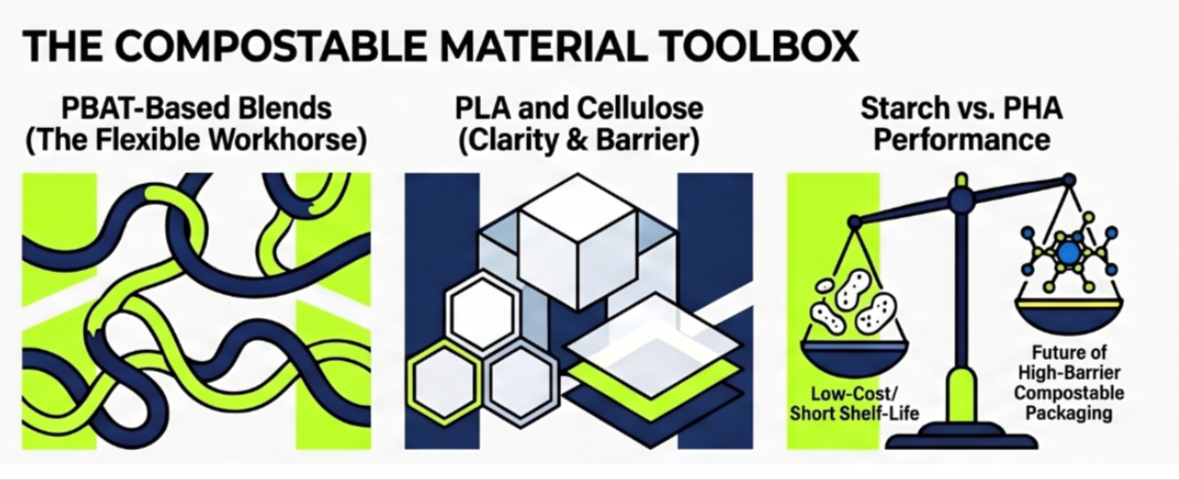
PBAT
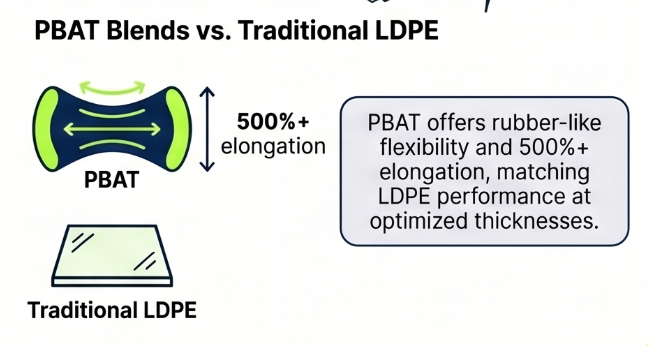
PBAT is a compostable polyester that is usually blended with PLA or starch to give the film more flexibility, sealability and tear resistance. In simple terms, PBAT helps compostable film behave more like conventional LDPE. This is why PBAT-based blends are widely used for carry bags, produce bags, wraps and organic waste liners.
PLA
PLA gives clarity and stiffness. Cellulose film gives transparency, gloss and strong oxygen-barrier potential. These materials are useful when the customer needs to see the product, such as biscuits, confectionery, tea, coffee, dry snacks or premium bakery packs.
PHA
PHA is promising for future-ready barrier packaging. But it is not yet the default commercial choice.
PHA has strong biodegradation potential and better moisture-barrier promise than several older bioplastics. However, availability and cost still limit its use in everyday flexible packaging.
Starch and Cellulose
Starch-blend film is useful where cost and compostability positioning matter more than high barrier. It can work for simple bags and short shelf-life uses, but it needs caution in humid storage.
Cellulose film is different. It comes from wood pulp and gives a premium, transparent, paper-like feel. Certain grades offer oxygen and aroma barrier, while coated grades add moisture protection.
So the best answer is conditional. The best compostable bioplastic film material for packaging for food depends on four things:
- the food’s oxygen and moisture sensitivity,
- the shelf-life target,
- the sealing and packing line,
- the certification claim.
This is why biodegradable food packaging materials should never be selected only by material name.
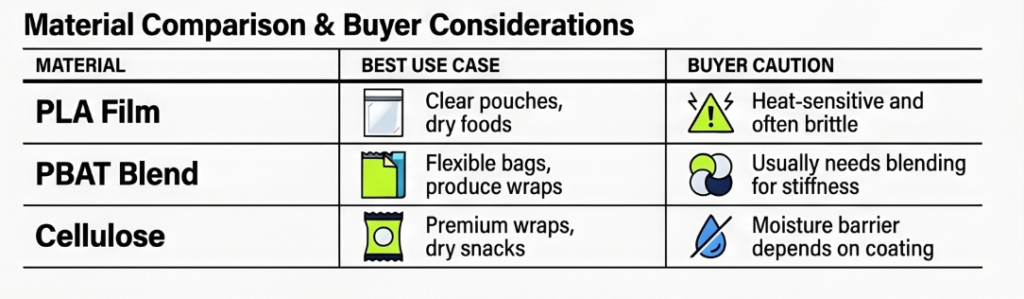
| Material | Best use | Buyer caution |
| PLA film | Clear pouches, labels, overwraps, dry foods | Heat-sensitive and often brittle without modification |
| PBAT blend film | Flexible bags, wraps, liners, produce bags | Usually needs blending with PLA or starch |
| Starch-blend film | Simple bags, low-barrier packaging, cost-led formats | Moisture sensitivity can be high |
| Cellulose film | Premium clear wraps, confectionery, dry foods | Moisture barrier depends on coating grade |
| PHA film | Future barrier applications and specialist compostable formats | Cost and commercial scale remain limiting factors |
Best compostable film material for food packaging by use case
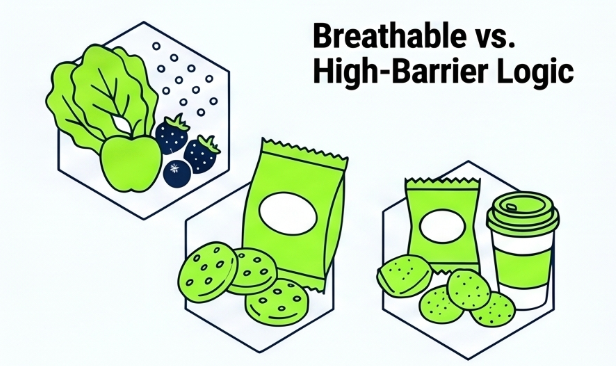
Food packaging should begin with the food’s failure risk.
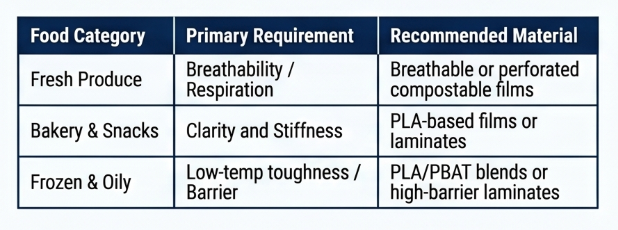
Dry foods, bakery items and snacks need moisture control, aroma retention and shelf appeal. PLA and cellulose films are strong candidates here because they can provide clarity, stiffness and a premium look. For biscuits, tea, coffee, dry fruits and confectionery, the buyer should check moisture barrier and aroma barrier before approval.
Fresh produce needs breathability.
Fruits and vegetables continue to respire after packing. If the film traps too much moisture, condensation can form, and the product may spoil faster. For produce bags, breathable PBAT/PLA blends or suitable semi-permeable cellulose films can work better than very high-barrier films.
Oily, moist or high-aroma foods need barrier-first thinking.
Fried snacks, spice mixes, oily bakery products and coffee need protection from oxygen, grease, aroma loss and sometimes light. A basic compostable mono film may not be enough. These products often need coated cellulose, compostable laminates, metallised compostable films or specialist barrier coatings.
Frozen food, hot food and microwave-use applications need extra caution.
Some compostable coatings can support hot-fill paper cups and plates up to defined temperature limits, but that does not mean every compostable film can handle hot food, freezing or microwave use. For hot applications, bagasse or coated paper formats may perform better than flexible film.
Food-contact safety must also be checked separately.
Compostable does not automatically mean food-safe. Any packaging film for food should be food safe, with low-migration inks, printing and adhesive safety, and finished-film migration testing. In India, this means meeting CPCB and IS/ISO 17088 certification requirements.
Explore Ukhi’s compostable packaging raw materials.
Best compostable film material for non-food products
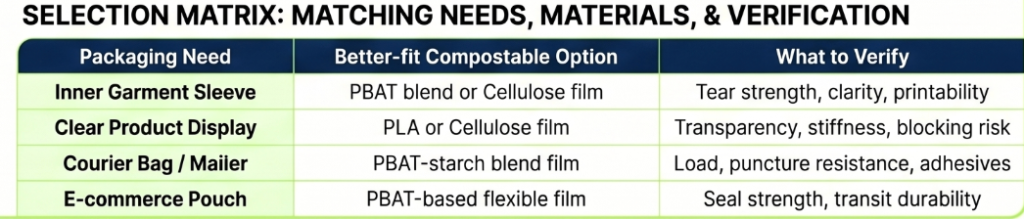
Food packaging usually begins with shelf life, oxygen barrier, moisture barrier and food-contact safety.
Garment packaging begins with handling risk.
A T-shirt, saree, shirt, accessory, cosmetic box, stationery item or small e-commerce product does not usually need the same oxygen or aroma barrier as food. It needs protection from dust, rubbing, moisture exposure, transit damage and repeated handling.
For inner garment bags, PBAT-based compostable blends are the practical choice because they give flexibility, softness and tear resistance.
These qualities matter when the pack has to move through folding, packing, warehousing, courier handling and customer opening.
For premium fashion, cosmetics, gifting and lifestyle products, compostable paper plus a clear compostable window can also work well.
Decision matrix: Which compostable film material fits your packaging job?
A buyer should compare compostable bioplastic film the same way they compare conventional plastic film.
But cost is not only price per kg. A film that costs more per kg may still work if it can be down-gauged without losing strength. A cheap film can become expensive if it fails during sealing, storage or transit.
MOQ also matters. Compostable film often needs more planning than standard LDPE because grade, colour, width, certification and printing affect minimum order size.
Here are some practical factors to compare.
| Decision factor | What to check | Practical meaning |
| Cost and MOQ | Resin type, roll width, print, micron, order size | Compostable film can cost more, so correct gauge matters |
| Micron range | Thickness, tear strength, puncture resistance | Lower micron only works if strength is proven |
| Heat sealing | Seal temperature, dwell time, jaw pressure | Compostable films may have narrower sealing windows |
| Machine fit | VFFS, HFFS, wrapping, lamination, pouching | Trial rolls prevent production loss |
| Transparency | Clarity, haze, gloss, product visibility | PLA and cellulose usually score well |
| Printability | Ink adhesion and surface treatment | Printed claims must not damage compostability |
| Export fit | EN 13432, ASTM D6400, IS/ISO 17088 | The certification must match the market |
For biodegradable products in India, buyers should ask whether the supplier is offering resin, film roll, converted bags or finished printed packaging.
Expert advice on material selection
At Ukhi, we recommend that buyers do not buy compostable film by claim but buy by application. Start with the product, then check the machine and the disposal route.
A dry snack pouch, fresh produce bag, courier wrap, cling film, bakery window pack and frozen food liner do not need the same structure. The correct grade depends on the food’s barrier requirement, the sealing system, storage humidity, handling load and certification requirement.
“Compostable film selection should begin with the product’s risk. If the product fails because of moisture, oxygen, oil, heat or weak sealing, the sustainability claim will not save the pack. A good compostable film is one that is sustainable and technically fit for the job.”
— Ukhi CEO, Vishal Vivek.
Before full approval, ask for sample rolls.
A proper trial should test:
- seal strength,
- COF and machine movement,
- blocking during storage,
- tearing and puncture,
- print adhesion,
- shelf-life performance,
- aroma and moisture retention,
- customer handling.
This is also where the right supplier matters. Biodegradable products manufacturers in India should be able to explain the grade, not just the claim. They should share a technical data sheet, safety data sheet, food-contact details, compostability certificate and recommended machine settings.
Ukhi can help you choose the right compostable film grade for food, retail and flexible packaging applications.
Request a sample kit, grade recommendation or WhatsApp procurement support from us to choose the best compostable film material for packaging for your product, machine and market.
FAQs
- What is the best biodegradable food packaging material for cling film?
A flexible PBAT-based or starch-blend film is one of the best options for a compostable cling film for wrapping fresh produce.
- What should a biodegradable products list include?
A useful biodegradable products list should include the material, product format, food-contact status, compostability certification, thickness, sealing range, shelf-life suitability, and disposal instruction. A list without these details does not help buyers make a real packaging decision.
- What is the best compostable film material for packaging for food exports?
The best compostable film material for packaging for food exports depends on the destination market. For Europe, buyers usually check EN 13432 fit. ASTM D6400 or BPI certification are common in the USA and CPCB and IS/ISO 17088 in India.
- How do biodegradable products manufacturers in India price compostable film?
Biodegradable products manufacturers in India usually price compostable film by resin blend, roll width, micron, printing, order volume, certification requirement, and conversion format. A clear film, printed pouch, surface protection film, and high-barrier laminate will not have the same cost structure.
- Can compostable film be used on existing packaging machines?
Yes. But compostable film does usually need changes in sealing temperature, dwell time, tension, cooling, and line speed.